Key takeaways
- Pump Head Height: The vertical distance from the unit to your drain outlet matters more than most specs. Budget models push water roughly 14–16 feet; commercial units can handle more. Measure from the floor to the drain point and add a few feet of margin before you commit.
- Coverage vs. Actual Square Footage: Manufacturers rate capacity at ideal conditions — typically 60 % relative humidity and 80 °F. Finished basements that stay cooler or have exterior concrete walls often need a unit rated 20–30 % above your measured floor area.
- Continuous Drain with Pump vs. Gravity: A pump-equipped model lets you run a hose uphill or sideways, which is critical when your only drain is across the room or at ceiling height. Confirm the hose diameter included with the unit, since cheap tubing clogs and kinks more easily.
- Energy Consumption and Certifications: A 200-pint unit running 24/7 adds up on your electric bill. ENERGY STAR Most Efficient-rated models use noticeably less power per pint of water removed, and the savings compound over a damp season that can last five or six months.
- Serviceability and Warranty: Dehumidifiers in basements work hard. Look for units with accessible filters, replaceable compressor components, and warranties of at least three to five years — the ALORAIR and CADPXS units here both exceed that baseline.
What's inside
Basements collect moisture the way junk drawers collect old chargers — slowly, invisibly, and then all at once when you notice warped trim or that unmistakable musty smell hitting you on the stairs. A standard dehumidifier with a gravity drain sounds fine on paper, but anyone who has tucked a unit under floor joists knows the drill: the hose kinks, the water backs up, and you’re mopping at 11 p.m. A built-in pump solves that headache by pushing condensate uphill and out to a laundry sink, window well, or floor drain — no gravity required.
This guide breaks down the strongest pump-equipped dehumidifiers you can buy right now, covering crawl-space compact units all the way up to 305-pint commercial workhorses. Each pick has been evaluated on drainage reliability, noise, energy draw, and how realistic its square-footage claims are for a real-world basement — not a lab. We also cover the key specs to compare so you can match the right unit to your space, budget, and drain setup.
As an Amazon Associate we earn from qualifying purchases.


How to Choose a Dehumidifier With Pump For Basement (2026)
- Pump Head Height: The vertical distance from the unit to your drain outlet matters more than most specs. Budget models push water roughly 14–16 feet; commercial units can handle more. Measure from the floor to the drain point and add a few feet of margin before you commit.
- Coverage vs. Actual Square Footage: Manufacturers rate capacity at ideal conditions — typically 60 % relative humidity and 80 °F. Finished basements that stay cooler or have exterior concrete walls often need a unit rated 20–30 % above your measured floor area.
- Continuous Drain with Pump vs. Gravity: A pump-equipped model lets you run a hose uphill or sideways, which is critical when your only drain is across the room or at ceiling height. Confirm the hose diameter included with the unit, since cheap tubing clogs and kinks more easily.
- Energy Consumption and Certifications: A 200-pint unit running 24/7 adds up on your electric bill. ENERGY STAR Most Efficient-rated models use noticeably less power per pint of water removed, and the savings compound over a damp season that can last five or six months.
- Serviceability and Warranty: Dehumidifiers in basements work hard. Look for units with accessible filters, replaceable compressor components, and warranties of at least three to five years — the ALORAIR and CADPXS units here both exceed that baseline.
The Best Dehumidifier With Pump For Basement (2026) Reviews
5000 Sq Ft ENERGY STAR Most Efficient Dehumidifier with Pump
ENERGY STAR’s “Most Efficient” badge is not handed out casually, and this 100-pint unit earns it by pulling moisture with less wattage than most competitors in its class. The auto-defrost cycle keeps the coil clear in cooler basements, and the built-in pump pushes condensate up to 16 feet — plenty for routing to a utility sink or window well. For a finished basement between 1,500 and 3,000 square feet, this is the balanced pick that does not punish your power bill.
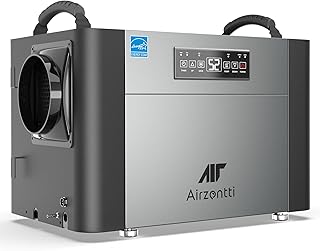
200 Pints Commercial Dehumidifier with Pump
When a 100-pint unit cannot keep up — a walkout basement with exposed concrete, a flood-prone utility room, or an attached garage — this 200-pint commercial unit fills the gap. The drainage hose attachment and auto-defrost make it genuinely hands-off, and the heavy-duty compressor handles the kind of sustained humidity spikes that would stall a residential model. Noise is noticeable, so place it away from living areas if you can.
305 Pints Commercial Dehumidifier with Pump
At 305 pints per day this is raw capacity wrapped in a commercial-grade shell, designed for warehouses, water-damage restoration crews, and seriously oversized basements. The built-in timer lets you schedule run cycles around off-peak electricity rates, and the auto-defrost function means it will not ice up even in unheated spaces during shoulder seasons. Overkill for most homes, but if you are drying out a 1,000-square-foot concrete slab after a pipe burst, nothing here moves water faster.
ALORAIR 70 Pint Helios MP35
Crawl spaces and compact basements do not need a tower of steel — they need a unit that fits through a tight access opening and still delivers serious dehumidification. The Helios MP35 checks both boxes at roughly 70 pints per day, and the six-year limited warranty is the longest in this roundup, which speaks volumes about the manufacturer’s confidence in the compressor. Portability is a real perk here: carry it in, connect the pump hose, and walk away.
5000 Sq Ft Dehumidifier with Pump, 100 Pint, Smart Humidity Control
Smart-humidity control sets this model apart for buyers who want set-it-and-forget-it operation: the unit monitors ambient conditions and adjusts fan speed and compressor cycling automatically, so it ramps down when the space is dry and ramps back up during rainy spells. Three drainage options — the pump, a gravity hose, and the built-in tank — give you flexibility that many competitors skip. It is a strong value pick if you want modern convenience without paying the premium the ENERGY STAR Most Efficient badge commands.
Frequently Asked Questions
How loud are dehumidifiers with built-in pumps?
Residential models like the 100-pint units typically run between 50 and 56 decibels — roughly the level of a running dishwasher. Commercial units pushing 200 or more pints can reach the low 60s. If noise matters, place the unit in an unfinished area or behind a louvered door and run it during hours when ambient household noise masks the compressor hum.
Can I run the drain hose uphill from the dehumidifier?
Yes, and that is the whole point of a pump-equipped model. Most residential pump units handle a vertical lift of about 14 to 16 feet, while commercial units can push higher. The key is using a clean, kink-free hose of the correct diameter — typically ⅝ inch — and keeping the run as short as practical to reduce strain on the pump motor.
How often should I clean or replace the filter?
In a standard basement environment, rinse the washable mesh filter every two to four weeks during peak use. If the space has construction dust, pet dander, or recent flood debris, check it weekly. A clogged filter reduces airflow, forces the compressor to work harder, and shortens the unit’s lifespan.
Do I need a dehumidifier rated above my basement’s square footage?
Almost always, yes. Manufacturer ratings assume warm, moderately humid conditions. Basements tend to be cooler and damper, which lowers the unit’s effective extraction rate. Aim for a capacity rating that covers at least 120 % of your actual floor area — more if the walls are uninsulated concrete or you are dealing with chronic water intrusion.
Final Thoughts
For most finished basements between 1,500 and 3,000 square feet, the 5000 Sq Ft ENERGY STAR Most Efficient 100-Pint Dehumidifier strikes the best balance of extraction power, energy efficiency, and hands-off operation. Homes dealing with serious moisture loads or oversized spaces should step up to the 200 Pints Commercial Dehumidifier with Pump, while owners of crawl spaces and tight utility areas will appreciate the compact footprint of the ALORAIR Helios MP35. All three deliver reliable pump-driven drainage that keeps you off the floor with a mop — which, frankly, is what you are really paying for.