Key takeaways
- Adjustable steam control: At least two or three heat/flow levels let you dial back output for moisture-sensitive surfaces.
- Quick heat-up time: Models that reach operating temperature in under 15 seconds spend less time dripping condensation on first contact. The 11-in-1 Steam Mop with handheld attachment heats in roughly 10 seconds, which keeps the first pass dry.
- Lightweight design: A mop under 5 lb (about 2.3 kg) reduces downward force on the floor. Heavier units — particularly all-in-one scrub models — are easier to push too hard and force water into joints.
- Quality microfibre pads: Shark’s Dirt Grip pads and BISSELL’s Soft Scrub pads are engineered to lift debris on light contact rather than requiring aggressive back-and-forth scrubbing.
- Cord length or cordless runtime: A 23 ft cord (like the 11-in-1 offers) eliminates mid-room outlet hops and keeps you moving at a steady pace, which is actually safer for laminate because standing in one spot concentrates heat and moisture.
What's inside
Steam mops promise a chemical-free deep clean, but laminate flooring demands a careful approach. Unlike ceramic tile or sealed stone, laminate is constructed from compressed fibreboard topped with a photographic layer and a resin coating. Expose it to too much moisture or heat, and the edges start to swell, the seams darken, and the surface loses its factory sheen. Choosing the right steam mop for laminate isn’t about raw power — it’s about precision steam delivery, adjustable settings, and a pad that cleans without gouging.
In this guide we walk through the factors that actually matter when shopping for a steam mop on laminate, recommend five standout models at different price points, and share field-tested tips so you can clean confidently without risking damage to your floor. Whether you’re tackling everyday kitchen spills or giving the whole ground floor a refresh, the advice below will help you pick the right tool and use it the right way.
As an Amazon Associate we earn from qualifying purchases.




Understanding Laminate and Moisture
Laminate planks are not waterproof by default — they are water-resistant at best. The HDF (high-density fibreboard) core absorbs liquid from the edges and joints, which is exactly where a mop applies the most pressure. A steam mop that pushes out too much water per minute will leave standing moisture in the seams before the heat has time to evaporate it. Look for models that produce a controlled, fine mist rather than a heavy wet output. Variable steam settings are not a luxury here; they are essential. You want to run the lowest effective setting on laminate and reserve higher modes for tile or vinyl in other rooms.
Key Features to Prioritise
- Adjustable steam control: At least two or three heat/flow levels let you dial back output for moisture-sensitive surfaces.
- Quick heat-up time: Models that reach operating temperature in under 15 seconds spend less time dripping condensation on first contact. The 11-in-1 Steam Mop with handheld attachment heats in roughly 10 seconds, which keeps the first pass dry.
- Lightweight design: A mop under 5 lb (about 2.3 kg) reduces downward force on the floor. Heavier units — particularly all-in-one scrub models — are easier to push too hard and force water into joints.
- Quality microfibre pads: Shark’s Dirt Grip pads and BISSELL’s Soft Scrub pads are engineered to lift debris on light contact rather than requiring aggressive back-and-forth scrubbing.
- Cord length or cordless runtime: A 23 ft cord (like the 11-in-1 offers) eliminates mid-room outlet hops and keeps you moving at a steady pace, which is actually safer for laminate because standing in one spot concentrates heat and moisture.
How We Chose the Five Recommendations
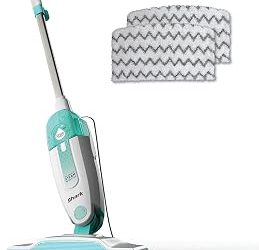
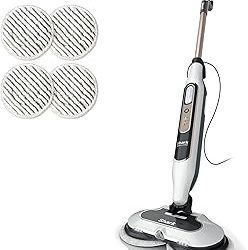
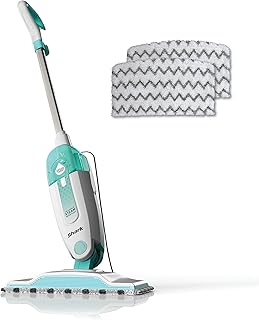
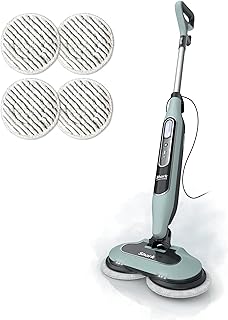
Each model in our picks earned its spot by meeting a specific use case. The Shark S1000 is the no-fuss lightweight option — a removable water tank, two washable Dirt Grip pads, and a narrow profile that slips under cabinets. The BISSELL PowerFresh 1940A adds a built-in scrubber for stuck-on messes and variable steam control, making it the best all-rounder for homes mixing laminate with tile. The 11-in-1 handheld converter shines for stairs, upholstery, and car interiors but still works cleanly on floors with its low-flow mode. The Shark Steam & Scrub S8001 brings LED headlights and an XL water tank for bigger jobs, though its scrubbing power is best reserved for sealed tile rather than delicate laminate. Finally, the pet-friendly 99.9% stain-removal model is the budget pick for households where muddy paw prints are the primary enemy — its chemical-free approach is genuinely safe for kids and pets.
Technique Matters More Than the Machine
Even the best steam mop can damage laminate if misused. Keep the head moving in a steady forward-and-back motion — never let it hover over one spot. Work in sections no wider than the mop head and overlap each pass slightly to avoid streaks. On laminate, always move with the grain direction of the planks so any residual moisture settles into the seams uniformly rather than pooling along an edge. After finishing a room, open a window or run a ceiling fan for 15–20 minutes to help any lingering surface moisture evaporate completely.
Tips
- Distilled water only. Tap water deposits minerals that clog steam jets and leave white residue on dark laminate. A $2 jug of distilled water lasts through multiple full-tank cleans.
- Test a hidden corner first. Run the mop on an inconspicuous area — under a couch or inside a closet — for a full minute and check for swelling before cleaning the visible floor.
- Change pads frequently. A saturated pad redistributes dirt instead of lifting it. Swap to a fresh pad every 100–150 square feet on a dirty floor.
- Avoid the “deep steam” button on laminate. That extra burst is designed for grout lines and sealed stone. On laminate it simply floods the seams with more moisture than the surface can handle.
Frequently Asked Questions
Can a steam mop warp laminate flooring?
It can if you use too much water or hold the mop stationary. Stick to the lowest steam setting, keep the head moving, and avoid edges and seams as turning points. Used correctly, a steam mop cleans laminate without damage.
How often should I steam mop my laminate floors?
Once a week is enough for most households. High-traffic areas like kitchens or entryways may benefit from twice-weekly touch-ups. Over-steam-cleaning accelerates wear on the protective resin layer.
Do I need special detergent for a steam mop?
No — and you should not add any. Steam mops are designed to clean with heated water alone. Adding soap or vinegar can void warranties and leave a sticky film that attracts more dirt.
Which of these five mops is best for pet owners?
The pet-friendly multi-purpose model stands out for its chemical-free sanitisation, but the BISSELL PowerFresh 1940A is also an excellent choice thanks to its Easy Scrubber for dried mud and the variable steam control that keeps floors dry around pet bowls.
Conclusion
Laminate floors reward the right steam mop used with restraint. Pick a lightweight model with adjustable steam — the Shark S1000 for simplicity, the BISSELL PowerFresh for versatility, or any of the multi-functional options if you need more than just floor cleaning — and follow the technique tips above. A clean floor and a long-lasting laminate finish are not mutually exclusive; they just require a mop that respects the surface it glides over.