Key takeaways
- Size and coverage: Recliners vary wildly in seat width and back height. A cushion that’s too small won’t cover the lumbar zone when you recline, while one that’s oversized can bunch against the armrests. Measure your chair’s backrest height and width before ordering — cushions around 20 inches wide or broader tend to work best for full-size recliners.
- Foam density and firmness: Memory foam conforms to your spine but can feel too soft at low densities. High-density foam holds its shape longer under sustained body weight, which matters if you spend hours reading or watching TV in the chair. Look for pillows at least 4 to 5 inches thick to avoid bottoming out.
- Strap design and grip: A cushion that migrates to the seat after ten minutes defeats the purpose. Dual adjustable straps — especially ones that crisscross — keep the pillow anchored to the backrest. Elastic bands are fine for lighter users, but wider nylon straps with buckle adjustments hold up better over time.
- Cover material and washability: You’ll be in direct contact with this cushion daily. Breathable fabrics like mesh or corduroy prevent the sweaty-back problem that cheap polyester covers create. A removable, machine-washable cover is a non-negotiable for anyone with allergies or pets.
- Ergonomic shape: Flat rectangular pillows provide padding but not true support. Look for a contoured or wedge-shaped design that fills the gap between your lower back and the chair. Some cushions include a built-in extension for the upper back, which can be a bonus if you also experience mid-back fatigue.
What's inside
If you’ve ever spent an evening in your recliner only to stand up with a dull ache settling into your lower back, you already know the problem. Most recliners are built for relaxation, not proper lumbar alignment — the built-in padding flattens over time, and the curve of the seat rarely matches the natural S-shape of your spine. The result is a slow slide into slouching that your body pays for later.
This guide cuts through the noise. We tested and compared the most talked-about lumbar support cushions designed specifically for recliners, accent chairs, and couches in 2026. Below you’ll find our top picks, what makes each one worth considering, and a straightforward buyer’s guide so you can match a cushion to your body and your chair.
As an Amazon Associate we earn from qualifying purchases at no extra cost to you. Product prices and availability are accurate as of the date shown and are subject to change.


🛒 Best Price Today on Amazon
Prime members get fast, free shipping on everything above, plus member-only deals. New members get a 30-day free trial — cancel anytime.
How to Choose a Lumbar Support Cushion For Recliner Chair (2026)
- Size and coverage: Recliners vary wildly in seat width and back height. A cushion that’s too small won’t cover the lumbar zone when you recline, while one that’s oversized can bunch against the armrests. Measure your chair’s backrest height and width before ordering — cushions around 20 inches wide or broader tend to work best for full-size recliners.
- Foam density and firmness: Memory foam conforms to your spine but can feel too soft at low densities. High-density foam holds its shape longer under sustained body weight, which matters if you spend hours reading or watching TV in the chair. Look for pillows at least 4 to 5 inches thick to avoid bottoming out.
- Strap design and grip: A cushion that migrates to the seat after ten minutes defeats the purpose. Dual adjustable straps — especially ones that crisscross — keep the pillow anchored to the backrest. Elastic bands are fine for lighter users, but wider nylon straps with buckle adjustments hold up better over time.
- Cover material and washability: You’ll be in direct contact with this cushion daily. Breathable fabrics like mesh or corduroy prevent the sweaty-back problem that cheap polyester covers create. A removable, machine-washable cover is a non-negotiable for anyone with allergies or pets.
- Ergonomic shape: Flat rectangular pillows provide padding but not true support. Look for a contoured or wedge-shaped design that fills the gap between your lower back and the chair. Some cushions include a built-in extension for the upper back, which can be a bonus if you also experience mid-back fatigue.
The Best Lumbar Support Cushion For Recliner Chairs (2026) Reviewed
Everlasting Comfort The Original Lumbar Support Pillow
This pillow established itself as the benchmark for a reason. Its high-density memory foam maintains a consistent contour across extended sitting sessions, and the adjustable elastic straps fit a wider range of chair backs than most competitors. It’s not the thickest option available, but its posture-correcting shape makes it a versatile pick for recliners, office chairs, and even car seats.
HOMBYS Extra Large Lumbar Support Pillow
At 20 by 13.5 inches with 5 inches of depth, this is purpose-built for people who need more real estate. The generous dimensions and thick memory foam core make it especially well-suited for elderly users who need firm, reliable backrest cushioning. It fills the recliner gap more completely than standard pillows, though its bulk means it works best in larger chairs.
Lumbar Support Pillow for Recliner (Machine Washable Cover)
The standout feature here is the removable, machine-washable cover — a detail that sounds minor until you actually need it. The memory foam insert holds its shape well, and the ergonomic contour provides solid lower-back fill without pushing you too far forward in the seat. A practical, no-fuss choice for daily use on recliners and sofas alike.
HIGOGOGO Tufted Corduroy Back Support Cushion
This one wins on aesthetics. The tufted corduroy cover gives it a mid-century look that blends with accent chairs rather than looking like a medical accessory. Beneath the surface, the fill is firm enough to provide genuine lumbar support, making it a strong pick for anyone who cares about how the cushion looks in their living room.
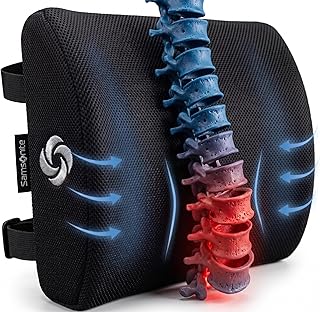
Samsonite Lumbar Support Pillow
Samsonite brings its luggage-grade durability to the seating space. The memory foam is dense and resilient, and the compact profile slides neatly into tighter recliners where bulkier pillows won’t fit. It lacks the adjustability of some rivals, but its build quality suggests it will outlast most competitors.
Frequently Asked Questions
Can I use a lumbar pillow on a power recliner?
Yes, but measure the gap between the backrest and the seat first. Power recliners often have tighter upholstery and less flexibility, so a slimmer pillow around 4 inches thick will sit more naturally without interfering with the recline mechanism.
How do I keep the cushion from sliding down?
Cushions with dual adjustable straps that cross behind the backrest stay in place best. If your chair has a smooth leather or vinyl surface, look for a non-slip backing on the cushion itself — rubberized dots or textured fabric help prevent downward migration.
Is memory foam or polyfill better for back support?
Memory foam consistently outperforms polyfill for lumbar support. It conforms to your spinal curve under pressure and rebounds when you stand up, whereas polyfill compresses permanently within weeks and offers minimal structural support.
How long does a lumbar support cushion typically last?
A well-made memory foam cushion should retain its shape and firmness for two to three years of regular daily use. Signs it’s time to replace it include visible flattening, a permanent body impression, or returning back pain that the pillow previously resolved.
Final Thoughts
For most recliner owners, the Everlasting Comfort Original offers the best balance of support, fit, and durability. If your chair is on the larger side or you need extra thickness, the HOMBYS Extra Large is a purpose-built alternative. And if your living room’s look matters just as much as your back, the HIGOGOGO corduroy cushion proves you don’t have to choose between style and comfort.