Key takeaways
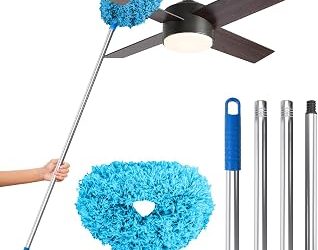
- Adjustable reach: Look for a tool that extends to at least 48 inches. If your ceilings are 9 feet or taller, consider a model like the 6-foot extension pole duster that reaches up to 72 inches so you never need a step stool.
- Microfiber quality: Dense, soft microfiber picks up dust without scratching the blade finish. Cheap, thin pads tend to push dust around rather than trapping it.
- Removable, washable heads: A reusable duster pays for itself quickly. Check that the microfiber pad detaches easily for laundering.
- Flexible or bendable heads: Some blades are slightly curved. A duster with a bendable head — like the 3 Pcs Fan Cleaning Brush set — conforms to the blade’s shape for a more thorough pass.
What's inside
Most people don’t notice how grimy their ceiling fan blades get until the blades start visibly shedding dust every time the fan spins. That gray fuzz isn’t just ugly — it clogs the motor over time, lowers airflow efficiency, and pushes fine particles around the room every time you turn the fan on. If you’ve been meaning to tackle this chore properly, the good news is that it takes the right approach and the right tool, not a lot of effort or a tall ladder.
This guide walks you through exactly how to clean ceiling fan blades without making a mess or straining your back, and it covers what to look for if you’re shopping for a dedicated fan-cleaning duster. We’ve tested and compared popular options so you can pick one that fits your ceiling height, your fan type, and your cleaning style.
As an Amazon Associate we earn from qualifying purchases.


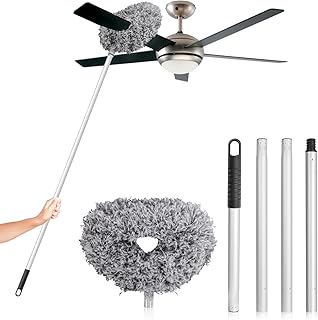
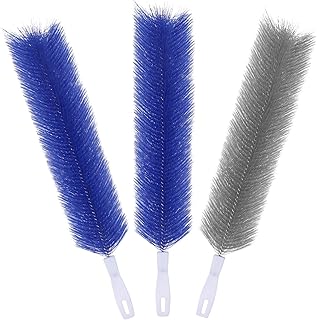
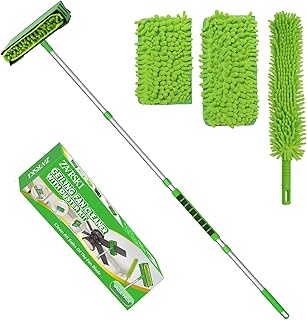
Our recommended picks — see prices and availability on Amazon.
Why Dirty Fan Blades Are Worth Your Attention
Ceiling fan blades act as dust magnets because of static charge and constant air circulation. As the fan runs, it pulls airborne particles toward the blades, where they settle into a sticky layer of lint, pet dander, and household grime. If you’ve ever seen a fine ring of dust on the ceiling around your fan, that’s a sign the buildup has gotten serious. Beyond air quality, a heavy dust load on the blades forces the motor to work harder, which can shorten the fan’s lifespan and increase energy consumption.
Step-by-Step: How to Clean Ceiling Fan Blades
Step 1: Power off the fan. Turn it off at the switch and wait until the blades come to a complete stop. This sounds obvious, but rushing this step is how people get smacked in the forehead.
Step 2: Lay down protection. Spread a drop cloth, old bedsheet, or a few layers of newspaper on the floor directly beneath the fan. This catches the dust waterfall that inevitably happens and saves you a second round of cleaning.
Step 3: Attach your duster to an extension pole. Most microfiber fan dusters — like the DRQ Ceiling Fan Cleaner or the SetSail Ceiling Fan Cleaner — come with telescoping poles that reach from about 13 inches up to 48 inches. Extend the pole to a comfortable length so you can reach the blades while standing firmly on the floor.
Step 4: Sweep each blade from base to tip. Press the microfiber head flat against the top of the blade and pull it outward in one smooth motion. Gravity helps here — pulling toward the tip means the dust falls away from you. Flip the duster and do the bottom edge, too.
Step 5: Wipe the blade arms and motor housing. Most people forget these areas, but the small brackets that hold each blade collect dust just as aggressively. Use the duster’s tip or a damp microfiber cloth for these tighter spots.
Step 6: Shake out or wash your duster. If you’re using a washable microfiber duster — like the FONUNO Ceiling Fan Cleaner — toss the head in the washing machine on a gentle cycle. Skip fabric softener; it coats the microfibers and reduces their dust-grabbing ability.
What to Look for When Buying a Fan Cleaning Tool
- Adjustable reach: Look for a tool that extends to at least 48 inches. If your ceilings are 9 feet or taller, consider a model like the 6-foot extension pole duster that reaches up to 72 inches so you never need a step stool.
- Microfiber quality: Dense, soft microfiber picks up dust without scratching the blade finish. Cheap, thin pads tend to push dust around rather than trapping it.
- Removable, washable heads: A reusable duster pays for itself quickly. Check that the microfiber pad detaches easily for laundering.
- Flexible or bendable heads: Some blades are slightly curved. A duster with a bendable head — like the 3 Pcs Fan Cleaning Brush set — conforms to the blade’s shape for a more thorough pass.
Do You Need a Ladder to Clean a Ceiling Fan?
With a well-designed extension-pole duster, almost certainly not. Modern fan-cleaning tools are engineered so you can stand on the floor and still reach blades at standard ceiling heights (8 to 10 feet). A tall step ladder might feel safer to some people, but it introduces fall risk and still leaves you wrestling with awkward angles. The extension-pole approach is faster, safer, and less stressful — especially if you’re cleaning multiple fans in one session.
How Often Should You Clean Ceiling Fan Blades?
For most homes, once every two to three months keeps dust under control and maintains decent air quality. If you have pets that shed, run the fan daily, or live in a dusty climate, bump that up to monthly. A quick monthly pass with a duster takes five minutes and prevents the kind of heavy buildup that demands a deep clean later.
Tips
- Work top-down. Always start with the highest blades and work your way around. Dropping dust onto already-cleaned blades defeats the purpose.
- Rotate the fan by hand. After cleaning one blade, gently push the fan to bring the next blade within reach. Never let the fan spin freely while you’re working near it.
- Avoid wet-cleaning unless necessary. A dry microfiber duster handles most buildup. If there’s a greasy layer (common in kitchens), lightly dampen the duster — don’t soak it.
- Store your duster properly. Crushing or folding a microfiber head in a drawer crushes the fibers over time. Hang it or store it flat to keep its shape and effectiveness.
Frequently Asked Questions
Can I use a regular duster to clean ceiling fan blades?
You can, but a standard feather duster or flat duster isn’t shaped to wrap around the blade profile. You’ll end up making multiple passes and still leaving dust behind. A dedicated fan-cleaning duster with a curved or bendable head is designed to grip the blade surface in one sweep, which saves time and gives a better result.
Will microfiber scratch my fan blade finish?
High-quality microfiber — the kind used in products like the DRQ or SetSail dusters — is extremely soft and will not scratch painted, wood, or metal blade finishes. The risk comes from abrasive pads or rough cloths. Stick to microfiber specifically labeled for dusting and you’ll be fine.
What if my ceilings are over 10 feet tall?
Look for a duster with a longer extension range. Several models extend to 50 inches, and at least one option reaches a full 72 inches (6 feet). Combine that with your own arm reach, and you can clean fans on ceilings up to about 12 feet without a ladder.
Do I need to clean the ceiling around the fan, too?
Yes — the ceiling immediately surrounding the fan usually has a visible dust ring. After you finish the blades, run your duster (or a damp cloth on a pole) over that area. It takes an extra minute and makes the whole job look complete.
Conclusion
Cleaning ceiling fan blades is one of those maintenance tasks that pays off disproportionate to the effort — better air quality, a quieter fan, and a room that simply looks more cared for. With a decent microfiber duster on an extension pole, the right technique, and a regular schedule, you can keep your fans running clean and efficient all year without breaking a sweat or climbing a single step.