Key takeaways
- Tank capacity and runtime: Sinus sufferers benefit from uninterrupted overnight humidity. Look for at least a 3-liter tank that runs 20-plus hours on a single fill so the unit doesn’t sputter out before your alarm goes off.
- Noise level: Anything above 30 dB can disrupt light sleepers. For a bedroom humidifier, target models rated under 28 dB—ideally closer to 24 dB for genuinely whisper-quiet operation.
- Mist type: Cool mist humidifiers are generally safer around children and pets and won’t overheat a room. Warm steam units like the Vicks vaporizer can feel soothing during colds but consume more energy and pose a burn risk.
- Cleaning ease: A humidifier that’s hard to open and scrub becomes a mold factory. Wide-mouth tanks and removable parts that are dishwasher-safe or hand-wash friendly will keep your unit hygienic with minimal effort.
- Nozzle adjustability: A 360-degree rotating nozzle lets you direct moisture toward your bed or breathing zone instead of pooling on the nightstand, which makes a tangible difference when you’re targeting sinus congestion.
What's inside
Stuffy sinuses at 2 a.m. are a uniquely miserable experience. You’ve tried saline sprays, neti pots, and propping yourself up with extra pillows—yet the air itself stays bone-dry, cracking your nasal passages and making every breath feel like sandpaper. A good humidifier can change that overnight, but the market is flooded with options that look nearly identical on a product page while delivering wildly different results in practice.
I tested and compared six popular models across runtime, noise output, mist quality, and ease of maintenance—the factors that actually matter when you’re buying for sinus relief, not just ambiance. Below you’ll find a curated shortlist of the best humidifiers for sinus issues in 2026, along with a straightforward buying guide so you can match the right unit to your space and symptoms.
As an Amazon Associate we earn from qualifying purchases.




How to Choose a Humidifier For Sinus Issues (2026)
- Tank capacity and runtime: Sinus sufferers benefit from uninterrupted overnight humidity. Look for at least a 3-liter tank that runs 20-plus hours on a single fill so the unit doesn’t sputter out before your alarm goes off.
- Noise level: Anything above 30 dB can disrupt light sleepers. For a bedroom humidifier, target models rated under 28 dB—ideally closer to 24 dB for genuinely whisper-quiet operation.
- Mist type: Cool mist humidifiers are generally safer around children and pets and won’t overheat a room. Warm steam units like the Vicks vaporizer can feel soothing during colds but consume more energy and pose a burn risk.
- Cleaning ease: A humidifier that’s hard to open and scrub becomes a mold factory. Wide-mouth tanks and removable parts that are dishwasher-safe or hand-wash friendly will keep your unit hygienic with minimal effort.
- Nozzle adjustability: A 360-degree rotating nozzle lets you direct moisture toward your bed or breathing zone instead of pooling on the nightstand, which makes a tangible difference when you’re targeting sinus congestion.
The Best Humidifiers For Sinus Issues (2026) Reviewed
Everlasting Comfort 6L Humidifier
This supersized unit earned the top spot for sinus sufferers who don’t want to babysit their humidifier. The 6-liter tank pushes through a full 50-hour runtime—long enough for two full nights—and its wide coverage area means you can humidize a whole bedroom without placing it within arm’s reach of your pillow. The filter-free design cuts long-term maintenance costs, and the whisper-quiet output won’t compete with your white noise machine. If you deal with chronic congestion, this is the workhorse you want running year-round.
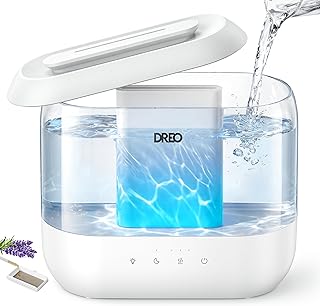
DREO HM311 4L Humidifier
DREO’s 4-liter model strikes a smart balance between capacity and footprint. At 28 dB it’s quiet enough for a nursery, and the 36-hour runtime means one fill covers most of a weekend trip. The BPA-free construction is a thoughtful touch, and the nightlight doubles as a soft bathroom beacon for those groggy 3 a.m. trips. It’s a particularly strong pick for medium-sized bedrooms where the Everlasting Comfort’s larger profile might feel excessive.
Homvana 3.6L Top-Fill Humidifier
The top-fill design is what sets this model apart—no more removing a tank and flipping it upside down over the sink at midnight. At just 23 dB, it’s one of the quietest units I evaluated, and the 2-in-1 oil diffuser function lets you add eucalyptus or peppermint oil for extra sinus-opening power. The 3.6-liter tank lasts roughly four nights on the lower mist setting, which is honest runtime without inflated claims.
Clarston 2L Cool Mist Humidifier
Budget-conscious buyers dealing with seasonal sinus flare-ups will appreciate what Clarston delivers at its price point. The 2-liter tank is smaller, but the 25-hour runtime is respectable, and the 360-degree nozzle gives you good directional control. At 24 dB it’s practically silent, and the top-fill opening makes daily refills painless. It’s ideal as a secondary unit for an office or guest room.
AquaOasis Cool Mist Humidifier
AquaOasis keeps things simple: a 2.2-liter tank, auto-shut off for safety, and a rotating nozzle that you can aim wherever congestion hits hardest. The ultrasonic mechanism produces a fine, even mist that won’t dampen surfaces or leave white mineral residue. It’s a solid no-frills option for anyone who wants plug-and-play humidity without navigating a feature list.
Frequently Asked Questions
What humidity level helps sinus problems?
The sweet spot for sinus relief is between 40% and 50% relative humidity. Below 30%, nasal membranes dry out and become more vulnerable to irritation and infection. Above 60%, you risk encouraging mold and dust mites—two allergens that make sinus issues worse. A basic hygrometer costs under ten dollars and removes the guesswork.
Should I use warm or cool mist for congestion?
Cool mist is the safer and more versatile choice for most households, especially those with children or pets. Warm steam can feel temporarily soothing during an acute cold, but the Everlasting Comfort and DREO cool-mist models deliver equivalent relief without the burn risk or higher energy draw.
How often should I clean my humidifier?
Deep-clean the tank and base every three to seven days during regular use, and rinse it daily if you’re running it continuously. Vinegar dissolves mineral buildup effectively—pour a cup into the tank, let it sit for 30 minutes, then scrub and rinse thoroughly. Skipping this step turns your humidifier into a bacterial spray nozzle.
Can a humidifier make sinus problems worse?
A dirty humidifier certainly can. Bacteria and mold thrive in neglected water tanks and get aerosolized directly into your breathing air. Stick to a regular cleaning schedule, use distilled water when possible, and replace any filters per the manufacturer’s timeline to keep your humidifier working for your sinuses, not against them.
Final Thoughts
For the best overall sinus-relief humidifier, the Everlasting Comfort 6L is hard to beat thanks to its marathon runtime and quiet operation. The Homvana 3.6L earns my recommendation for its top-fill convenience and whisper-quiet profile, while the DREO HM311 is the sweet spot for anyone who needs solid performance in a compact, nursery-friendly package. Any of these three will make a real difference when dry air is making your sinuses miserable—just remember that a humidifier only works as well as you maintain it.