Key takeaways
- Window fit: Measure the clear opening, not just the sash or frame. Casement units need enough height and width for the cabinet, while portable models need space for a hose panel.
- Cooling capacity: Match BTUs to the room rather than choosing the largest model available. A 10,000-BTU unit generally suits roughly 400 to 450 square feet, depending on sunlight, insulation, and ceiling height.
- Installation: Casement air conditioners usually require a support bracket and a vertical filler panel. Confirm that the included hardware suits your window and that the unit can be safely supported outdoors.
- Controls and comfort: A remote, timer, sleep mode, adjustable fan speeds, and a thermostat that senses room temperature can make a noticeable difference overnight.
- Noise and efficiency: Look for quiet operation if the unit will run in a bedroom. Inverter technology can reduce cycling and energy use, although the purchase price and installation requirements may be higher.
What's inside
Casement windows create a frustrating air-conditioning problem: most window units are designed for wide, vertically sliding openings, while crank-out windows are tall, narrow, and difficult to seal around. A poorly matched unit can waste energy, admit hot air, or require an improvised installation that feels anything but secure.
This guide focuses on the features that matter in real homes, including casement compatibility, cooling capacity, noise, controls, installation flexibility, and room size. It also includes a few non-casement alternatives that may suit renters or households willing to use a portable or modified-window setup.
As an Amazon Associate we earn from qualifying purchases.



How to Choose a Casement Window Air Conditioner (2026)
- Window fit: Measure the clear opening, not just the sash or frame. Casement units need enough height and width for the cabinet, while portable models need space for a hose panel.
- Cooling capacity: Match BTUs to the room rather than choosing the largest model available. A 10,000-BTU unit generally suits roughly 400 to 450 square feet, depending on sunlight, insulation, and ceiling height.
- Installation: Casement air conditioners usually require a support bracket and a vertical filler panel. Confirm that the included hardware suits your window and that the unit can be safely supported outdoors.
- Controls and comfort: A remote, timer, sleep mode, adjustable fan speeds, and a thermostat that senses room temperature can make a noticeable difference overnight.
- Noise and efficiency: Look for quiet operation if the unit will run in a bedroom. Inverter technology can reduce cycling and energy use, although the purchase price and installation requirements may be higher.
The Best Casement Window Air Conditioner (2026)s Reviewed
Perfect Aire 10,000 BTU Casement Window Air Conditioner
The Perfect Aire is the most straightforward choice for a genuine crank-out or sliding-casement installation. Its 10,000 BTUs are a sensible match for medium-size rooms, while the remote with Follow Me, digital display, timer, and multiple operating modes make everyday temperature control pleasantly simple.
ELEMENT ESC10BE 10,000 BTU Casement Air Conditioner
ELEMENT’s 10,000-BTU casement unit is a practical option for shoppers who want a purpose-built vertical-window design without paying for extensive smart-home features. It is best suited to a bedroom, office, or living space around 450 square feet, provided the opening and support requirements match the installation instructions.
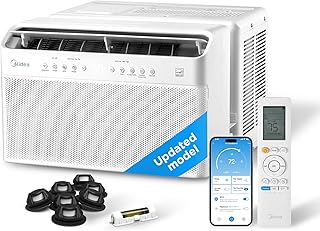
Midea 10,000 BTU U-Shaped Smart Inverter Window Air Conditioner
Midea’s U-shaped design is not a conventional casement unit, but it is worth considering where the window configuration can accommodate it or where a custom installation is appropriate. Its inverter compressor, low-noise operation, open-window flexibility, and Alexa and Google Assistant compatibility make it especially appealing for energy-conscious households.
Air Choice 10,000 BTU Portable Air Conditioner
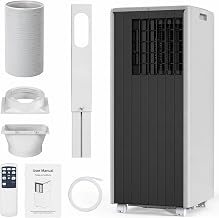
For renters or homes where a casement window unit cannot be safely mounted, the Air Choice portable model is the easiest workaround. It offers cooling for rooms up to 450 square feet, plus dehumidifying, fan operation, sleep mode, a remote, and a 24-hour timer; expect somewhat more floor and hose clutter than with a window installation.
BLACK+DECKER 12,000 BTU BWAC12WTB Window Air Conditioner
This BLACK+DECKER is a conventional window unit rather than a casement model, so it is primarily a comparison choice for homes with a compatible double-hung window nearby. Its higher cooling capacity, remote, three cooling speeds, and fan-only mode make it useful for spaces up to about 550 square feet, but it should not be forced into a narrow crank-out opening.
Frequently Asked Questions
Can a standard window air conditioner be installed in a casement window?
Usually not without significant modification. Standard units are wide and rely on a double-hung window sash to hold them in place, whereas casement windows need a vertical cabinet, dedicated support hardware, and a sealed filler panel. A purpose-built casement model or portable air conditioner is generally safer.
Is a portable air conditioner better for a crank-out window?
It is often the most practical alternative, especially in a rental. The exhaust hose can connect to a temporary panel fitted into the opening, but sealing matters: gaps around the panel allow hot air and humidity back into the room and reduce cooling performance.
What size air conditioner is suitable for a bedroom?
For a typical insulated bedroom, 8,000 BTUs may handle up to roughly 350 square feet, while 10,000 BTUs is more appropriate for approximately 400 to 450 square feet. Add capacity for strong afternoon sun, poor insulation, high ceilings, or several occupants, but avoid substantially oversized units that cool too quickly without removing enough humidity.
Do casement air conditioners need a support bracket?
Yes. These units are heavy and should never be held solely by the window frame or filler panel. Use the supplied bracket or an approved compatible support system, follow the installation guide carefully, and have a professional install it if the exterior access or mounting surface is difficult.
Final Thoughts
The Perfect Aire is the strongest all-around pick for a true casement installation, while the ELEMENT ESC10BE is a sensible purpose-built alternative. If mounting a window unit is impractical, the Air Choice portable model offers the most flexible solution; for compatible non-casement windows, Midea’s quiet inverter design is the standout upgrade.