Key takeaways
- Check the connection: Most home dehumidifiers use a 3/4-inch female hose thread (FHT) outlet, but confirm your manual or inspect the drain port before ordering.
- Measure the route: Choose a hose long enough to reach the drain with a little slack, not so much that excess tubing loops across the floor or creates a trip hazard.
- Look for kink resistance: A flattened or sharply bent hose can restrict drainage and cause water to back up into the collection bucket.
- Consider the fittings: Brass or rust-resistant connectors are useful in damp utility areas because they tend to feel sturdier and hold threads securely during installation.
- Plan the slope: Gravity drainage works best when the hose runs continuously downhill to a floor drain, sump, standpipe, or other suitable outlet.
What's inside
A dehumidifier can quietly fill its tank several times a day, especially in a basement, laundry room, or humid bedroom. Emptying that tank is manageable for a weekend, but it quickly becomes a nuisance—and a missed emptying can stop the appliance or leave standing water on the floor. A continuous-drain hose is the simple fix, provided it fits securely and follows a dependable path to the drain.
This guide focuses on the details that matter in everyday home use: connector size, hose length, flexibility, leak resistance, and how easily each option can be routed without kinks. The selections below cover common 3/4-inch FHT dehumidifier outlets, with practical notes to help you choose a hose that suits your appliance and room layout.
As an Amazon Associate we earn from qualifying purchases.




How to Choose a Dehumidifier Drain Hose (2026)
- Check the connection: Most home dehumidifiers use a 3/4-inch female hose thread (FHT) outlet, but confirm your manual or inspect the drain port before ordering.
- Measure the route: Choose a hose long enough to reach the drain with a little slack, not so much that excess tubing loops across the floor or creates a trip hazard.
- Look for kink resistance: A flattened or sharply bent hose can restrict drainage and cause water to back up into the collection bucket.
- Consider the fittings: Brass or rust-resistant connectors are useful in damp utility areas because they tend to feel sturdier and hold threads securely during installation.
- Plan the slope: Gravity drainage works best when the hose runs continuously downhill to a floor drain, sump, standpipe, or other suitable outlet.
The Best Dehumidifier Drain Hose (2026)s Reviewed
12FT Dehumidifier Drain Hose with Brass Fittings
This 12-foot option is a sensible choice when the dehumidifier sits well away from a floor drain or utility sink. Its rust-resistant brass fitting should provide a reassuringly solid connection, while the extra reach gives you more flexibility when positioning furniture and appliances. Measure carefully before buying, since unused hose can be harder to manage neatly.
5-Foot No-Kink Black Dehumidifier Hose
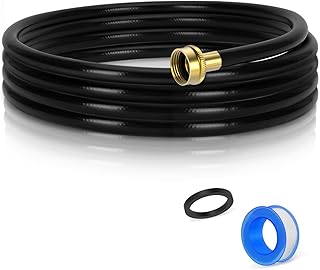
The Dehumidifier Hose, ¾ Inch FHT Connection, No Kink, 5 Feet, Black is a straightforward pick for compact setups. Its shorter length helps keep the installation tidy, and the black finish is less visually distracting behind shelving or beside dark appliances. It is best suited to a nearby drain rather than a cross-room run.
Multi-Length Dehumidifier Drain Hose with Brass Connector
This seven-length-option version is useful when you know the fitting you need but are uncertain about the ideal reach. The 3/4-inch FHT connector and rust-resistant brass construction emphasize secure installation, while the range of sizes can help avoid both a stretched hose and an unnecessarily long coil.
5FT Thickened Leakproof Dehumidifier Hose
The 5FT Dehumidifier Drain Hose with a 3/4-inch FHT connector is designed for a short, direct route and emphasizes a thicker hose body with a rustproof connector. It makes sense for a basement dehumidifier placed close to a drain, where a firm connection and minimal excess tubing are more valuable than extra reach.
5FT Dehumidifier Hose with Premium Brass Connectors
This 5-foot drainage hose keeps the setup simple while adding premium brass connectors at the connection point. It is a practical match for common dehumidifier brands and nearby drains, particularly if you prefer a compact installation that does not leave a long length of tubing lying behind the appliance.
Frequently Asked Questions
What size hose do most dehumidifiers use?
Many residential models use a 3/4-inch female hose thread, commonly described as 3/4-inch FHT. Compatibility is not universal, however, so check the dehumidifier manual or manufacturer specifications before purchasing.
Does a dehumidifier drain hose need to slope downhill?
Usually, yes. Most continuous-drain systems rely on gravity, so the hose should leave the appliance and travel steadily downward. Avoid high loops, sharp bends, or sections where water can collect.
Can I use a garden hose instead?
A garden hose may have a similar nominal size, but its connector and thread pattern may not match the dehumidifier outlet. A purpose-made hose with the correct FHT fitting is generally easier to install and less likely to require adapters.
How do I prevent leaks at the connection?
Thread the fitting on straight by hand first, then tighten it carefully without forcing it. Keep the hose supported, avoid sideways strain on the drain port, and test the setup with the appliance running before leaving it unattended.
Final Thoughts
For long runs, the 12FT Dehumidifier Drain Hose with Brass Fittings offers useful reach; for compact installations, the 5-foot no-kink hose is easier to keep orderly. The multi-length brass-connector option is the most flexible choice when your room layout is difficult to predict. Whichever you choose, accurate measuring and a continuous downhill route matter just as much as the hose itself.