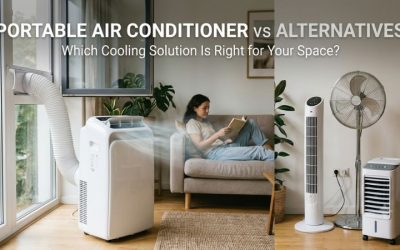
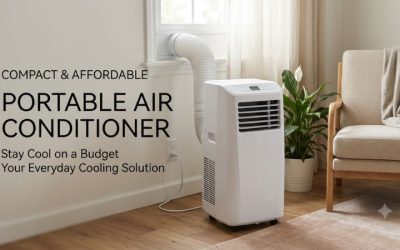
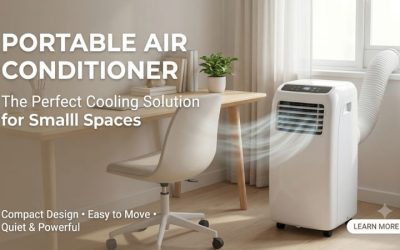
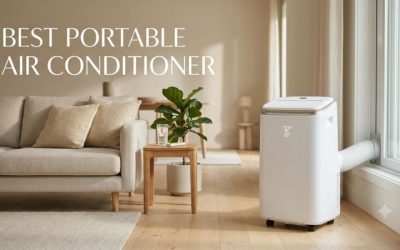
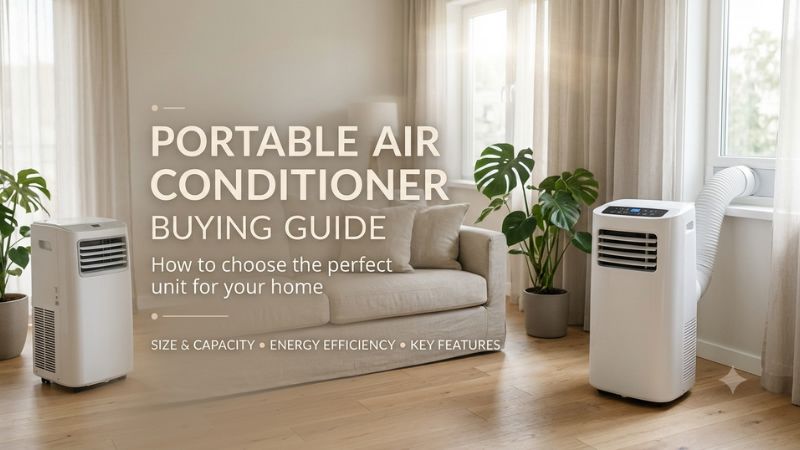
This portable air conditioner buying guide explains how to select cooling equipment that matches your room, budget, and daily comfort requirements. Understanding standardized cooling capacity, compressor technology, exhaust configurations, electrical compatibility, and maintenance can help you avoid expensive purchasing mistakes.
What to know before buying a portable air conditioner
Portable air conditioners provide localized refrigerated cooling without requiring permanent installation of a central air conditioning system. They are particularly useful in rental properties, apartments, home offices, bedrooms, and residential spaces where existing cooling equipment cannot maintain comfortable temperatures.
However, portability does not mean installation-free operation. Conventional portable air conditioners require suitable electrical connections, adequate airflow, and an appropriate method of releasing accumulated heat outside the conditioned room.
Understand how portable air conditioners work
A portable air conditioner uses a refrigeration cycle to transfer heat from indoor air. Warm room air passes over an evaporator coil, where refrigerant absorbs heat. The cooled air then returns to the occupied space.
The refrigeration system moves absorbed heat toward a condenser, where it is released into another airflow stream. An exhaust hose directs the heated air outside through an approved window or ventilation arrangement.
Moisture can also condense on the evaporator during cooling. Depending on the model, collected water may be partially evaporated into the exhaust airflow, stored temporarily, or discharged through an appropriate drainage connection.
The principal components generally include:
- A compressor that circulates refrigerant.
- An evaporator that absorbs indoor heat.
- A condenser that releases accumulated heat.
- Fans that move air through the system.
- Temperature sensors and operating controls.
- An exhaust hose and compatible installation components.
- A condensate management system.
Understanding these components helps explain why portable cooling equipment needs adequate airflow and proper installation to function effectively.
Determine whether portable cooling is appropriate for your home
Portable air conditioners are particularly attractive when homeowners cannot install window-mounted equipment or permanent ductless systems.
Renters may appreciate the ability to remove the appliance and its approved installation components when moving to another property. Homeowners may use portable equipment to supplement central air conditioning in rooms experiencing uneven temperatures.
Common applications include bedrooms with insufficient central cooling, converted garages with appropriate installation conditions, home offices containing heat-producing electronics, and guest rooms requiring occasional temperature control.
However, portable equipment may not be the most economical solution when permanent cooling installation is permitted. Window air conditioners and ductless mini-split systems can offer important advantages in efficiency, noise management, and floor-space utilization.
Distinguish portable air conditioners from evaporative coolers
Some products marketed as portable cooling devices do not contain conventional refrigeration systems.
Evaporative coolers use water evaporation to reduce the temperature of an airflow stream. Their effectiveness depends heavily on environmental humidity and ventilation conditions.
A conventional refrigerated portable air conditioner actively transfers heat outside the room. An evaporative cooler introduces moisture into the air during its cooling process.
These technologies should not be treated as interchangeable.
Before purchasing a product advertised as a hose-free portable air conditioner, determine whether it uses refrigeration, evaporative cooling, or ordinary fan operation.
An inexpensive personal cooling device may provide localized comfort without meaningfully reducing the temperature of an entire room.
How to choose the correct cooling capacity
Cooling capacity is one of the most important specifications when selecting a portable air conditioner. An appropriately sized appliance should provide sufficient heat removal under expected operating conditions without unnecessary purchase expenses or excessive physical dimensions.
Understand BTU cooling ratings
A British thermal unit is a measurement of thermal energy. Air conditioning capacity is generally expressed in BTU per hour, indicating the rate at which equipment removes heat under specified evaluation conditions.
Portable air conditioners frequently display both ASHRAE and DOE cooling ratings. The ASHRAE figure is generally higher, while the DOE Seasonally Adjusted Cooling Capacity provides a useful standardized comparison for portable equipment.
These ratings use different measurement approaches. Buyers should avoid interpreting them as equivalent.
| Specification | Meaning | Purchasing relevance |
|---|---|---|
| ASHRAE cooling capacity | Capacity under applicable ASHRAE conditions | Useful when compared consistently |
| DOE/SACC capacity | Seasonally adjusted portable cooling capacity | Important for portable equipment selection |
| Electrical input | Power consumption expressed in watts | Helps estimate operating expenses |
| CEER | Combined energy-efficiency ratio | Supports standardized efficiency comparisons |
| Advertised room coverage | Manufacturer-estimated application area | Preliminary sizing reference |
A portable appliance advertised with 14,000 BTU ASHRAE capacity may have a substantially lower SACC rating. Always identify which measurement appears in a product listing.
Measure the room before shopping
Begin by measuring the length and width of the intended cooling area. Multiply these measurements to calculate floor area.
A room measuring 15 feet by 20 feet contains 300 square feet. This information provides an initial reference for evaluating appliance capacity.
However, floor area alone does not account for every factor affecting heat transfer. Ceiling height, insulation, outdoor temperatures, window exposure, occupancy, and adjacent spaces can substantially influence cooling requirements.
An enclosed room with ordinary insulation generally presents a different cooling challenge than an open loft with large windows and vaulted ceilings.
Determine the complete accessible space that the appliance must condition before comparing products.
Use preliminary capacity ranges
The following capacity ranges provide general shopping references for portable residential air conditioners. They should not replace a formal cooling-load assessment when building conditions are unusually demanding.
| Room area | SACC capacity worth evaluating |
|---|---|
| Under 150 square feet | 4,000–5,000 BTU |
| 150–250 square feet | 5,000–6,000 BTU |
| 250–350 square feet | 6,000–8,000 BTU |
| 350–450 square feet | 8,000–10,000 BTU |
| 450–550 square feet | 10,000–12,000 BTU |
| Larger or interconnected spaces | High-capacity equipment or professional assessment |
These ranges are illustrative rather than guaranteed coverage limits. Compare the manufacturer’s sizing guidance and evaluate the actual room conditions.
A smaller room with substantial sunlight may require more cooling capacity than a larger shaded room.
Account for ceiling height and room volume
Rooms with high ceilings generally contain more air than rooms with conventional ceiling heights. Their building surfaces and temperature distribution can also create different cooling requirements.
A portable air conditioner positioned on the floor may produce noticeable cooling near the occupied area while warmer air accumulates elsewhere in a tall room.
Suitable air circulation can help improve temperature distribution. Nevertheless, additional air movement does not increase the refrigeration capacity of the appliance.
Buyers with vaulted ceilings, lofts, and converted attic spaces should avoid relying exclusively on ordinary square-footage recommendations.
Consider sunlight and outdoor temperature
Solar heat entering through windows can substantially increase indoor cooling demand. Rooms exposed to direct afternoon sunlight often experience greater temperature increases than otherwise similar shaded spaces.
Large glass surfaces, inadequate window coverings, and poor insulation may further increase heat transfer.
Appropriate shading can reduce cooling demand before additional equipment capacity becomes necessary. Consider suitable blinds, curtains, and permitted exterior shading where practical.
Outdoor temperature also influences heat entering the building and the conditions under which the appliance rejects heat. Compare the manufacturer’s supported operating environment with expected summer conditions.
Include internal heat sources
People, computers, lighting, televisions, and household appliances release heat into indoor spaces.
A home office with multiple desktop computers may require considerably more cooling than an ordinary bedroom of the same size.
For illustration, electronic equipment consuming 600 watts and releasing that energy as heat within the room contributes approximately 2,047 BTU per hour of thermal load.
This theoretical conversion demonstrates why internal equipment should be included in cooling decisions. It does not establish the actual power consumption of any particular computer or appliance.
Kitchens and gaming rooms deserve special consideration because their internal heat production can vary substantially throughout the day.
Understand the disadvantages of undersizing and oversizing
An undersized appliance may operate for extended periods while failing to maintain the desired indoor temperature. This can reduce comfort and increase electricity consumption without resolving the underlying capacity problem.
An oversized conventional air conditioner may cycle frequently during modest cooling demand. It may also occupy unnecessary floor space and increase the initial purchase expense.
Variable-speed inverter equipment can offer more flexibility across changing cooling conditions. However, its minimum and maximum operating capabilities remain model-specific.
Choose an appliance according to realistic room conditions rather than automatically purchasing the highest available BTU rating.
Single-hose vs dual-hose portable air conditioners
Hose configuration affects condenser airflow, room pressure, installation complexity, and practical cooling performance. Understanding these differences helps buyers select equipment suitable for their building and operating priorities.
How single-hose systems operate
A conventional single-hose appliance generally draws air from the conditioned room for condenser cooling before exhausting that heated air outdoors.
Although this arrangement provides a relatively straightforward installation, exhausting indoor air can create negative pressure.
Replacement air may enter through gaps around doors, windows, and other building openings. When incoming air is warm or humid, it can increase the cooling burden placed on the appliance.
Single-hose equipment remains a practical option for many households, particularly when cooling requirements are modest and initial purchase expenses are important.
How dual-hose systems operate
Dual-hose portable air conditioners generally use separate pathways for condenser intake and exhaust.
One hose introduces outdoor air for condenser cooling, while another releases heated air outside.
This arrangement reduces dependence on conditioned indoor air for condenser operation and can reduce certain infiltration-related disadvantages associated with single-hose equipment.
However, dual-hose configuration alone does not guarantee superior performance in every comparison.
Standardized cooling capacity, energy efficiency, installation quality, and equipment design remain important considerations.
Understand integrated hose-in-hose technology
Some portable air conditioners combine separate intake and exhaust pathways within an integrated hose assembly.
This configuration can provide dual-airflow functionality without requiring two visibly separate hoses extending from the appliance.
The combined assembly may simplify certain installation arrangements, although its dimensions and compatibility requirements remain model-specific.
Buyers should examine the complete installation layout rather than assuming an integrated system will always occupy less space.
Replacement adapters and hose assemblies may also be specific to individual product models.
Compare the practical differences
| Feature | Single hose | Separate dual hoses | Integrated dual airflow |
|---|---|---|---|
| Installation arrangement | One primary exhaust hose | Separate intake and exhaust | Combined assembly |
| Condenser airflow | Generally uses indoor air | Generally uses outdoor intake | Separate integrated pathways |
| Infiltration-related disadvantages | Potentially greater | Can be reduced | Can be reduced |
| Window compatibility | Model-specific | Model-specific | Model-specific |
| Initial purchase cost | Often lower | Varies | Varies |
| Suitable application | Modest localized cooling | Frequent or demanding cooling | Buyers seeking integrated airflow design |
Evaluate the exact appliance rather than purchasing exclusively according to the number of hoses.
Inverter vs conventional compressor technology
The compressor is central to refrigerated cooling. Its operating design influences how the appliance responds to changing temperature conditions and can affect efficiency, sound, and comfort.
Conventional fixed-speed compressors
A conventional compressor generally operates at a fixed speed when active. The appliance cycles compressor operation according to its temperature controls and protective operating requirements.
This technology provides effective refrigerated cooling when the equipment is appropriately sized and installed.
Conventional appliances may offer lower initial purchase costs than comparable inverter equipment. They can be particularly attractive for households requiring occasional supplemental cooling.
However, noticeable operating cycles and changes in sound may become more apparent in bedrooms and quiet workspaces.
Variable-speed inverter compressors
Inverter technology allows compressor operation to adjust within a supported speed range.
Instead of relying exclusively on full-capacity operation followed by stopping, the appliance may reduce compressor output as cooling demand decreases.
Potential benefits include improved temperature stability, reduced cycling, and better efficiency under suitable partial-load conditions.
These advantages depend on the exact equipment design, operating environment, and control settings.
Do not assume that every inverter appliance delivers identical energy savings or sound characteristics.
Determine whether inverter technology justifies its price
Frequent daily operation can make standardized efficiency and variable-speed functionality more valuable.
A homeowner using an appliance throughout the cooling season may benefit more from efficient operation than someone cooling an occasional guest room.
Consider the purchase-price difference, expected operating hours, local electricity rates, and documented efficiency information.
For example, if an inverter appliance hypothetically costs $120 more and reduces annual electricity expenses by $40, the simple recovery period would be approximately three years.
Actual savings must be evaluated using reliable product information and realistic household conditions.
Energy efficiency in a portable air conditioner buying guide
A portable air conditioner’s long-term cost depends on both initial purchase expenses and electricity consumption. Efficiency deserves particular attention when equipment will operate frequently throughout warm weather.
Understand the combined energy-efficiency ratio
The combined energy-efficiency ratio, commonly abbreviated CEER, provides standardized information about cooling performance relative to electrical energy consumption under applicable test procedures.
A higher CEER generally indicates better standardized efficiency when products are evaluated under comparable requirements.
This measurement provides more meaningful information than assuming a product with a lower advertised wattage will necessarily cost less to operate.
Compare equipment within suitable capacity classes and use current, consistent rating information.
Estimate electricity consumption
Electricity consumption can be estimated by multiplying average electrical input in kilowatts by operating time.
For example, a hypothetical appliance drawing an average of 800 watts over eight daily operating hours would consume approximately 6.4 kilowatt-hours per day.
Over 30 days, that would equal 192 kilowatt-hours.
At an assumed electricity rate of $0.16 per kilowatt-hour, the estimated monthly expense would be $30.72.
Actual compressor cycling, variable-speed operation, temperature settings, and room conditions can change the average electrical input considerably.
Compare hypothetical operating expenses
| Average electrical input | Daily use | Monthly consumption | Cost at $0.16/kWh |
|---|---|---|---|
| 500 watts | 8 hours | 120 kWh | $19.20 |
| 750 watts | 8 hours | 180 kWh | $28.80 |
| 1,000 watts | 8 hours | 240 kWh | $38.40 |
| 1,250 watts | 8 hours | 300 kWh | $48.00 |
| 1,500 watts | 8 hours | 360 kWh | $57.60 |
These calculations assume 30 operating days and constant average electrical input during the stated hours. They are hypothetical ownership-cost examples rather than measured results for particular appliances.
Households should substitute their local electricity prices and realistic operating information.
Consider total ownership costs
The complete expense of portable air conditioning includes more than electricity.
Potential ownership costs include the initial appliance purchase, compatible installation accessories, replacement filters where applicable, maintenance, repairs, and eventual equipment replacement.
Products with unusual window adapters or model-specific replacement components may introduce additional costs.
A lower purchase price can remain attractive for occasional operation, while documented efficiency and service support may become more valuable for frequent cooling.
Reduce cooling demand through household improvements
Energy-efficient operation begins with reducing unnecessary heat entering or being produced within the room.
Suitable window shading, improved insulation, appropriate sealing, and reduced electronic equipment operation can help lower the cooling burden.
These improvements may also allow an appropriately sized appliance to maintain comfort with less demanding operation.
However, do not obstruct required building ventilation, compromise emergency exits, or make unsupported structural modifications to improve cooling.
Essential portable air conditioner features
Modern portable air conditioners may include numerous convenience and operating functions. Buyers should distinguish essential capabilities from optional features that do not significantly improve the intended application.
Adjustable temperature controls
An adjustable thermostat allows users to select a preferred temperature and manage cooling operation accordingly.
Digital displays can make settings easier to interpret, while simple controls may be preferable for households that value straightforward operation.
Temperature measurements near the appliance may differ from readings elsewhere in the room. A separate thermometer can help evaluate comfort in the occupied area.
The thermostat’s lowest available setting should not automatically be considered its most effective operating mode.
Fan speed and airflow adjustment
Multiple fan speeds allow users to manage airflow distribution and operating sound.
Adjustable louvers can help direct cooled air toward different parts of the room.
These functions are particularly useful in bedrooms, offices, and living rooms where appliance placement may not align directly with occupied areas.
Avoid relying on airflow adjustment to compensate for fundamentally inadequate cooling capacity or blocked ventilation openings.
Dehumidification mode
Portable air conditioners can remove moisture from indoor air through condensation.
Some models include dedicated dehumidification operating modes that adjust appliance behavior for moisture management.
However, these functions vary between products. Certain modes require continuous drainage or different exhaust arrangements.
A portable air conditioner should not automatically be treated as an equivalent replacement for a dedicated dehumidifier, especially in cool, persistently damp basements.
Sleep mode
Sleep modes may modify temperature targets, fan settings, display brightness, or other operating characteristics according to the manufacturer’s design.
These functions can improve convenience for bedroom users who prefer less disruptive operation during sleeping hours.
Nevertheless, the presence of a sleep mode does not establish a verified sound level or guarantee silent operation.
Compare documented operating noise information when bedroom comfort is a primary requirement.
Programmable timers
Timers allow users to establish particular operating or shutoff periods.
They can be helpful when cooling is only required during certain parts of the day.
For example, a guest room may need cooling before bedtime without requiring continuous operation throughout the afternoon.
Timer functionality should be evaluated alongside the appliance’s operating instructions and electrical safety requirements.
Smart connectivity
Wi-Fi-enabled appliances may provide remote temperature adjustments, scheduling, status notifications, or integration with compatible smart-home platforms.
These capabilities can be convenient for users managing cooling across changing household routines.
However, connected functionality depends on compatible networks, software, and ongoing manufacturer support.
Buyers should prioritize appropriate cooling capacity and reliable basic operation before paying additional money for smart features.
Automatic restart functionality
Some portable air conditioners can resume operation or restore selected settings after an electrical interruption.
This function may be useful in households experiencing occasional outages.
Exact behavior varies between products, and buyers should verify it in the manufacturer documentation.
Automatic restart should not be assumed simply because an appliance includes digital controls.
How to evaluate installation compatibility
A portable air conditioner must fit its intended installation environment. An unsuitable window, restricted electrical arrangement, or inadequate floor-space clearance can make an otherwise attractive product impractical.
Measure the window opening
Many portable appliances include adjustable window panels intended for compatible horizontal or vertical sliding windows.
Before purchasing, measure the usable opening width and height. Determine whether the supplied panel supports the window’s orientation and dimensions.
Casement windows, outward-opening windows, unusually deep frames, and fixed security components may require specialized approved installation arrangements.
Do not assume that every portable air conditioner includes a universally compatible window kit.
Check exhaust hose requirements
Exhaust hoses have model-specific dimensions, length limitations, and routing instructions.
Long or sharply bent hoses can restrict airflow and interfere with heat rejection.
The appliance should be positioned close enough to the approved exhaust location to allow the intended installation without unsupported modifications.
Avoid extending, cutting, or replacing the hose with incompatible materials unless specifically permitted by the manufacturer.
Evaluate physical dimensions and floor space
Portable air conditioners occupy usable indoor floor area.
Measure the cabinet width, depth, and height, then account for ventilation clearances and exhaust hose space.
The installation should preserve access to doors, furniture, electrical outlets, and ordinary household walkways.
A compact cabinet may still require considerable space behind the appliance to accommodate its exhaust arrangement.
Consider the appliance’s weight
Portable air conditioners contain compressors, heat exchangers, refrigerant circuits, and other components that can make them relatively heavy.
Caster wheels may assist movement across suitable level surfaces, but they do not eliminate the difficulty of carrying equipment upstairs.
Before purchasing, consider delivery access, staircase dimensions, seasonal relocation, and storage arrangements.
Follow manufacturer transportation instructions, including any upright-positioning requirements before operation.
Verify electrical compatibility
Check the appliance’s voltage, current, grounding, and outlet requirements.
Many residential portable air conditioners use standard household electrical supplies, but exact requirements vary according to model and capacity.
Use an appropriate outlet and avoid unsuitable extension cords, overloaded power strips, or adapters that defeat grounding features.
If existing electrical arrangements do not satisfy manufacturer requirements, consult a qualified electrician before operating the appliance.
Preserve window security and emergency access
A portable air conditioner installation should not compromise essential building safety.
Consider how the window panel affects locking mechanisms, weather protection, and required emergency escape routes.
Renters should obtain appropriate permission before making alterations that affect window structures or building components.
Do not permanently obstruct a required emergency exit to accommodate cooling equipment.
Understand condensate management
Moisture removal occurs when humid indoor air contacts the cold evaporator surface. Portable air conditioners must manage the resulting collected water through an appropriate design and operating arrangement.
Self-evaporating systems
Some appliances reuse part of the collected condensate during heat rejection or discharge moisture through the exhaust airflow.
These configurations can reduce the need for frequent manual drainage under suitable cooling conditions.
However, self-evaporating functionality does not guarantee completely maintenance-free operation.
High humidity, different operating modes, and model-specific limitations may result in additional collected water requiring drainage.
Manual reservoir drainage
Certain portable air conditioners require users to drain collected water when an internal reservoir becomes full.
This arrangement can be manageable for occasional operation but inconvenient in humid environments.
Before purchasing, determine where the drain connection is located and whether it remains accessible after installation.
Some appliances may require operation to stop before collected water is discharged according to manufacturer instructions.
Continuous drainage arrangements
Continuous drainage can be useful when an appliance operates in dehumidification mode or collects substantial moisture.
Use the appropriate drain connection, supported hose arrangement, and approved discharge location.
Gravity drainage generally requires a suitable downward route unless compatible pumping equipment is provided or expressly supported.
Inspect the arrangement periodically for leaks, blockages, and accidental disconnections.
Evaluate operating sound and household comfort
Noise is an important consideration because a portable air conditioner generally contains major refrigeration and airflow components within the occupied room.
Understand published sound ratings
Manufacturers may publish operating sound levels in decibels.
However, measurements may reflect different fan settings, compressor speeds, distances, and testing environments.
Avoid interpreting two advertised sound figures as directly comparable unless the measurement conditions are reasonably consistent.
A sound rating measured during low-speed fan operation may not represent full-capacity cooling noise.
Choose equipment for bedroom use
Bedroom users may benefit from appropriate cooling capacity, adjustable fan settings, variable-speed operation, and useful night-time controls.
Appliance placement also affects perceived noise and airflow comfort.
Avoid positioning equipment where strong airflow blows continuously toward the bed if it causes discomfort.
Maintain manufacturer-required clearances regardless of the preferred sleeping arrangement.
Choose equipment for home offices
Home office users should consider operating noise during video calls, recordings, and concentrated work.
A suitable appliance may need additional cooling capacity to offset heat generated by computers and other electronic equipment.
Avoid placing the unit immediately beside sensitive microphones or obstructing the airflow with desk furniture.
Variable-speed operation may be useful when cooling demand changes throughout the working day.
Portable air conditioner recommendations by room type
The most suitable appliance depends on how the intended space is used and which operating characteristics matter to its occupants.
Bedrooms and guest rooms
For ordinary enclosed bedrooms, evaluate appropriately sized lower- or intermediate-capacity equipment.
Prioritize suitable operating sound, adjustable temperature settings, straightforward controls, and window compatibility.
Guest rooms used infrequently may not justify premium inverter technology or advanced connected features.
Living rooms
Living rooms often have larger floor areas, multiple occupants, televisions, and substantial window exposure.
Higher-capacity portable appliances may be necessary when cooling demand remains elevated throughout the afternoon.
Evaluate whether adjoining rooms can be reasonably separated and whether the portable unit’s cooling capacity is sufficient for the complete accessible area.
Studio apartments
Studio apartments combine several household activities within one open space.
Cooking, entertainment equipment, and sleeping arrangements may create changing cooling requirements.
A dual-hose or inverter appliance may be worth evaluating for frequent operation, but its installation dimensions must remain compatible with limited floor space.
Gaming rooms
Gaming computers, multiple displays, consoles, and other equipment can produce substantial internal heat.
Measure expected room conditions and consider equipment power consumption before choosing cooling capacity.
A small gaming room may require a higher-capacity appliance than an ordinary bedroom of equivalent floor area.
Attic and converted spaces
Attics and converted rooms may have inadequate insulation, unusual windows, high ceiling temperatures, or restricted electrical arrangements.
Portable cooling can provide supplemental relief when the building conditions and installation requirements are suitable.
However, improving insulation and correcting building-related heat problems may offer more fundamental benefits than purchasing progressively larger portable appliances.
How to compare portable air conditioner prices
An effective purchasing decision balances price with cooling capability, installation requirements, energy efficiency, and expected frequency of use.
Entry-level appliances
Entry-level portable air conditioners generally emphasize conventional cooling technology and basic operating controls.
They can be suitable for occasional cooling in compact residential rooms.
Compare verified DOE capacity carefully because products with similar advertised ASHRAE ratings may provide different standardized cooling capabilities.
Midrange appliances
Midrange equipment may provide higher capacity, additional operating controls, improved installation configurations, or selected smart features.
This category can be attractive for homeowners requiring more frequent cooling without automatically purchasing premium high-capacity equipment.
Evaluate which additional functions contribute meaningful household benefits.
Premium appliances
Premium portable air conditioners may include inverter compressors, integrated dual-airflow designs, higher standardized capacity, and advanced control functionality.
These features can be relevant for demanding cooling applications and frequent operation.
Nevertheless, premium equipment is not automatically the best value for small rooms with modest seasonal cooling requirements.
Review warranty and return conditions
Check the manufacturer’s warranty coverage, included installation accessories, and available service arrangements.
Review the retailer’s return conditions, particularly when window compatibility remains uncertain.
Portable air conditioners can be bulky and inconvenient to transport, making accurate pre-purchase measurements particularly valuable.
How to maintain a portable air conditioner
Proper maintenance supports airflow, operating reliability, and household cleanliness throughout the cooling season.
Clean the air filters
Follow the manufacturer’s recommended filter-cleaning schedule.
Accumulated dust can restrict airflow and interfere with normal heat exchange.
Some filters are washable, while others require specific cleaning or replacement methods.
Do not operate the appliance without required filters or reinstall components before they are appropriately prepared according to manufacturer instructions.
Inspect the exhaust arrangement
Periodically check the exhaust hose and window connections for loose fittings, obstructions, damage, and excessive bending.
Maintain the approved routing configuration and avoid unsupported modifications.
A properly secured exhaust arrangement helps the appliance release accumulated heat outdoors.
Maintain condensate drainage
Inspect accessible drain connections and discharge hoses according to the operating instructions.
Address collected water notifications promptly and investigate recurring leakage.
Disconnect power and follow the manufacturer’s safety procedures before performing maintenance that requires handling drainage components.
Prepare the appliance for seasonal storage
At the end of the cooling season, follow the manufacturer’s cleaning, drainage, drying, and storage procedures.
Keep installation accessories organized so they remain available when cooling is required again.
Store the appliance in a suitable environment and maintain its required orientation.
Avoid placing heavy objects on hoses or other components that could become damaged during storage.
Common portable air conditioner purchasing mistakes
Even experienced buyers can overlook important compatibility and performance considerations when comparing portable cooling equipment.
Comparing different BTU rating methods
Do not compare ASHRAE and SACC figures as though they represent identical measurement conditions.
Use a consistent standardized rating when evaluating portable cooling capacity.
Ignoring the complete installation footprint
Cabinet dimensions do not account for exhaust hoses, electrical connections, ventilation clearances, or drainage access.
Measure the complete operating arrangement before purchasing.
Buying unnecessary premium features
Smart connectivity and specialized operating modes can improve convenience, but they do not compensate for inadequate cooling capacity.
Prioritize the functions that directly support your household requirements.
Expecting whole-home cooling
Most portable air conditioners provide localized temperature control.
Large open spaces and multiple separated rooms may require additional equipment or a different cooling system.
Assuming self-evaporating means no drainage
Condensate requirements can change according to humidity and operating mode.
Review the exact appliance instructions before selecting or installing the drainage arrangement.
Frequently asked questions
What BTU rating should I look for when buying a portable air conditioner?
Prioritize the DOE or SACC rating when comparing modern portable equipment. Many compact rooms can begin with approximately 5,000 to 6,000 BTU SACC, while larger or more demanding rooms may require higher capacity. Actual requirements depend on the building and heat load.
Is a dual-hose portable air conditioner worth buying?
A dual-hose appliance can reduce certain disadvantages associated with exhausting conditioned indoor air. It may be worth evaluating for frequent cooling or substantial heat loads. Compare standardized efficiency, installation dimensions, and actual purchase price before deciding.
Are inverter portable air conditioners more economical?
Inverter technology can provide efficiency and temperature-control advantages under suitable operating conditions. Financial value depends on product efficiency, purchase price, daily operating hours, electricity rates, and room conditions.
Can portable air conditioners operate without outdoor ventilation?
Conventional refrigerated portable air conditioners require an appropriate method of rejecting accumulated heat outside the conditioned space. They cannot provide effective net room cooling when all absorbed heat and equipment-generated heat remain inside the same room.
How long should a portable air conditioner last?
Service life varies considerably according to equipment construction, operating conditions, maintenance, installation quality, and component reliability. Warranty length does not establish guaranteed service life. Compare documented warranty and service information for the exact product.
When is a window air conditioner a better purchase?
A compatible window appliance may provide advantages in energy efficiency, indoor floor-space utilization, and installation footprint. Portable equipment remains useful when window-mounted installation is prohibited or unsuitable.
Conclusion
Choosing a portable air conditioner begins with matching standardized DOE cooling capacity to the room’s actual heat load, followed by evaluating hose configuration, compressor technology, energy efficiency, and installation compatibility. Prioritize essential cooling functionality, safe electrical connections, appropriate exhaust routing, and manageable maintenance. Purchase premium features only when they provide meaningful benefits for your household’s expected operating conditions.
More from Amazon
Programs that pair well with the guide above. Offers and eligibility are set by Amazon and may change.
Collect the home and kitchen items you want in one registry that guests can shop from.
Create a wedding registrySet up recurring deliveries of everyday items on eligible products. Terms and savings are set by Amazon.
Explore Subscribe & SaveFree shipping on eligible items, Prime Video and more. Eligible new members can start with a free trial.
Start a Prime free trialAudiobooks and podcasts to listen to on the go. Eligible new members can start with a free trial.
Try Audible freeAs an Amazon Associate we earn from qualifying purchases.