Our Top Picks
A stuffy room is rarely an air-purifier problem. More often it is carbon dioxide creeping up in a closed bedroom or a home office where the door stays shut all day, and you cannot fix what you cannot see. That is the real job of an indoor air quality monitor: turning a vague headache or afternoon fog into a number you can act on by cracking a window, running a fan, or moving a meeting to another room. With a ceiling of under 200 dollars, you have access to everything from single-purpose CO2 meters to screens that track a dozen readings at once.
The catch is that long lists of measured items do not guarantee useful readings. Some monitors use a dedicated NDIR sensor for carbon dioxide, while others estimate it from a different chemical sensor, and the difference matters for anyone who cares about accuracy. This 2026 guide is for people setting up a monitor in a bedroom, nursery, workshop, or classroom, and it sorts the options by what each one actually measures, how it is powered, and how easy it is to read at a glance.
Quick Picks
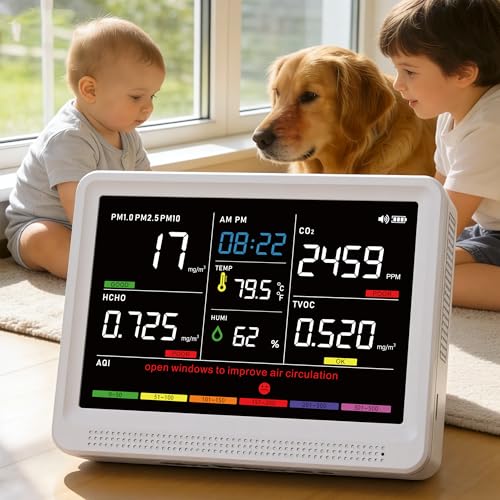
16 in 1 Air Quality Monitor Indoor High-Precision CO2 Monitor & HD Screen | CO2, TVOC, PM2.5, PM1.0, PM10, HCHO, Temp, Humidity, AQI, HD Color Screen, Portable Air Meter for Home, Office, Bedroom, Car
One of the consumer electronics options compared in this guide.
View on Amazon
16-in-1 Indoor Air Quality Monitor, CO2 PM1.0 PM2.5 PM10 HCHO TVOC AQI Temp Humidity, HD Color Screen, Auto Calibration, Adjustable Brightness, USB-C Powered for Home & Office
One of the consumer electronics options compared in this guide.
View on Amazon
5-in-1 Professional Indoor Air Quality Monitor Indoor Portable CO2 Monitor | Temperature | Formaldehyde Detector | Humidity TVOC | Air Quality Tester - Confined Space Clean Air Monitor(Glossy White)
One of the consumer electronics options compared in this guide.
View on Amazon
16-in-1 Indoor Air Quality Monitor, High-Precision Multi-Parameter Portable Air Quality Tester with Color-Coded HD Display, Fast Charging, Smart Air Quality Meter for Home, Office, Cars, Bedroom
One of the consumer electronics options compared in this guide.
View on Amazon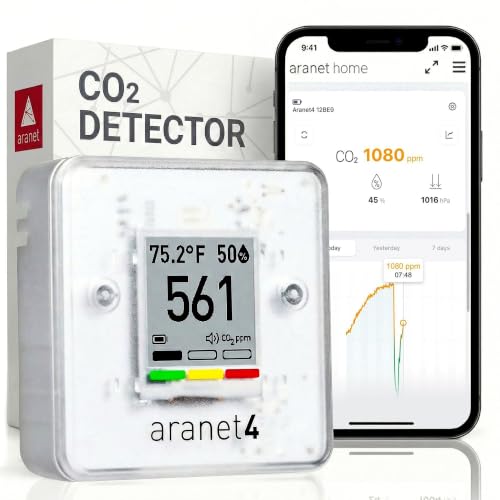
Aranet4 Indoor Air Quality Monitor, Wireless CO2 Detector for Home, Office | 4-year battery life, NDIR sensor. Tracks carbon dioxide, temperature, humidity, and pressure in real time. E-ink screen
One of the consumer electronics options compared in this guide.
View on Amazon
BREATHE Smart Air Quality Monitor Indoor, CO2 Detector for Home, PM2.5 VOC | PM2.5 Air Quality Monitor, VOC Air Quality Monitor, NDIR CO2 Monitor for Home, Formaldehyde Detector, CSV Export
One of the consumer electronics options compared in this guide.
View on Amazon
10-in-1 Air Quality Monitor, Carbon Dioxide HCHO TVOC PM1.0 PM2.5 PM10 Meter, Temperature Humidity Reading with AQI Grading, Data Logging, Air Quality Meter for Industrial and Lab Use
One of the consumer electronics options compared in this guide.
View on Amazon
Air Quality Monitor Indoor, 10-in-1 Portable Smart Real-Time CO2 Detector | for CO2 | TVOC | HCHO | AQI | PM2.5 | PM1.0 | PM10 | Temp | Humidity and Time for Home, Office, Cars, Hotel, School, Black
One of the consumer electronics options compared in this guide.
View on Amazon
16 in 1 Air Quality Monitor Indoor 7" High-Precision Real-Time CO2 Monitor | 7" HD Large Air Quality Tester with Alerts for CO2, TVOC, PM2.5 PM1.0 PM10, HCHO Temp & Humidity AQI &Time Air Meter for Home
One of the consumer electronics options compared in this guide.
View on Amazon| Product | Best for | Key spec from the title |
|---|---|---|
| Alexa-compatible smart monitor | Voice-assistant households | Works with Alexa |
| 16-in-1 HD screen monitor | All-around home tracking | CO2, TVOC, PM2.5, PM1.0, PM10, HCHO, HD color screen |
| 16-in-1 USB-C monitor | Bedrooms needing dim displays | Auto calibration, adjustable brightness, USB-C |
| 5-in-1 Professional monitor | Simple handheld spot checks | CO2, temperature, formaldehyde, humidity, TVOC |
| 16-in-1 color-coded monitor | Quick glance readability | Color-coded HD display, fast charging |
| Aranet4 | Long battery life and CO2 focus | 4-year battery life, NDIR sensor, wireless |
| BREATHE smart monitor | CO2 plus particulates and VOC | NDIR CO2, PM2.5, VOC |
| 10-in-1 data logging monitor | Tracking trends over time | Data logging, AQI grading, HCHO, TVOC |
| 10-in-1 portable smart monitor | Carrying between rooms | Real-time CO2, TVOC, HCHO, AQI, PM readings |
| 16-in-1 7-inch monitor | Wall or shelf viewing from a distance | 7-inch HD screen with alerts |
How to Choose
Check the CO2 sensor type first
Carbon dioxide is the reading most people buy these for. Indoor levels around 400 to 600 ppm are typical of well-ventilated spaces, while sustained readings above 1,000 ppm suggest the room needs fresh air. Look for the words NDIR, which refers to a non-dispersive infrared sensor and is the standard approach for true CO2 measurement. Monitors that list “CO2” without naming a sensor may be estimating the value from volatile compounds, which can drift with perfume or cleaning sprays.
Understand which readings you actually need
Particulate counts (PM1.0, PM2.5, PM10) matter near cooking, wildfire smoke, or traffic. TVOC and HCHO cover volatile compounds and formaldehyde, which are relevant after new furniture or paint. Temperature and humidity are handy but already exist in many thermostats. A 16-in-1 label sounds impressive, but several of those items are derived from the same sensors, so judge a monitor by the sensors it names rather than the headline count.
Power and portability
Some units run on a rechargeable battery with USB-C, others plug in continuously, and the Aranet4 lists a four-year battery life. Plugged-in models suit a desk or wall spot that stays put. Battery models let you carry the device between a bedroom, kitchen, and classroom to compare spaces. If you plan to leave it running overnight, make sure the display brightness is adjustable or can be turned off.
Where budget models cut corners
Auto-calibration claims, humidity accuracy, and formaldehyde sensors on inexpensive monitors are the usual weak spots. Electrochemical formaldehyde sensors can respond to other vapors, so treat HCHO numbers as a trend indicator, not a lab result. Data logging and app features are nice for charting, but a clear screen and stable CO2 reading are worth more than a long feature list. Also look at how the unit alerts you: a color change, a beep, or a flashing bar all help when you are not staring at the display, and a silent device that only shows digits is easy to forget on a shelf. Finally, think about placement before you buy. A monitor that needs a nearby outlet is a poor match for a bedside table with no free socket, while a battery model gives you freedom to move it each week and learn how each room behaves.
The 10 Best Options
Alexa-Compatible Smart Air Quality Monitor
This smart monitor is built around voice-assistant use, with the title promising that it helps you know your air and works with Alexa. It targets households already invested in a smart-home setup. Someone who already asks a speaker for the weather will find it natural to ask about air too, and it avoids another screen to maintain.
- Strength: voice-assistant integration lets you ask about air without opening an app.
- Strength: a simple, brand-backed listing reduces setup guesswork.
- Trade-off: the title names no specific sensors, so you need to review the spec sheet before relying on its readings.
Pass on it if you want a detailed on-device screen or a clearly stated NDIR CO2 sensor.
16-in-1 Indoor CO2 Monitor with HD Screen
This unit lists CO2, TVOC, PM2.5, PM1.0, PM10, HCHO, temperature, humidity, and AQI on an HD color screen. It is the broadest reader of the group in terms of named parameters. A family that wants to learn how cooking, candles, and closed windows change the room will get plenty of material to look at, and the HD display keeps the numbers legible.
- Strength: it covers gases, particulates, and comfort readings on a single display.
- Strength: a high-precision claim appears in the title for CO2.
- Trade-off: with so many metrics, the screen can feel busy if you only care about CO2.
Look elsewhere if you want a minimal glanceable device.
16-in-1 Indoor Air Quality Monitor with USB-C
This monitor tracks CO2, particulate sizes, HCHO, TVOC, AQI, temperature, and humidity, then adds auto calibration, adjustable brightness, and a USB-C connection. Parents who want to watch a nursery overnight can dim the screen, check it at a glance in the morning, and charge it from a standard cable they already own.
- Strength: adjustable brightness makes it more bedroom-friendly than a fixed bright panel.
- Strength: auto calibration is claimed, which helps readings stay consistent over time.
- Trade-off: the title does not state a sensor type for CO2.
Pass on it if you need a battery-first, cable-free device.
5-in-1 Professional Indoor Air Quality Monitor
The pared-down option covers CO2, temperature, formaldehyde, humidity, and TVOC in a portable body. It is a practical choice for quick checks after buying new furniture. Think of it as a walk-around checker for a new couch, a freshly painted room, or a rental unit before you decide how long to air it out.
- Strength: fewer metrics make reading the screen quicker.
- Strength: portability suits walking from room to room.
- Trade-off: it does not list particulate readings such as PM2.5 in the title.
Skip it if wildfire smoke or cooking particles are your main concern.
16-in-1 Portable Multi-Parameter Air Quality Tester
This portable model promises a color-coded HD display, fast charging, and multi-parameter readings. Color coding helps you spot a problem from across the room without reading numbers. A person who splits time between a home studio and a workshop will like grabbing it with the charger and seeing warning colors without reading small print.
- Strength: color-coded readouts speed up quick decisions.
- Strength: fast charging reduces downtime between rooms.
- Trade-off: the listing emphasizes multi-parameter coverage over any named CO2 sensor type.
Look elsewhere if you want a documented NDIR sensor.
Aranet4 Indoor Air Quality Monitor
The Aranet4 is a wireless CO2 detector for home or office with a four-year battery life and an NDIR sensor. It tracks carbon dioxide, temperature, and humidity, and it concentrates on doing a few things well. Teachers and remote workers who care mostly about stale air will appreciate a device that does one job and can sit untouched for years.
- Strength: the NDIR sensor is named, and the multi-year battery means no charging cables.
- Strength: a focused, wireless design suits desks, classrooms, and meeting rooms.
- Trade-off: it does not list particulates, VOC, or formaldehyde in the title.
Pass on it if you want smoke and VOC readings from the same device.
BREATHE Smart Air Quality Monitor
BREATHE combines an NDIR CO2 monitor with PM2.5 and VOC tracking, a balanced mix for homes. It is aimed at buyers who want carbon dioxide accuracy plus particulate awareness. A household near a busy road or with a gas stove gets both stale-air and particle awareness, without paying for a long list of extra readings.
- Strength: it pairs a named NDIR sensor with particulate and VOC coverage.
- Strength: smart features support remote monitoring.
- Trade-off: it does not list formaldehyde or PM10 in the title.
Skip it if you need a full formaldehyde reading after renovation.
10-in-1 Air Quality Monitor with Data Logging
This monitor reads CO2, HCHO, TVOC, PM1.0, PM2.5, PM10, temperature, and humidity, plus AQI grading and data logging. Data logging suits anyone who wants to review trends after a night’s sleep. People troubleshooting a bedroom that feels stuffy by morning can compare logged evenings and see whether keeping the door open really changes the numbers.
- Strength: data logging allows trend review beyond a single glance.
- Strength: AQI grading condenses many readings into a simple score.
- Trade-off: logged data is only useful if you will review it.
Pass on it if you never plan to look at history.
10-in-1 Portable Smart Real-Time CO2 Detector
This one targets carry-around use, tracking CO2, TVOC, HCHO, AQI, PM1.0, PM2.5, PM10, temperature, and humidity in real time. Renters and shared-house tenants can carry it into the room they are about to sleep in and learn which one needs more ventilation.
- Strength: real-time readings across gases and particulates in a portable body.
- Strength: easy to compare a bedroom with a kitchen on the same day.
- Trade-off: the title does not name the CO2 sensor type.
Look elsewhere if your priority is a fixed desk or wall display.
16-in-1 7-Inch Large Screen Monitor
The seven-inch HD display and alerts are the highlight here, making numbers readable across a room. It tracks CO2, TVOC, PM2.5, PM1.0, PM10, and more. Classrooms, small offices, and playrooms benefit most, since everyone in the room can read the display and the alert prompts someone to open a window.
- Strength: a large screen is easy to read from a distance.
- Strength: alerts draw attention when levels rise.
- Trade-off: its size makes it less pocketable than the handheld models.
Skip it if you want a small device that disappears on a shelf.
Which One Fits Your Situation
A home office with a closed door
The Aranet4 is the cleanest fit, because CO2 is the main concern and its NDIR sensor and long battery life keep it simple on a desk.
A bedroom where light matters
Choose the 16-in-1 USB-C model with adjustable brightness so the display does not light the ceiling at night.
A family home with cooking and new furniture
The BREATHE or the 10-in-1 data logging monitor give you CO2, particulates, and VOC or formaldehyde in one place, and the logging model lets you review what happened overnight.
A smart-home setup you already built
The Alexa-compatible monitor is the logical addition, letting you ask for readings by voice alongside your existing devices. Confirm the spec sheet for its sensors, since the title lists only the voice feature, and pair it with a second device if you need detailed particulate numbers.
Common Mistakes
- Counting the number of measured items instead of checking which sensors are actually named.
- Placing the monitor next to a window, vent, or your face, which skews CO2 readings.
- Expecting formaldehyde numbers to be laboratory accurate on a low-cost sensor.
- Reading it five minutes after setup instead of letting the sensors warm up and stabilize.
- Ignoring brightness controls and then turning the device to face a wall at night.
Related guides
- Indoor Electric Heaters For Large Rooms
- Infrared Heaters For 1000 Square Feet
- Home Theater Projector Under $500
Frequently Asked Questions
What CO2 level should worry me?
Levels near outdoor air are roughly 400 to 450 ppm, and sustained readings above 1,000 ppm usually mean the room needs more ventilation. Use your device as a prompt to open a window or add airflow.
Do I need all 16 readings?
Probably not. CO2 and PM2.5 cover the most common concerns for homes, while formaldehyde and TVOC matter after renovation or new furniture.
Does the monitor need calibration?
Some models list auto calibration, which resets a baseline using the lowest readings over several days. Place the device in a ventilated space for the first days so the baseline is realistic.
Can a monitor replace a smoke or CO detector?
No. Air quality monitors track indoor conditions but are not safety alarms. Keep certified smoke and carbon monoxide detectors in place regardless.
More from Amazon
Programs that pair well with the guide above. Offers and eligibility are set by Amazon and may change.
Collect the home and kitchen items you want in one registry that guests can shop from.
Create a wedding registrySet up recurring deliveries of everyday items on eligible products. Terms and savings are set by Amazon.
Explore Subscribe & SaveFree shipping on eligible items, Prime Video and more. Eligible new members can start with a free trial.
Start a Prime free trialAudiobooks and podcasts to listen to on the go. Eligible new members can start with a free trial.
Try Audible freeAs an Amazon Associate we earn from qualifying purchases.