Key takeaways
-
Best Overall: TEMPUR-Neck Pillow
-
Best Traditional Cervical Support: Core Products Tri-Core Cervical Support Pillow
-
Best Firm Foam Design: Core Products Tri-Core Ultimate Cervical Pillow
-
Best Adjustable Option: Coop Orthopedic Adjustable Pillow
-
Best Dual-Sided Design: TEMPUR-Symphony Pillow
-
Best Gentle Transition: Core Products Tri-Core Gentle Cervical Support Pillow
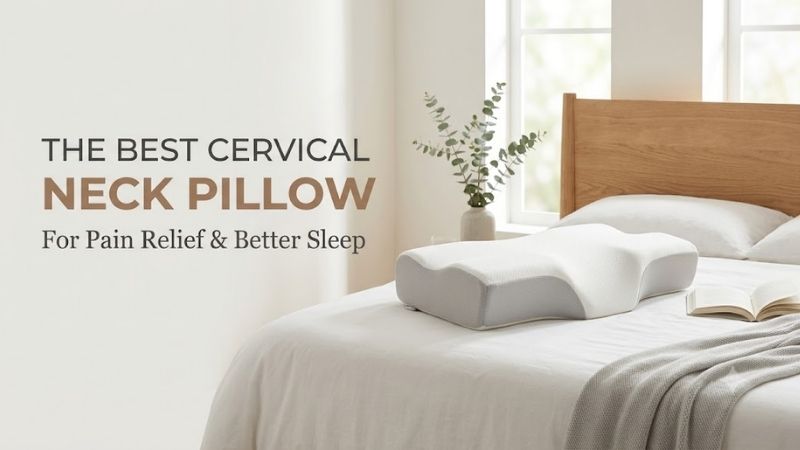
The best cervical neck pillow supports your head while helping your neck remain in a comfortable, neutral position during sleep. But a pillow that works for a broad-shouldered side sleeper may be too tall for someone who sleeps on their back. This guide compares six cervical support pillows, explaining their shapes, materials, adjustment options, and practical limitations so you can choose a suitable design.
What Makes a Cervical Pillow Worth Buying?
A cervical pillow differs from an ordinary flat pillow because its shape or adjustable filling is designed to support the space beneath your neck.
Some models use a raised neck roll with a recessed center for the head. Others use molded memory foam, adjustable fill, or a dual-sided contour.
The important distinction is fit rather than aggressive correction. A pillow should not force the neck into an uncomfortable curve or cause new pain.
For most shoppers, the leading candidates are:
-
Best Overall: TEMPUR-Neck Pillow
-
Best Traditional Cervical Support: Core Products Tri-Core Cervical Support Pillow
-
Best Firm Foam Design: Core Products Tri-Core Ultimate Cervical Pillow
-
Best Adjustable Option: Coop Orthopedic Adjustable Pillow
-
Best Dual-Sided Design: TEMPUR-Symphony Pillow
-
Best Gentle Transition: Core Products Tri-Core Gentle Cervical Support Pillow
The two Tri-Core versions are different firmness configurations of the same product family. They are included separately here because the firmness choice meaningfully changes how a sleeper experiences its neck rolls.
Compare the Six Cervical Pillows
| Pillow | Construction | Best Sleeping Position | Key Difference | Main Limitation |
|---|---|---|---|---|
| TEMPUR-Neck | Molded TEMPUR foam | Back and side | Three profile sizes | Firm, fixed shape |
| Tri-Core Cervical Support | Polyester fiber, recessed center | Back and side | Traditional neck rolls | Adjustment period |
| Tri-Core Ultimate | Molded foam | Back and side | Multiple support surfaces | Very firm |
| Coop Orthopedic Adjustable | Zoned adjustable fill | Back and side | Customizable height | Requires setup |
| TEMPUR-Symphony | Dual-sided TEMPUR foam | Back and side | Curved and flatter faces | Less pronounced cervical cradle |
| Tri-Core Gentle | Polyester fiber, medium-firm configuration | Back and side | Gentler neck-roll resistance | Still more structured than regular pillows |
Detailed Cervical Pillow Reviews
TEMPUR-Neck Pillow — Best Overall for Contoured Support
Best For: Back and side sleepers who prefer firm, consistent support from a molded-foam pillow.
Why We Picked It: TEMPUR-Neck uses a recognizable ergonomic contour with multiple size options. The design addresses a central purchasing problem: different sleepers require different cervical-support heights.
Key Specifications:
-
Material: TEMPUR-Material molded foam
-
Sizes: Small, medium, and large
-
Approximate profiles: 3.5, 4, and 4.75 inches
-
Feel: Firm
-
Cover: Removable and washable polyester knit
Features and Practical Benefits
The pillow has a raised section designed to support the neck and a lower area where the head rests.
This shape can be useful for back sleepers because the head does not need to remain elevated to the same height as the neck roll.
Side sleepers should select a profile that accommodates their shoulder width and mattress firmness.
What Makes It Different
Unlike pillows with loose filling, TEMPUR-Neck maintains its molded shape. That consistency can be attractive for someone who has already determined the correct height.
The drawback is that the pillow cannot be customized by removing filling.
Pros
-
Three profile sizes
-
Defined cervical contour
-
Consistent molded construction
Cons
-
Firm feel may require adjustment
-
Foam height is not user-adjustable
Buy If: You want an established, firm cervical pillow and can select an appropriate profile.
Skip If: You frequently change positions or prefer soft, freely moldable filling.
Core Products Tri-Core Cervical Support Pillow — Best Traditional Design
Best For: Sleepers who want a pronounced cervical neck roll rather than a conventional rectangular pillow.
Why We Picked It: Tri-Core uses a recessed center and elevated neck rolls, creating distinct areas for back and side sleeping.
Key Specifications:
-
Filling: Virgin polyester fiber
-
Cover: Cotton/polyester
-
Full size: 24 × 16 × 5 inches
-
Midsize: 22 × 15 × 4 inches
-
Petite: 19 × 12 × 4 inches
-
Firmness: Firm or Gentle in applicable sizes
Features and Practical Benefits
The trapezoid-shaped central depression helps position the head while the surrounding rolls support the cervical region.
Back sleepers can choose between the larger and smaller neck rolls. Side sleepers use the raised side portions.
Performance Considerations
This is a structured pillow. The sensation differs substantially from sinking into ordinary fiberfill.
Some sleepers need an adjustment period, and an uncomfortable pillow should not be used continuously in the hope that pain will eventually disappear.
Pros
-
Defined support zones
-
Multiple sizes
-
No natural rubber latex in the listed materials
Cons
-
Unusual shape
-
May feel too firm or restrictive for some users
Buy If: You want a traditional cervical-support shape with clear placement guidance.
Skip If: You prefer a fluffy pillow that can be folded or scrunched.
Core Products Tri-Core Ultimate Cervical Pillow — Best Firm Foam Option
Best For: People who specifically prefer robust molded-foam support.
Why We Picked It: Tri-Core Ultimate combines a contoured center, side sleeping areas, and multiple neck-support surfaces within one foam design.
Key Specifications:
-
Material: Molded foam
-
Firmness: Very firm
-
Intended positions: Back and side
-
Design: Contoured head cradle and elevated side areas
-
Cover: Removable and machine-washable
Features and Practical Benefits
The pillow offers different support heights, allowing a sleeper to choose a placement that better matches their body.
The structured foam retains a consistent shape rather than allowing filling to migrate.
The side sleeping areas also include channels designed to accommodate facial and ear contact.
Trade-Offs
Very firm support is not automatically healthier. A pillow that creates pressure beneath the neck or changes head position excessively can be uncomfortable.
This model is most appropriate for buyers who already know they prefer substantial resistance.
Pros: Multiple support zones; consistent molded shape; removable cover.
Cons: Very firm feel; limited flexibility compared with adjustable-fill pillows.
Buy If: You want strong, defined support.
Skip If: You are new to cervical pillows and uncertain about firmness tolerance.
Coop Orthopedic Adjustable Pillow — Best for Customized Support
Best For: Combination sleepers and buyers who have struggled to find the right pillow height.
Why We Picked It: The Coop Orthopedic Adjustable Pillow emphasizes zoned adjustability instead of relying entirely on a fixed cervical contour.
Key Specifications:
-
Construction: Adjustable-fill orthopedic pillow
-
Fill: Foam-based adjustable materials
-
Support: Zoned design
-
Available sizes: Queen and king configurations
Features and Practical Benefits
Adjustable fill makes it possible to change the pillow’s height and support distribution.
This is important because neck alignment depends on shoulder width, sleeping position, and mattress compression.
A soft mattress may allow the shoulder to sink farther, potentially reducing the amount of pillow height a side sleeper needs.
Performance Considerations
Start with the manufacturer’s intended configuration and make gradual changes.
Removing too much fill can compromise support, while overfilling can raise the head excessively.
Pros: Adjustable support; flexible fitting process; useful for mixed sleeping positions.
Cons: More setup; periodic adjustments may be needed.
Buy If: Fixed-height pillows have not suited you.
Skip If: You prefer a permanent molded shape.
TEMPUR-Symphony Pillow — Best Dual-Sided Design
Best For: Sleepers who want a gentler transition into contoured neck support.
Why We Picked It: TEMPUR-Symphony combines a slightly arched side with a flatter surface, making it more versatile than strongly sculpted cervical pillows.
Key Specifications:
-
Material: TEMPUR-Material foam
-
Shape: Dual-sided
-
Curved side: Intended primarily for back sleepers
-
Flatter side: Intended for side and stomach sleeping preferences
Features and Practical Benefits
The arched surface provides additional contour under the head and neck.
Flipping the pillow offers a more conventional profile without needing to purchase a second pillow.
This makes it an appealing alternative for people who dislike a pronounced central depression.
Trade-Offs
The Symphony does not provide the same sharply defined cervical roll as TEMPUR-Neck.
For someone specifically seeking a strongly recessed orthopedic shape, that difference may be important.
Pros: Two sleeping surfaces; familiar foam feel; less aggressive contour.
Cons: Fixed height; less targeted support than pronounced cervical designs.
Buy If: You want a versatile contoured pillow.
Skip If: You require a substantial cervical roll.
Core Products Tri-Core Gentle Cervical Support Pillow — Best Gentler Neck Roll
Best For: First-time cervical-pillow buyers who want a less resistant feel.
Why We Picked It: The Gentle configuration provides a different support experience from the Firm Tri-Core model without abandoning the recessed cervical design.
Key Specifications:
-
Fiber filling: Polyester
-
Shape: Recessed center with cervical rolls
-
Feel: Medium-firm relative to the Firm version
-
Available sizes: Selected Tri-Core sizes
Features and Practical Benefits
The softer configuration can be more approachable for buyers transitioning from a conventional pillow.
It retains dedicated support areas for back and side positions.
What Makes It Different
The main distinction from the standard Firm Tri-Core is resistance under pressure, not a fundamentally different design.
For a buyer comparing these two options, choosing the correct firmness is more important than purchasing both.
Pros: Less resistant feel; defined cervical design; multiple placement choices.
Cons: Still requires adaptation; not as customizable as shredded-fill products.
Buy If: You want cervical support but find very firm pillows uncomfortable.
Skip If: You want an ordinary flat pillow.
How to Choose a Cervical Neck Pillow That Actually Fits
Match the Pillow to Your Sleeping Position
For back sleepers, the pillow should support the neck without forcing the chin toward the chest.
For side sleepers, the head should remain reasonably aligned with the torso. Broad shoulders and firmer mattresses may require additional height.
Stomach sleeping commonly involves considerable neck rotation, and strongly contoured cervical pillows may not accommodate it comfortably.
Consider Mattress Firmness
Pillow height should never be evaluated independently of mattress compression.
A shoulder that sinks deeply into a soft mattress changes the distance between the head and sleeping surface.
A pillow that works on a firm mattress may feel too tall on a soft one.
Choose Contour Rather Than Maximum Firmness
A harder pillow is not necessarily more supportive.
The intended purpose is to provide comfortable contact beneath the neck while avoiding excessive head elevation.
If a pillow causes tingling, increasing pain, headaches, or restricted movement, stop using it and seek appropriate professional guidance.
Understand What a Cervical Pillow Cannot Do
A cervical pillow cannot diagnose or correct structural spinal conditions.
It may improve comfort for some sleepers, but persistent neck pain can have causes unrelated to pillow selection.
People experiencing weakness, numbness, radiating arm pain, or worsening symptoms should seek medical assessment.
Frequently Asked Questions
Can a Cervical Pillow Help With Neck Pain?
A suitably fitted pillow may reduce uncomfortable sleeping positions and improve support. It is not guaranteed to relieve pain or treat an underlying condition.
Is Memory Foam Better Than Fiberfill for Cervical Support?
Memory foam offers consistent contouring, while structured fiberfill can provide distinct support rolls with a different feel. Both can work when the design fits the sleeper.
How Long Does It Take to Adjust to a Cervical Pillow?
Some people adapt quickly, while others need several nights. Persistent or worsening pain is not a normal adjustment goal and should not be ignored.
Should Cervical Pillows Be Firm?
They should provide adequate support without forcing an uncomfortable neck position. The appropriate firmness depends on the sleeper and the design.
Can Side Sleepers Use Cervical Neck Pillows?
Yes. Many models provide raised side sections specifically intended for side sleeping. Proper height is essential.
Conclusion
The TEMPUR-Neck Pillow is a strong overall option for sleepers seeking a defined cervical contour and consistent foam support. Tri-Core offers traditional neck-roll construction, Coop provides customizable support, and TEMPUR-Symphony suits buyers preferring a gentler shape. The best cervical neck pillow is the one that maintains comfortable alignment without introducing new pressure or pain.