Key takeaways
- Children around 3–6: Consider an electric balance bike with a seat height roughly 16–20 inches. Keep the motor below about 100–150 watts and the top speed near 6–10 mph.
- Children around 6–10: A 12- or 16-inch model may fit, often with a seat height of approximately 18–25 inches. A 100–250-watt motor and a 10–15 mph limit are more manageable than adult-level performance.
- Children around 8–14: A 20-inch youth bike can work when the rider’s inseam and reach fit the frame. Look for a low step-over height, adjustable saddle, and speed modes rather than simply choosing the highest wattage.
- Taller teenagers: Some youth riders fit a small adult e-bike, but only if the frame, brakes, load rating, and local regulations are appropriate. A full-size e-bike is not automatically safer because the child is tall.
The best kids electric bikes are the ones that match your child’s height and coordination first, then provide a low starting speed, predictable braking, manageable weight, and enough battery for short family rides without encouraging unsupervised road use.
Quick picks by family situation
| Family situation | Best fit | What to prioritize | Typical budget |
|---|---|---|---|
| Young child learning balance | Low-power electric balance bike or small electric ride-on | 6–10 mph maximum speed, hand or foot brake, low seat height | $200–$500 |
| Child aged about 8–12 for paths and driveways | 12-inch or 16-inch electric bike | 12–15 mph cap, adjustable modes, pneumatic tires, rear disc brake | $300–$800 |
| Taller child joining longer family rides | 20-inch youth e-bike with pedal assist | 25–40-mile advertised range, removable battery, strong brakes | $700–$1,500 |
| Small home with limited storage | Lightweight mini e-bike or balance bike | Under 35 lb, folding handlebars, 26–28-inch storage width | $250–$900 |
| Mixed-age family with pets or younger siblings nearby | Model with a parent-controlled speed limit | Three ride modes, keyed start or app lock, quiet motor, enclosed chain | $400–$1,200 |
Age and height matter more than the number on the box
Age ratings are only a starting point. A child should be able to place both feet securely on the ground when stopped, reach the brake levers without stretching, and turn the handlebar without leaning heavily over it. The correct size also leaves enough room to bend the elbows slightly while maintaining a relaxed grip.

Hiboy BK1 Kids Electric Balance Bike, Ages 3-5, 12-Inch Tires, UL 2272
Included for 'Best Kids Electric Bikes for Safe Family Rides' because the listing specifies Ages 3-5 and 12-Inch Tires, details this guide uses to compare options.
View on Amazon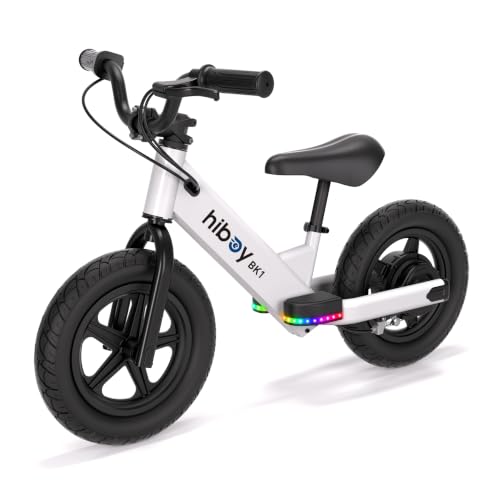
Hiboy BK1 Kids Electric Balance Bike, Ages 3-5, 12-Inch Tires, UL 2272
Included for 'Best Kids Electric Bikes for Safe Family Rides' because the listing specifies Ages 3-5 and 12-Inch Tires, details this guide uses to compare options.
View on Amazon
RFN Kids Electric Bike,12" Lightweight Balance EBike for Ages 4-8, 2-Speed up to 10 mph, 10 Miles Range, 24V 170W Power, 12x2.4 Tires, Birthday for Kids
Included for 'Best Kids Electric Bikes for Safe Family Rides' because the listing specifies 12" Lightweight Balance EBike for Ages 4-8 and 2-Speed up to 10 mph, details this guide uses to compare options.
View on Amazon
SKIRAI Kids Electric Bike, 20-Inch Ebike for Ages 6–10
Included for 'Best Kids Electric Bikes for Safe Family Rides' because the listing specifies 20-Inch Ebike for Ages 6, details this guide uses to compare options.
View on Amazon- Children around 3–6: Consider an electric balance bike with a seat height roughly 16–20 inches. Keep the motor below about 100–150 watts and the top speed near 6–10 mph.
- Children around 6–10: A 12- or 16-inch model may fit, often with a seat height of approximately 18–25 inches. A 100–250-watt motor and a 10–15 mph limit are more manageable than adult-level performance.
- Children around 8–14: A 20-inch youth bike can work when the rider’s inseam and reach fit the frame. Look for a low step-over height, adjustable saddle, and speed modes rather than simply choosing the highest wattage.
- Taller teenagers: Some youth riders fit a small adult e-bike, but only if the frame, brakes, load rating, and local regulations are appropriate. A full-size e-bike is not automatically safer because the child is tall.
Measure the rider’s inseam while wearing shoes and compare it with the manufacturer’s minimum and maximum seat heights. Leave at least 1–2 inches of clearance when standing over a traditional frame. A child who can barely touch the ground will have difficulty stopping on grass, gravel, or a slope.
Motor power and speed: less is usually easier to control
Motor wattage indicates potential output, not how safely the bike will behave. A 250-watt motor with smooth acceleration can be easier for a child to manage than a cheaper, abrupt 350-watt system. For first-time riders, a speed limit between 6 and 12 mph is generally more useful than a high top speed.
Choose a bike with a true low-speed mode, not merely a throttle that is difficult to press gently. The safest controls let a parent set a maximum speed before the ride and prevent the child from changing it casually. Some models offer a keyed power switch, while others use an app or display menu. Treat app restrictions as a convenience rather than a substitute for supervision: settings can be reset, batteries can be swapped, and children can learn to bypass controls.
Pedal-assist systems require the child to keep pedaling before the motor helps. They can be a good choice for family bike paths because they encourage attention and balance. Throttle-driven models are simpler to start but need especially predictable acceleration and a clearly labeled cutoff switch.
Range claims need a practical adjustment
Manufacturers commonly quote battery range under light rider weight, flat pavement, low speed, and warm weather. A useful planning estimate is 50–70% of the advertised maximum once hills, frequent starts, heavier riders, cold temperatures, and soft tires are included.
| Advertised range | Reasonable family-planning range | Best use |
|---|---|---|
| 5–8 miles | 3–5 miles | Driveways, parks, and short neighborhood loops |
| 10–20 miles | 6–14 miles | Short family outings with a recharge afterward |
| 25–40 miles | 15–28 miles | Longer rides on a properly sized 20-inch youth e-bike |
Battery capacity in watt-hours is more informative than miles alone. Divide watt-hours by the bike’s average power draw to estimate riding time, then multiply by the actual speed. A removable battery is useful for apartment dwellers, but store and charge it indoors only when the manufacturer permits it, using the supplied charger on a nonflammable surface.
Braking, tires, and weight are safety equipment
Look for two independent brakes, preferably hand-operated brakes on a bicycle-style model. Mechanical or hydraulic disc brakes usually offer more consistent stopping than a rear coaster brake, particularly on wet paths or slopes. The brake levers should be adjustable or positioned so the child can reach them with one or two fingers.
- Weight: A bike weighing 25–35 lb is far easier for a child or parent to control and carry than one exceeding 45 lb. If the adult cannot lift it safely, recovering it after a fall becomes difficult.
- Load rating: Stay well below the stated maximum. Include the rider’s clothing, backpack, and any accessories in the calculation.
- Tires: Pneumatic tires generally provide better grip and comfort than hard plastic wheels. Check pressure before every ride because underinflation reduces handling and range.
- Guards: A chain guard, covered moving parts, rounded bar ends, and a stable kickstand reduce everyday injuries.
- Visibility: Reflectors, a white front light, a red rear light, and a bell are worthwhile even for daytime paths.
Head-to-head: balance bike, mini e-bike, or youth pedal-assist bike?
Electric balance bike
This is the simplest option for a young beginner. The low seat and absence of pedals let a child concentrate on steering and braking. The limitations are short range, small wheels, and poor suitability for public roads or long rides. Choose one for supervised practice in a driveway, yard, or closed path.
Small electric bike or mini scooter-style bike
These are compact and often affordable, but their small wheels can react sharply to potholes and loose gravel. They work best on smooth surfaces and for riders who can already stop and turn reliably. Confirm that the handlebar does not wobble and that the frame is not too heavy for the child.
20-inch youth pedal-assist bike
This is the most practical choice for a tall, confident child joining family cycling trips. It can offer better tires, stronger brakes, and a more natural riding position. It also costs more and may weigh 35–50 lb, so measure storage space and doorway access before buying.
Assembly, storage, and durability realities
Expect many online bikes to arrive partly assembled. Final setup may include fitting the front wheel, handlebar, pedals, brake levers, reflectors, and display. After assembly, check that the wheels spin freely, the stem is tight, the brakes stop both wheels, and the handlebar is aligned. Have a bicycle shop inspect the bike if you are unsure about brake or headset adjustment.
Measure the packed box and the narrowest doorway before ordering. A bike that fits through a 30-inch doorway may still be awkward around a stair landing or into a car. In a 10-by-12-foot room, reserve a clear storage strip about 2 feet wide by 5–6 feet long for a 16- or 20-inch bike; do not store it where a child can trip over the charger.
Brake pads, tires, chains, grips, and charging ports usually show wear before the motor does. Keep the bike dry, wipe off grit, lubricate the chain as directed, and never hose down the battery or display. Avoid carrying a child on a rear rack unless the frame is specifically designed and rated for passengers.
Safety checklist before the first family ride
- Fit a certified helmet snugly, with the front edge level above the eyebrows.
- Practice starting, stopping, turning, and using both brakes in an empty area.
- Begin at the lowest speed mode and increase it only after several controlled rides.
- Use a parent-set speed limit, and keep children away from traffic, steep hills, and water.
- Check tire pressure, brake response, battery charge, and fasteners before every outing.
- Follow local rules for e-bike classes, age limits, helmets, sidewalks, and bike paths.
The best purchase is not the fastest kids electric bike or the one with the longest advertised range. It is the lightest correctly sized model that gives your child predictable acceleration, reachable brakes, adjustable limits, and enough real-world battery for the route your family actually rides.