Key takeaways
- You have 5–10 minutes a day: Choose Tenuto or Complete Ear Trainer. A focused drill is more realistic than a large lesson plan you rarely open.
- You are a beginner: Choose EarMaster or Perfect Ear, where you can start with simple intervals and progress toward chords, rhythm, and melodies.
- You are an improviser or songwriter: Add Functional Ear Trainer to develop scale-degree awareness, then practice hearing progressions in actual songs.
- You are preparing for an exam: Prioritize EarMaster or another app with melodic dictation, rhythmic dictation, sight-singing, and structured difficulty rather than only interval games.
- You are a singer: Look for pitch input and sight-singing, not just listening questions. EarMaster and Perfect Ear are better fits than a drill collection focused mainly on recognition.
- You dislike subscriptions: Tenuto is the clearest choice where its platform version is available. Some other apps offer free tiers or low-cost unlocks, but verify what is included before subscribing.
The best ear training apps are EarMaster for a structured all-round course, Tenuto for fast drills and reference tools, Complete Ear Trainer for interval-and-chord practice in a game-like format, and Functional Ear Trainer for learning to hear notes by their role in a key.
The right choice depends less on the largest exercise library than on how you intend to practice. A beginner who needs a guided sequence should choose differently from an instrumentalist who wants five-minute interval drills, a singer working on pitch, or a student preparing for conservatory exams.
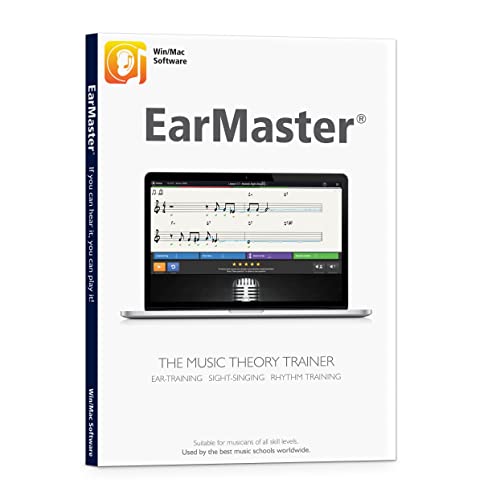
EarMaster 7 Professional - Ear Training, Sight-Singing, Rhythm Trainer
Included for 'Best Ear Training Apps for Musicians' because the listing specifies Ear Training and Sight-Singing, details this guide uses to compare options.
View on Amazon
Auricula Ear Training App
Included for 'Best Ear Training Apps for Musicians' as a relevant option in this category; details come from the product listing.
View on Amazon
Pitchimprover ear training
Included for 'Best Ear Training Apps for Musicians' as a relevant option in this category; details come from the product listing.
View on Amazon
Music Ear Training: Interval Practice Pro
Included for 'Best Ear Training Apps for Musicians' as a relevant option in this category; details come from the product listing.
View on AmazonBest ear training apps by musician and goal
| Best for | Recommended app | Why it stands out | Typical cost |
|---|---|---|---|
| Structured beginners and exam preparation | EarMaster | Broad curriculum covering intervals, chords, scales, rhythm, sight-singing, dictation, and theory | Free limited access; paid plans commonly about $7–$15 per month or $40–$100 per year, depending on platform and promotion |
| Short daily drills and musicians who already know the basics | Tenuto | Large collection of focused exercises, customizable settings, and useful theory tools | Usually a one-time purchase in the roughly $5–$15 range on supported mobile platforms |
| Intervals and chords with game-style progression | Complete Ear Trainer | Progressive levels, repeated listening, and practical chord and scale identification | Free basic version; paid access commonly falls around $5–$10 per month or a low one-time unlock, depending on platform |
| Developing tonal hearing | Functional Ear Trainer | Teaches pitches as scale degrees in a key instead of treating every note as an isolated interval | Often free or available at a low one-time cost, depending on edition |
| Singers and players who want flexible fundamentals | Perfect Ear | Combines intervals, scales, rhythm, chords, note reading, and customizable practice | Free tier with optional subscription or paid features; commonly about $5–$10 per month or $30–$60 per year |
EarMaster: the best complete course
EarMaster is the strongest choice when you want an app to tell you what to study next. Its course-style organization covers the major skills musicians usually mean by ear training: interval recognition, chord identification, chord progressions, rhythm reading and imitation, melodic dictation, sight-singing, and music theory.
Its main advantage is balance. You can move from recognizing a major third to singing one, then apply that sound in a melodic exercise. That is more useful than an app that only asks you to identify isolated intervals. The software is also a sensible choice for students following a teacher-assigned syllabus or preparing for aural-skills examinations.
The trade-off is cost and complexity. EarMaster has more settings and lesson material to navigate than a minimalist drill app. Subscription and licensing options vary by device and edition, so check whether the purchase covers desktop, mobile, or both before paying. It is best value for people who will practice several categories every week, not for someone seeking only occasional interval quizzes.
Tenuto: the best drill cabinet
Tenuto is ideal when you already understand basic music theory and want quick, repeatable exercises. It includes drills for intervals, scales, chords, key signatures, note identification, and other theory skills, along with reference tools such as a keyboard and circle of fifths.
Its one-time-purchase model is appealing if you dislike recurring subscriptions. You can open the app, choose one narrow skill, and practice for a few minutes without working through a locked sequence. This makes it particularly useful for instrumentalists who want to sharpen a weakness between lessons or rehearsals.
Tenuto is less of a guided course. It can tell you whether an answer is right, but it does not provide the same sense of staged curriculum as EarMaster. Sight-singing and rhythm are also not its central strengths. Choose it for efficient, customizable drills rather than for a complete musicianship program.
Complete Ear Trainer: the best game-like option
Complete Ear Trainer turns interval, chord, scale, and progression recognition into a level-based challenge. Each stage introduces a limited set of sounds before gradually increasing difficulty, which can make consistent practice easier for people who lose motivation with traditional quizzes.
It is particularly effective for interval and chord work. You can begin with large contrasts, add closer intervals, and then practice more complex chord qualities and inversions. The game structure gives you a visible target, while repeated listening helps reinforce a sound vocabulary.
The limitation is transfer. Identifying a chord from multiple-choice options is not the same as hearing a chord in a song, singing its notes, or transcribing a progression. Pair this app with an instrument, singing exercises, or real-music transcription if your goal is practical playing rather than quiz performance.
Functional Ear Trainer: the best approach for tonal hearing
Functional Ear Trainer teaches you to hear a note in relation to the tonic. Instead of asking only, “What interval is this note from the previous note?” it encourages you to recognize whether a pitch sounds like the first, second, third, or another degree of the key.
This approach can be valuable for improvisers, songwriters, and players who want to predict where melodies and bass lines are going. It also reduces dependence on memorizing isolated interval labels. With regular practice, a scale degree can begin to feel like a musical function: stable, tense, leading, or resting.
It is narrower than a full musicianship app. It is not the first choice for rhythm dictation, sight-singing lessons, or detailed chord-quality study. Use it as a focused companion, especially if you can already identify a few basic intervals.
Perfect Ear: the flexible all-rounder
Perfect Ear combines interval and scale training with rhythm exercises, chord identification, note reading, and customizable practice. It suits musicians who want broad coverage without committing to a formal, classroom-style course.
The app is also useful for singers because exercises can connect listening with pitch production. However, the quality of progress depends on how you organize the available material. A large menu can be helpful, but it can also encourage jumping between topics without mastering any of them.
Compare the exercise types before subscribing
| Skill | What to look for | Strong choices | Common limitation |
|---|---|---|---|
| Intervals | Ascending, descending, harmonic, melodic, adjustable range, and singing or instrument playback | Tenuto, Complete Ear Trainer, EarMaster | Multiple-choice recognition may not transfer to real melodies |
| Rhythm | Clapping or tapping input, changing meters, rests, syncopation, and immediate feedback | EarMaster, Perfect Ear | Some mobile microphones misread soft or uneven tapping |
| Chords | Triads, seventh chords, inversions, progressions, and voicing variety | EarMaster, Complete Ear Trainer, Perfect Ear | Fixed piano sounds can be easier than the same chords in a band mix |
| Sight-singing | Written melodies, adjustable difficulty, pitch tracking, and solfège or scale-degree options | EarMaster, Perfect Ear | Pitch detection needs a quiet room and a clear microphone signal |
How to choose based on your practice situation
- You have 5–10 minutes a day: Choose Tenuto or Complete Ear Trainer. A focused drill is more realistic than a large lesson plan you rarely open.
- You are a beginner: Choose EarMaster or Perfect Ear, where you can start with simple intervals and progress toward chords, rhythm, and melodies.
- You are an improviser or songwriter: Add Functional Ear Trainer to develop scale-degree awareness, then practice hearing progressions in actual songs.
- You are preparing for an exam: Prioritize EarMaster or another app with melodic dictation, rhythmic dictation, sight-singing, and structured difficulty rather than only interval games.
- You are a singer: Look for pitch input and sight-singing, not just listening questions. EarMaster and Perfect Ear are better fits than a drill collection focused mainly on recognition.
- You dislike subscriptions: Tenuto is the clearest choice where its platform version is available. Some other apps offer free tiers or low-cost unlocks, but verify what is included before subscribing.
A practical weekly plan
Use one primary app rather than switching between five programs. Spend two minutes on intervals or scale degrees, three minutes on chords or progressions, and five minutes on rhythm or singing. After each session, apply the skill away from the app: sing a melody from notation, identify the bass movement in a song, clap a difficult phrase, or play a progression in several keys.
For measurable progress, record accuracy and difficulty rather than simply counting minutes. A useful target is at least 80–90% accuracy at one level before adding more interval types, faster rhythms, or closer chord qualities. If accuracy collapses after an increase, step back and mix old material with the new challenge.
Bottom line
Choose EarMaster for the most complete guided curriculum, Tenuto for efficient one-time-purchase drills, Complete Ear Trainer for motivating interval and chord practice, Functional Ear Trainer for tonal awareness, and Perfect Ear for flexible coverage across several skills. Before paying, confirm the platform, offline access, lesson limits, pitch-detection requirements, and whether the price is a subscription or a permanent unlock. The best ear training app is the one whose exercises match your musical goal and are easy enough to use consistently.