Key takeaways
- Duplexing: Automatic two-sided printing saves paper and avoids manually flipping pages. Confirm that duplexing is built in rather than an optional accessory.
- Paper capacity: A 250-sheet tray is a practical starting point for a shared office. A second tray is valuable if you switch between letterhead, plain paper, labels, or different sizes.
- Multipurpose feed: A manual or multipurpose slot makes occasional envelopes and specialty media easier to handle. Check the approved media types and weight limits in the model’s specifications.
- Connectivity: Wi-Fi is convenient for a home office; Ethernet is often more dependable for a shared printer. USB can provide a direct connection, while mobile-printing support is useful when staff print from phones or tablets.
- Security: For a workplace, consider user authentication, secure print release, and firmware support. These matter more when documents contain client, financial, or health information.
Best Color Laser Printers: Reviews
The best color laser printer for most small offices is a compact 25–35-page-per-minute model with automatic two-sided printing, a 250-sheet paper tray, and high-yield toner options; choose a smaller, slower LED or laser printer if desk space matters more than throughput, or a business-class model if several people print every day. The right choice depends less on headline speed than on toner cost, color needs, paper capacity, and whether the printer will fit where you plan to use it.
Quick picks by office situation
| Your situation | What to look for | Why it fits |
|---|---|---|
| Home office with limited desk space | Compact color laser or LED printer, roughly 15–25 ppm, Wi-Fi, automatic duplex | Handles correspondence and occasional color without taking over a work surface. |
| Two to five regular users | About 25–35 ppm, Ethernet, 250-sheet tray, high-yield toner | Balances shared-office speed with fewer paper and toner interruptions. |
| Frequent reports and color charts | Business-class model, expandable paper capacity, separate high-yield cartridges | Lower interruption risk and better economics when monthly volume is substantial. |
| Mostly black text, occasional color | Entry-level color laser with modest upfront cost | Suitable when color is useful but not worth paying for photo-grade output. |
Compare the trade-offs that matter
| Printer class | Typical color speed | Paper capacity | Typical footprint | Best for |
|---|---|---|---|---|
| Compact home-office color laser/LED | 15–25 ppm | 150–250 sheets | About 16–18 in. wide, 15–18 in. deep | Occasional color and limited space |
| Midrange small-office model | 25–35 ppm | 250–550 sheets, depending on options | About 17–20 in. wide, 18–22 in. deep | Shared daily printing |
| Workgroup printer | 35–50+ ppm | 500+ sheets, often expandable | Typically larger and heavier; may be floor-stand or cabinet territory | High-volume teams and multiple paper types |
These are useful buying ranges, not guarantees: manufacturers may quote different speeds for monochrome and color, and printer dimensions exclude the extra room needed for trays, cables, and ventilation. Check the exact model’s specification sheet before ordering.
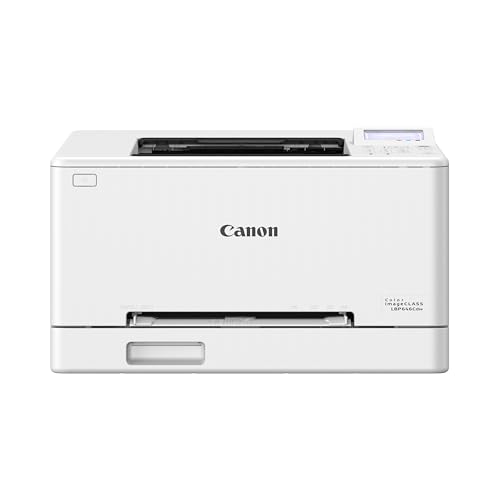
Canon Color imageCLASS LBP646Cdw Wireless Laser Printer, Duplex, 26 PPM, Print Only, White
Included for 'Best Color Laser Printers: Reviews' because the listing specifies Duplex and 26 PPM, details this guide uses to compare options.
View on Amazon
HP Color LaserJet Pro 3201dw | Color Laser Printer | Wireless | Duplex
Included for 'Best Color Laser Printers: Reviews' because the listing specifies Color Laser Printer and Wireless, details this guide uses to compare options.
View on Amazon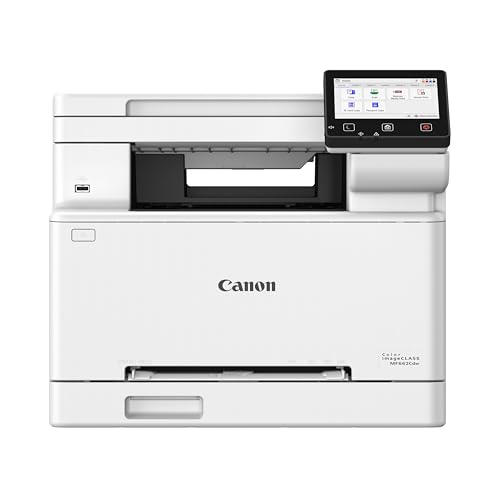
Canon Color imageCLASS MF662Cdw - Wireless Duplex Laser Printer with Copier, Scanner, 3 Year Limited Warranty, 26 PPM
Included for 'Best Color Laser Printers: Reviews' because the listing specifies Wireless Duplex Laser Printer with Copier and Scanner, details this guide uses to compare options.
View on Amazon
Canon Color imageCLASS MF753Cdw II - All-in-One Color Duplex Laser Printer
Included for 'Best Color Laser Printers: Reviews' because the listing specifies All-in-One Color Duplex Laser Printer, details this guide uses to compare options.
View on AmazonSpeed versus actual workflow
Pages per minute matters most when you print long documents repeatedly. For a home office, a printer rated at 20–25 ppm is usually responsive enough for invoices, school documents, and short reports. First-page-out time can matter more than top speed when jobs are only one or two pages. Automatic duplexing also takes longer than single-sided printing, so compare duplex speed if two-sided output is your normal setting.
Color quality: business graphics, not photo printing
Color laser printers are well suited to charts, logos, presentation handouts, and color-coded documents. They generally produce crisp text and durable, smudge-resistant pages, but smooth gradients and photographic detail tend to look less natural than on a good inkjet photo printer. If your priority is family photos or fine-art prints, a color laser is usually the wrong tool. For office graphics, look for consistent color registration and settings that let you control brightness, saturation, and toner use.
Running cost and toner yield
Compare the price and stated yield of all four cartridges—black, cyan, magenta, and yellow—not just the printer’s purchase price. A low-cost printer can become expensive if replacement cartridges have limited capacity or if you print enough color to replace them often. High-yield cartridges generally reduce cost per page, but only pay off if your usage justifies their higher upfront price.
Manufacturers usually estimate cartridge yield using standardized coverage, often around 5% coverage per page. A page with a large colored background, photos, or dense charts can use substantially more toner than that estimate. Also check whether the printer has a separate imaging drum or other consumable that will eventually need replacement. For a realistic comparison, calculate:
Approximate cost per page = cartridge price ÷ stated page yield. Calculate black and color separately, then factor in any drum or maintenance consumables. Prices vary by model and region; across the market, color laser printers commonly range from a few hundred dollars to over $1,000, while replacement toner costs vary widely by cartridge capacity.
Paper handling, duplexing, and connections
- Duplexing: Automatic two-sided printing saves paper and avoids manually flipping pages. Confirm that duplexing is built in rather than an optional accessory.
- Paper capacity: A 250-sheet tray is a practical starting point for a shared office. A second tray is valuable if you switch between letterhead, plain paper, labels, or different sizes.
- Multipurpose feed: A manual or multipurpose slot makes occasional envelopes and specialty media easier to handle. Check the approved media types and weight limits in the model’s specifications.
- Connectivity: Wi-Fi is convenient for a home office; Ethernet is often more dependable for a shared printer. USB can provide a direct connection, while mobile-printing support is useful when staff print from phones or tablets.
- Security: For a workplace, consider user authentication, secure print release, and firmware support. These matter more when documents contain client, financial, or health information.
Will it fit your office furniture?
A printer’s listed width and depth do not tell the whole story. Many compact units weigh roughly 30–50 pounds, while larger workgroup machines can be considerably heavier; check the exact weight before placing one on a shelf or moving it upstairs. Use a sturdy desk or printer stand rated above the machine’s weight, and avoid a narrow floating shelf that may flex during printing.
Measure the printer and leave roughly 4–6 inches of open space at the sides and rear for ventilation and cable access, unless the manufacturer specifies a different clearance. Allow additional room in front for the paper tray and output pages, and above the machine if its scanner lid or access panel opens upward. On a 48-inch desk, a compact printer around 17 inches wide can share the surface with a laptop, but its depth may still cr