Key takeaways
- Non-marking grip: Look for a gum-rubber or similar indoor outsole labeled non-marking. Its tread should grip a clean, dry wooden or synthetic court without leaving streaks. A dirty or dusty outsole can slip even when the rubber is in good condition.
- Lateral stability: Badminton involves abrupt side steps, lunges, and recovery movements. A broad, supportive base and a secure midfoot help prevent the foot from rolling over the edge of the sole. Running shoes are designed mainly for forward motion and are not a substitute.
- Cushioning: Cushioning should soften repeated landings without making the shoe feel tall or unstable. A lower, firmer ride can feel more responsive; more cushioning can be helpful for players who spend long sessions on hard courts or prefer a softer landing.
- Breathability: Mesh uppers usually ventilate better than heavier, more enclosed materials. Reinforced panels may add support and abrasion resistance, but can reduce airflow.
- Fit: Your heel should stay seated during a lunge, while your toes have room to spread and do not hit the front when you stop. Try shoes on with your usual court socks, ideally later in the day when feet may be slightly larger.
- Durability: Outsole rubber, toe-area reinforcement, and upper construction influence how well a shoe holds up. Frequent players may wear down the forefoot or inside edge first, especially if their footwork drags or their court has abrasive patches.
Best Badminton Shoes for Court Play: Choose by Grip, Stability, and Fit
The best badminton shoes for court play are purpose-built indoor court shoes with a non-marking rubber outsole, a close heel fit, and enough lateral support for repeated lunges and direction changes. Choose a stable, supportive model for frequent singles or hard lateral movement; a lighter, more breathable shoe for long doubles sessions; and a roomier fit if your toes feel cramped in standard court shoes.
What matters most on a badminton court
- Non-marking grip: Look for a gum-rubber or similar indoor outsole labeled non-marking. Its tread should grip a clean, dry wooden or synthetic court without leaving streaks. A dirty or dusty outsole can slip even when the rubber is in good condition.
- Lateral stability: Badminton involves abrupt side steps, lunges, and recovery movements. A broad, supportive base and a secure midfoot help prevent the foot from rolling over the edge of the sole. Running shoes are designed mainly for forward motion and are not a substitute.
- Cushioning: Cushioning should soften repeated landings without making the shoe feel tall or unstable. A lower, firmer ride can feel more responsive; more cushioning can be helpful for players who spend long sessions on hard courts or prefer a softer landing.
- Breathability: Mesh uppers usually ventilate better than heavier, more enclosed materials. Reinforced panels may add support and abrasion resistance, but can reduce airflow.
- Fit: Your heel should stay seated during a lunge, while your toes have room to spread and do not hit the front when you stop. Try shoes on with your usual court socks, ideally later in the day when feet may be slightly larger.
- Durability: Outsole rubber, toe-area reinforcement, and upper construction influence how well a shoe holds up. Frequent players may wear down the forefoot or inside edge first, especially if their footwork drags or their court has abrasive patches.
Which type suits your playing situation?
| Playing situation | Prioritize | Trade-off to expect | Useful fit check |
|---|---|---|---|
| Fast doubles and frequent direction changes | Secure heel, supportive midfoot, grippy non-marking outsole | A more structured upper may feel warmer | Make several side steps; the foot should not slide over the sole |
| Long sessions or hard landings | Comfortable cushioning with a stable, low platform | A softer ride may feel less direct than a firmer shoe | Check that the shoe compresses comfortably without wobbling |
| Hot courts or sweaty feet | Breathable mesh and a lighter upper | Less coverage can mean less protection against scuffing | Check ventilation and whether the tongue or seams create pressure |
| Wide forefoot or toe discomfort | A roomier last or a model offered in multiple widths | A generous fit can feel loose at the heel if the shape is wrong | Confirm toe room without allowing heel lift during a lunge |
| Occasional recreational play | Reliable indoor grip, comfortable fit, and reinforced high-wear areas | You may not need premium materials or the lightest construction | Choose secure comfort over features you will rarely use |
The measurements below are practical fitting targets, not a guarantee that every brand or model will fit identically. Shoe sizing and shape vary, so use the brand’s size chart and your own on-foot fit as the final check.
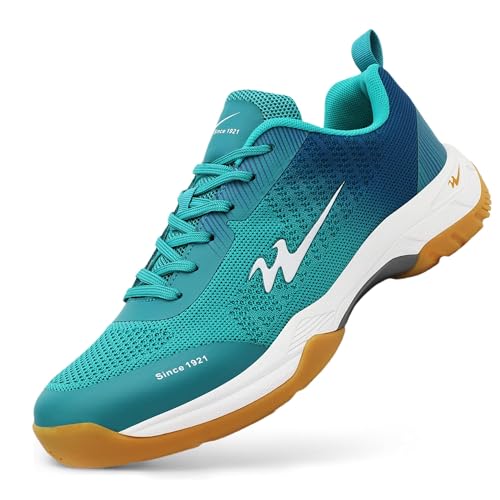
cungel Unisex Tennis Pickleball Badminton Shoes for Men & Women Court Shoes
Included for 'Best Badminton Shoes for Court Play' as a relevant option in this category; details come from the product listing.
View on Amazon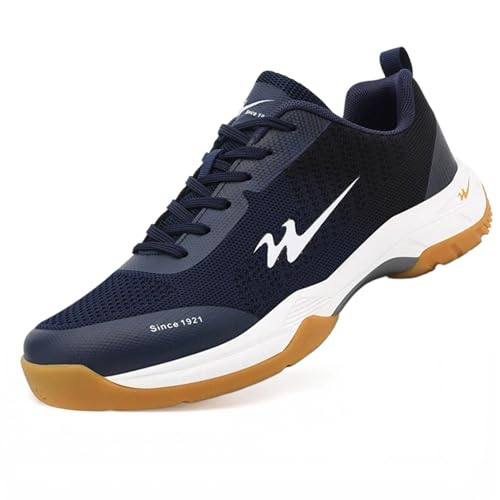
Men Women Badminton-Tennis Shoes Pickleball Racquet Sports Training Shoes
Included for 'Best Badminton Shoes for Court Play' as a relevant option in this category; details come from the product listing.
View on Amazon
Sisttke Men's Badminton Pickleball Tennis Shoes White/Dark Blue
Included for 'Best Badminton Shoes for Court Play' as a relevant option in this category; details come from the product listing.
View on Amazon
Ozefiad Boys Girls Badminton Shoes Kids Tennis Court Shoes Youth Sneakers
Included for 'Best Badminton Shoes for Court Play' as a relevant option in this category; details come from the product listing.
View on Amazon| Fit or court check | Practical target | Why it matters |
|---|---|---|
| Toe space while standing | About 8–12 mm between the longest toe and the shoe front | Leaves room for foot movement without an excessively loose fit |
| Heel movement | Minimal lift during a brisk step or lunge | Reduces rubbing and keeps the shoe secure during changes of direction |
| Side-to-side containment | Foot remains centered over the sole during a controlled lateral shuffle | Helps avoid sliding toward the edge of the shoe |
| Outsole condition | Clean, dry rubber with no worn-through patches or peeling | Dust and damage can undermine grip regardless of the shoe’s original design |
How to compare popular court-shoe ranges
Yonex, ASICS, and Victor all make badminton or indoor-court footwear. Their ranges include different levels of cushioning, support, and weight, so compare individual models rather than assuming a brand name alone determines performance. Availability and exact specifications can differ by market and year.
| What to compare | Support-focused option | Lightweight option | Comfort-focused option |
|---|---|---|---|
| Construction | More upper reinforcement and a secure midfoot structure | Less material and a more flexible-feeling upper | More emphasis on underfoot cushioning and step-in comfort |
| Best suited to | Players who make forceful lateral movements | Players who value quick, light footwork | Players who prioritize comfort over the longest sessions |
| Possible compromise | May feel warmer or less flexible | May provide less protection or structure, depending on the model | May feel less low-to-the-court or responsive |
| What to verify | Heel lockdown and stable support on a side step | Secure fit despite the lighter build | Stable landings and enough toe room |
Fit and durability checks before you buy
Try them on as you play
Wear your usual badminton socks and lace the shoes snugly, without overtightening across the top of the foot. Walk, stop sharply, and make controlled side steps. A shoe that feels comfortable while standing can still let your heel lift or your forefoot slide when you move. If you use an orthotic, check that it fits securely and does not make the shoe too shallow.
Match the outsole to the venue
Use non-marking indoor shoes on indoor courts, and avoid wearing them outside. Outdoor grit can abrade the outsole and bring dirt onto the playing surface. If the court feels slippery, clean the outsole and check the court for dust before deciding the shoe has lost its grip.
Think about what wears first
Inspect the forefoot tread, toe guard, and inside edge periodically. These areas commonly take the most stress from lunges, toe drag, and recovery steps. Rotate shoes if you play often, let them dry between sessions, and replace them if the outsole is badly smoothed, the upper is separating, or the shoe no longer holds your foot securely.
How much should you spend?
As a broad market guide, entry-level badminton shoes often fall around $40–$80, mid-range models around $80–$140, and premium models around $140–$220 or more. Prices vary by country, model, and season. Spending more may buy lighter materials or additional construction features, but it cannot compensate for poor fit. For most recreational players, a correctly fitting mid-range shoe with dependable indoor grip is a sensible starting point.
Bottom line
For fast indoor badminton, start with a true non-marking court shoe that keeps your heel and midfoot secure. Choose added structure for aggressive lateral play, more cushioning for comfort across long sessions, and extra ventilation or forefoot room when those are your main fit needs. The best badminton shoes for court play are the pair that stays stable through a lunge, grips your clean court, and fits comfortably from the first rally to the last.