Key takeaways
- Neck and shoulders: Requires rollers that travel high enough, or shoulder airbags. Vibration recliners rarely reach the neck.
- Back and lumbar: The core zone. On robotic chairs, look at track type. An S-track follows the spine’s curve; an L-track continues under the seat to the glutes and hamstrings, typically 45 to 53 inches long in total.
- Seat and hips: Vibration motors or airbags in the cushion.
- Arms and hands: Airbags in the armrests. Common on robotic chairs, nearly absent on furniture-style recliners.
- Calves and feet: Airbag compression in a leg rest, ideally with foot rollers. This is the zone most people end up using daily.
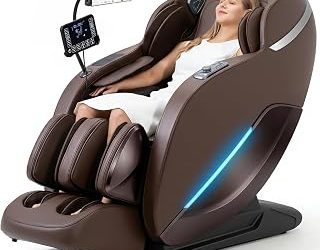
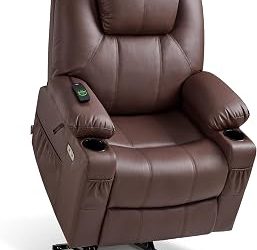
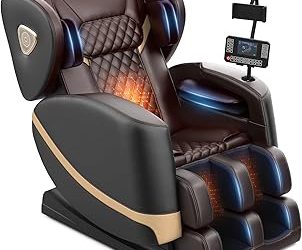
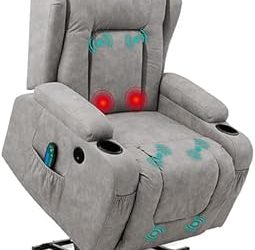
A full body massage recliner is a reclining chair with built-in massage that reaches the back, seat, legs and often the arms and feet, but the term covers two very different products: upholstered recliners with vibration motors and heat (usually $300 to $900), and true robotic massage chairs with rollers and air compression (usually $1,500 to $8,000 and up). Knowing which one you are looking at, and whether it physically fits your room and body, matters more than the feature list.
Vibration Recliner vs Robotic Massage Chair
The phrase “full body” is used for both categories, so start by sorting the listing into one of these groups.
| Feature | Vibration massage recliner | Robotic massage chair (2D/3D/4D) |
|---|---|---|
| How it massages | 4–10 vibration motors, sometimes heat pad in lumbar | Mechanical rollers on a track, 20–40+ airbags, foot rollers |
| Feels like | Gentle buzzing, relaxing, no kneading | Kneading, tapping, shiatsu pressure, calf squeeze |
| Typical weight | 70–120 lb | 180–330 lb |
| Wall clearance when reclined | 3–12 in (wall-hugger) or 18–24 in (standard) | 2–6 in on space-saving models, 20+ in on older designs |
| Usual weight capacity | 250–300 lb (some big-and-tall to 400 lb) | 250–300 lb typical |
| Height fit | Wide; it is still a normal recliner | Usually about 5’0″ to 6’3″; body scan adjusts roller track |
| Looks like furniture? | Yes, fabric or faux leather upholstery | Mostly no; synthetic leather shell |
| Price range | $300–$900 | $1,500–$8,000+ |
If what you want is a comfortable chair to read and nap in, with a pleasant hum and warmth on the lower back, a vibration recliner is enough. If you want something that actually works knotted shoulders and tight calves, only a roller-and-airbag chair will do that.
What “Full Body” Should Actually Cover
Check each zone instead of trusting the headline. A chair earns the label only if it reaches most of these:
- Neck and shoulders: Requires rollers that travel high enough, or shoulder airbags. Vibration recliners rarely reach the neck.
- Back and lumbar: The core zone. On robotic chairs, look at track type. An S-track follows the spine’s curve; an L-track continues under the seat to the glutes and hamstrings, typically 45 to 53 inches long in total.
- Seat and hips: Vibration motors or airbags in the cushion.
- Arms and hands: Airbags in the armrests. Common on robotic chairs, nearly absent on furniture-style recliners.
- Calves and feet: Airbag compression in a leg rest, ideally with foot rollers. This is the zone most people end up using daily.
Room Fit and Clearance
Massage recliners take more floor space than they appear to, because the leg rest extends forward and the back reclines. Use these figures when measuring:
| Measurement | Vibration recliner | Robotic chair |
|---|---|---|
| Upright footprint (W x D) | 32–38 in x 36–40 in | 28–33 in x 50–58 in |
| Fully reclined length | 62–70 in | 65–80 in |
| Upright height | 39–42 in | 42–47 in |
| Front clearance to add for leg rest | 18–24 in | 15–25 in (leg rest may extend) |
| Doorway needed in shipping state | Usually 30 in+ | Often 28–32 in, back and leg rest removable |
In a 10 x 12 ft living room, a single robotic chair fits comfortably in a corner if you leave about 6 feet of length for the reclined position. In a smaller bedroom, look specifically for “space-saving” or “zero wall” designs that slide forward as they recline instead of swinging back.
Also check the outlet. Both types need a standard 120V outlet within reach of a 6 to 8 foot cord. Robotic chairs draw roughly 100 to 250 watts while running, and running the cord under a rug is a fire risk.
Features Worth Paying For
Zero gravity recline
Raises the legs to roughly heart level and shifts weight onto the back. This deepens roller pressure on robotic chairs and takes load off the lower spine. Two or three preset positions are standard on mid-range chairs.
Heat
Lumbar heat is common across both categories; calf heat appears on higher-end robotic chairs. Carbon-fiber heaters warm up faster than older resistive pads. Heat is rarely hot enough to matter in 15 minutes, so do not overvalue it.
Body scan and intensity range
Robotic chairs scan shoulder height before a session. A wide intensity range, plus the ability to turn off airbags in specific zones, matters more than the number of auto programs, because most owners settle on two or three programs.
Power recline vs manual
Vibration recliners come in manual (lever or push-back) and power versions. Power recline with a USB port costs more but helps anyone with limited grip or hip mobility. Lift-assist versions push the whole chair upward to help users stand, which is worth it for older adults.
Decision Matrix: Which Type Fits Your Situation
| Your situation | Best choice | Why |
|---|---|---|
| Wants a living room chair first, massage second | Vibration power recliner with lumbar heat | Looks like furniture, lower cost, lighter |
| Chronic back or shoulder tension | 2D/3D robotic chair with L-track | Rollers reach the muscles vibration cannot |
| Tired legs, long standing shifts | Robotic chair with calf and foot airbags plus foot rollers | Compression is the most-used function |
| Small apartment or upstairs bedroom | Wall-hugger vibration recliner or compact robotic chair | 2–6 in wall clearance, lighter carry |
| Over 6’3″ or over 300 lb | Big-and-tall recliner, or a robotic chair with extendable leg rest and published capacity above 300 lb | Standard roller tracks may stop short |
| Older adult with mobility issues | Lift recliner with massage and heat | Lift assist matters more than roller depth |
Delivery, Assembly and What Wears First
Robotic chairs often ship in two or three boxes with a combined weight of 200 to 350 lb. Two strong people are the minimum; many sellers offer white-glove delivery for a fee, and it is worth it on stairs. Assembly is usually limited to attaching the leg rest, armrests and back cushion, about 30 to 60 minutes.
The parts that wear out first are predictable:
- Synthetic leather on headrests and armrests, which can crack or peel after a few years, especially near heat or direct sun.
- Airbags in the calf area, which may leak with heavy daily use.
- Roller covers that wear thin and make the roller feel sharper.
- Recline motors and actuators on vibration power recliners, typically covered for one to three years.
Read the warranty structure closely. Established massage chair brands such as Osaki, Human Touch and Panasonic generally separate frame, parts, labor and in-home service coverage, and in-home service is the term that matters most for a 250 lb chair.
Safety Notes
Massage chairs are not recommended during pregnancy, with a pacemaker, after recent surgery, or with conditions like osteoporosis or deep vein thrombosis without a doctor’s approval. Sessions are usually capped at 15 to 20 minutes by default; longer sessions can leave muscles sore rather than relaxed. Keep children and pets away from the leg rest mechanism while it moves.
Bottom Line
Decide first whether you want furniture with a massage feature or a massage machine you can sit in. A vibration recliner fits normal living rooms and budgets, while a robotic L-track chair with calf compression is the only option that delivers what most people mean by a full body massage. Measure the reclined length, check the doorway and weight capacity, and favor a long in-home service warranty over a long list of auto programs.