Key takeaways
- True tilt-in-space recline: the seat pan itself rotates backward as the back reclines and the footrest rises, so your hips drop and your knees end up higher than your hips. This is the position the term is meant to describe.
- Standard recline with a high footrest: the back goes down and the footrest comes up, but the seat stays mostly level. Comfortable, but closer to a regular recliner than the name implies.
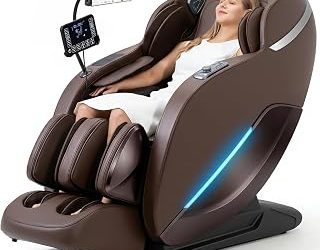
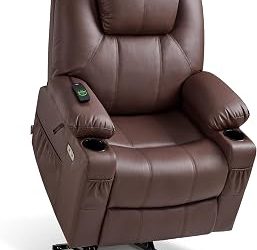
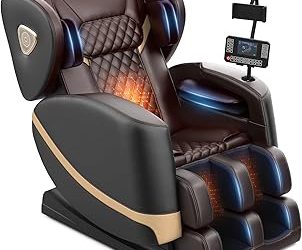
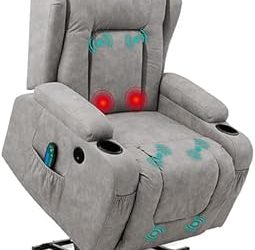
A zero gravity recliner with heat and massage is a reclining chair that tilts the whole seat back until your knees sit at or above heart level, adds a heated pad (usually in the lumbar area) and uses vibration motors for massage; it is a good buy if you want a comfortable leg-up rest position with gentle warmth, but it is not a substitute for a full roller-based massage chair. The real decisions are whether the “zero gravity” label describes an actual tilting seat, how much floor and wall space the chair needs when fully open, and what the heat and massage hardware actually does.
What “zero gravity” means in a recliner
The term borrows from a neutral body posture studied by NASA: thighs raised, knees bent, and the angle between torso and thighs opened to roughly 120 to 130 degrees, with the legs elevated near or above the heart. In practice, furniture makers use the label for two quite different mechanisms:
- True tilt-in-space recline: the seat pan itself rotates backward as the back reclines and the footrest rises, so your hips drop and your knees end up higher than your hips. This is the position the term is meant to describe.
- Standard recline with a high footrest: the back goes down and the footrest comes up, but the seat stays mostly level. Comfortable, but closer to a regular recliner than the name implies.
Look at product photos taken from the side in the fully reclined position. If the front edge of the seat is clearly higher than the back edge and the knees sit above the hips, the chair delivers the real thing. Power models with a separate “zero gravity” preset button usually do.
Heat: what to expect
Heat in these chairs is almost always a low-voltage heating element sewn behind the back cushion at lumbar height, sometimes also in the seat. It produces gentle warmth rather than the intensity of a standalone heating pad. Typical features:
- One or two heat zones (lumbar is standard; seat heat is less common).
- An auto shut-off timer, often 15 to 30 minutes.
- Heat that takes several minutes to become noticeable through upholstery, and is felt more through thinner leather or faux leather than through thick fabric and padding.
If heat is the main reason you are buying, check that it can be run independently of massage, since some controllers tie them together.
Massage: vibration versus rollers
Nearly every recliner sold as “with heat and massage” uses vibration motors, commonly 4 to 10 of them spread across the back, seat, thighs and calves, with a handful of preset patterns and intensity levels. Vibration feels like a steady buzz or pulse. It is relaxing, but it does not knead or press like hands.
Dedicated massage chairs use mechanical rollers on a track, often with air bags for arms and calves. They cost far more, weigh far more and look like equipment rather than furniture. Many of them also have zero gravity positions. If you want deep-tissue style massage, that is the category to shop in. If you want a living room recliner that also hums and warms your back, a vibration model is the right tool.
| Feature | Zero gravity recliner (vibration + heat) | Roller massage chair with zero gravity |
|---|---|---|
| Typical price | $300–$1,200 | $1,500–$8,000+ |
| Weight | 70–130 lb | 150–300 lb |
| Massage type | 4–10 vibration motors | Track rollers plus air bags |
| Heat | Lumbar pad, sometimes seat | Lumbar, sometimes calves and feet |
| Fully reclined length | About 62–72 in | About 65–80 in |
| Looks like | Regular living room furniture | Specialized equipment |
| Power needed | Standard outlet, low draw | Standard outlet, higher draw |
Space: the numbers to measure
Recliners always need more room than their upright footprint suggests, and a full zero gravity tilt is the deepest recline position the chair has.
| Measurement | Typical range | Why it matters |
|---|---|---|
| Upright width | 30–40 in | Fits between end tables or other seating |
| Upright depth | 36–42 in | Leaves walkway space in front |
| Fully reclined length | 62–72 in | Must clear coffee tables and walkways |
| Wall clearance, wall-hugger design | 4–8 in | Can sit close to a wall |
| Wall clearance, standard design | 12–20 in | Back swings out as it reclines |
| Seat height | 18–21 in | Ease of getting in and out |
| Weight capacity | 250–350 lb common | Check before buying for larger users |
In a 12 by 14 foot living room, a fully reclined 70-inch chair with 12 inches behind it takes up nearly 7 feet of one dimension. Mark the reclined footprint on the floor with tape before ordering. Also check the box: a fully assembled power recliner often ships in a carton over 40 inches on a side and 90 pounds or more, so confirm your doorways (most interior doors are 30 to 32 inches) and plan on two people. Most recliners have a removable back that slides off brackets, which helps with tight doors.
Power or manual?
Manual zero gravity recliners use a lever or a push-back motion, but the full tilt needs some body weight shift, which not everyone finds easy. Power models use one or two motors: a single motor moves back and footrest together, while dual motors let you set them independently, which is useful for fine-tuning the knee angle. Power models need a cord to an outlet, so the chair has to be near one or you need a cord cover. Some include a battery backup or USB charging port in the side panel.
If getting out of a deep chair is hard, consider a power lift recliner with a zero gravity setting instead, which tilts forward to help you stand.
Upholstery and what wears first
- Faux leather (PU): transmits heat well and wipes clean, but cheap PU often cracks and peels on the arm tops and seat front within a few years.
- Top-grain leather: lasts longer and handles heat well; costs more.
- Microfiber or performance fabric: warm feel, pet-friendly options, mutes the vibration feel slightly.
Mechanically, the parts that wear first are the footrest linkage and the seat foam. Look for a steel mechanism, a seat cushion that is listed as high-density foam, and a warranty that covers the motor and electronics separately from the frame, typically 1 year on electronics and longer on the frame for better brands.
Who should buy which
| Situation | Recommended setup |
|---|---|
| Small living room or apartment | Wall-hugger power recliner, under 34 in wide |
| Want warmth more than massage | Model with independent heat control and leather or thin PU cover |
| Want strong, kneading massage | Roller massage chair with zero gravity, not a vibration recliner |
| Trouble standing up | Power lift recliner with zero gravity preset |
| Tall user (over 6 ft 2 in) | Back height 40 in+ and reclined length 70 in+ |
| Pets | Performance fabric or top-grain leather, no thin PU |
A note on health claims
Many listings suggest that zero gravity positions or massage relieve back pain or improve circulation. A reclined, legs-up position is comfortable for many people, and gentle heat and vibration can feel soothing, but a chair is not a medical treatment. If you have back problems, swelling, circulation issues or a heart condition, ask your doctor whether reclined leg elevation and heat are suitable for you.