Key takeaways
- Wall anchoring. An L-bracket or anti-tip strap into a stud or drywall anchor eliminates the problem almost entirely. Only an option if you own or your lease allows small holes.
- C-table designs. The base slides 4–6 inches under the sofa, so the table is supported by the sofa’s weight, not just its own footprint. The best renter-friendly solution.
- Weighted bases. Some models put a steel plate in the bottom shelf. Look for tables weighing 20 pounds or more at 10-inch depths and under.
- Placement against two surfaces. Wedging the table into the corner where the sofa arm meets a wall gives you two bracing surfaces for free.
What's inside
A narrow end of sofa table is typically 6–12 inches deep, 12–20 inches wide, and should stand within 1–2 inches of your sofa arm height — for most sofas that means 24–28 inches tall. The right depth depends on one thing: the actual gap you have. Measure the space beside or behind your sofa at its narrowest point (including baseboards, which eat 0.5–0.75 inches), subtract at least 1 inch of wiggle room, and that’s your maximum table depth. Below is how to size, stabilize, and place one in genuinely tight quarters.
What “Narrow” Actually Means in Inches
Standard end tables run 18–24 inches on each side. Anything 12 inches deep or less falls into the narrow category, and each step down in depth changes what the table can realistically do:

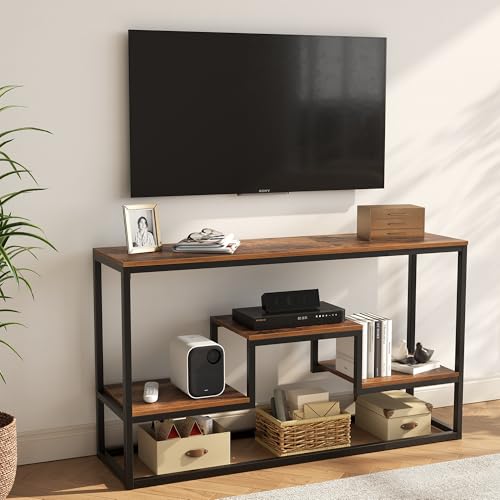
Vantimo 3-Tier Side Table, Small End Table, Sofa Side Table for Narrow Spaces, Slim End Table, Nightstand Table, for Living Room Bedroom Office, Rustic Brown
Included for 'Narrow End of Sofa Table: Dimensions and How to Fit It in Tight Spaces' because the listing specifies Small End Table and Sofa Side Table for Narrow Spaces, details this guide uses to compare options.
View on Amazon
Narrow Side Table with Storage Basket Small End Table for Small Space,Brown
Included for 'Narrow End of Sofa Table: Dimensions and How to Fit It in Tight Spaces' because the listing specifies Brown, details this guide uses to compare options.
View on Amazon
SLEEPING LAMB Side Table for Living Room, 3-Tier End Table for Small Space with Wide Storage Tabletop, Rustic Brown Narrow Nightstand for Bedroom, Sofa Couch
Included for 'Narrow End of Sofa Table: Dimensions and How to Fit It in Tight Spaces' because the listing specifies 3-Tier End Table for Small Space with Wide Storage Tabletop and Rustic Brown Narrow Nightstand for Bedroom, details this guide uses to compare options.
View on Amazon
CHOEZON Narrow Side Table with Charging Station, Skinny End Table with Fabric Basket, Slim Nightstand for Small Spaces, Small Side Table, for Living Room, Bedroom, Rustic Brown and Black TBZ07UBF
Included for 'Narrow End of Sofa Table: Dimensions and How to Fit It in Tight Spaces' because the listing specifies Skinny End Table with Fabric Basket and Slim Nightstand for Small Spaces, details this guide uses to compare options.
View on Amazon| Depth | Realistically Holds | Best Spot | Minimum Total Gap |
|---|---|---|---|
| 6 in | One drink, phone, remote | Squeezed between sofa and wall | 7 in |
| 8 in | Drink + small lamp (base under 6 in) or a paperback | Hallway-facing end of a sofa | 9 in |
| 10 in | Lamp + book + coaster | Standard side spot in a small living room | 11 in |
| 12 in | Lamp, tablet, small plant | Anywhere a regular end table almost fits | 13 in |
Height matters as much as depth. A table more than 2 inches above the arm forces you to lift your elbow to set down a glass; more than 3 inches below and you’ll knock drinks reaching down. Low-profile modern sofas often have 22–24 inch arms, which means many “narrow” tables sold at 26–28 inches tall will tower over them — check both numbers before buying.
The Stability Trade-Off Nobody Mentions
Physics works against you at these depths. A 26-inch-tall table on an 8-inch-deep base has a very low tipping threshold — a hip bump, a dog’s tail, or a toddler pulling up on the edge can bring it over, lamp and all. Expect a lightweight 8-inch-deep engineered-wood table to tip under roughly 10–15 pounds of sideways force at the top edge.
You have four ways to compensate, roughly in order of effectiveness:
- Wall anchoring. An L-bracket or anti-tip strap into a stud or drywall anchor eliminates the problem almost entirely. Only an option if you own or your lease allows small holes.
- C-table designs. The base slides 4–6 inches under the sofa, so the table is supported by the sofa’s weight, not just its own footprint. The best renter-friendly solution.
- Weighted bases. Some models put a steel plate in the bottom shelf. Look for tables weighing 20 pounds or more at 10-inch depths and under.
- Placement against two surfaces. Wedging the table into the corner where the sofa arm meets a wall gives you two bracing surfaces for free.
Avoid tall pedestal-style tables with a single column at depths under 10 inches — they’re the most tippable format in this category.
Material and Construction Trade-Offs
| Material | Typical Weight | Stability at 8–10 in Depth | What Wears First | Usual Price Range |
|---|---|---|---|---|
| Solid wood (oak, acacia, pine) | 15–30 lb | Good heft; still anchor if over 26 in tall | Surface scratches — but refininable | $80–$200 |
| Engineered wood (MDF/particleboard) | 10–20 lb | Light; tips easiest — anchor strongly advised | Veneer chips at edges; swells if drinks sweat on it | $30–$80 |
| Metal frame + wood top | 15–35 lb | Best option when the base is wider than the top | Weld joints loosen; wobbles on uneven floors | $60–$150 |
| All metal | 12–25 lb | Slim but needs a flared base to stay put | Paint chips; joints can rattle | $70–$180 |
For weight capacity, budget engineered-wood models typically rate around 20–40 pounds — fine for a lamp and drinks, not for sitting on or leaning against while you tie your shoes. Metal-frame designs commonly rate 40–75 pounds. If the table will see daily abuse from kids or pets, the metal-plus-wood combination holds up longest.
Placement Ideas for Tight Spaces
Hallway ends and walkway-facing arms
When the sofa’s end faces a walkway, the table sits in a traffic path. Keep at least 30 inches of clear passage — 36 if it’s a route to a door people use daily — and choose rounded corners, because a sharp 90-degree edge at hip height will bruise someone within a week. An 8-inch-deep table here is a drop zone for keys and mail as much as a drink spot.
The skinny gap between sofa and wall
If your sofa sits 8–13 inches off a wall, a 6–10 inch table slides into dead space. Two catches: baseboards push the table’s back edge away from the wall unless the design has a cutout, and plugging in a lamp requires either a low-profile flat plug or a table with a built-in outlet — several narrow models now include a USB-equipped power strip on the back edge, which solves both problems.
No side gap at all: go behind the sofa
When there’s truly no room beside the sofa, a long narrow table behind the sofa is the better fix. These sofa tables run 10–14 inches deep and should span roughly two-thirds to the full length of the couch — a 72–84 inch sofa pairs with a 60–72 inch console. Set the top at or just below the sofa back height (usually 30–36 inches) and leave 2–3 inches behind it for cords if you plan to charge devices there. This setup also anchors floating furniture in an open-plan room.
Between seating pieces
A 6–8 inch table fits between a sofa and an adjacent recliner where a standard table won’t — just verify the recliner’s clearance first, since most recliners need 3–5 inches of side room for the mechanism and 12–16 inches behind to fully recline.
Match the Table to Your Situation
| Your Situation | Best Pick | Why |
|---|---|---|
| Gap under 8 inches | 6 in table or C-table | The only formats that physically fit |
| Renter, no wall drilling | Weighted-base C-table | Sofa weight provides stability, zero holes |
| Kids or large pets | Metal frame, rounded corners, wall-anchored | Survives bumps and climbing |
| Need a real lamp | 10–12 in depth minimum | Most lamp bases are 6–8 in wide |
| Drink and phone only | 6–8 in, possibly a sofa arm tray | Don’t pay for depth you won’t use |
| Zero side clearance | Long narrow console behind sofa | Uses dead space instead of fighting for it |
How to Measure Before You Buy
- Measure the gap at its narrowest point. Baseboards, sofa skirts, and curved arms all shrink the real opening. Measure at floor level and at arm height.
- Subtract 1–2 inches. A table jammed tight against upholstery rubs the fabric and looks accidental.
- Check sofa arm height and hold the table within 1–2 inches of it.
- Check what moves nearby — door swings, recliner footrests, and drawer pulls on adjacent pieces.
- Confirm the power plan if a lamp or charger will live there; a rear outlet behind a 6-inch-deep table may be unreachable without a flat plug.
- Check shipping weight and box size. Most of these ship flat-packed at 15–35 pounds, which fits through any standard 30-inch interior door — assembled units up to 12 inches deep still clear doorways on their side.
FAQ
Can a 6-inch-deep table hold a lamp?
Only if the lamp base is under about 5.5 inches across, which rules out most table lamps. At that depth, a plug-in wall sconce or a clamp light mounted to the table edge is the practical answer.
How much weight can a narrow end table take?
Budget models are typically rated for 20–40 pounds; sturdier metal-frame versions handle 40–75 pounds. Either way, treat the rating as a static load — dynamic loads like a child grabbing the edge are what actually tip these tables.
My gap is under 6 inches. What then?
Skip the table entirely. Use a C-table that shares the sofa’s footprint, a weighted sofa arm tray, or move the surface behind the sofa with a long narrow console table.
The short version: measure the gap first, let that number pick your depth, and plan for stability before you plan for style — at 6 to 12 inches deep, anchoring or a C-shaped base isn’t optional, it’s the difference between a side table and a floor hazard.