Key takeaways
- Swivel top rating: The maximum weight the rotating platform itself can support. This should be 1.5 times your TV’s weight. A 50-lb TV needs at least a 75-lb top rating.
- Top surface rating (non-swivel portion): Often higher, 100–150 lbs, but irrelevant if your TV sits on the swivel disk.
- Shelf ratings: Usually 20–40 lbs per open shelf, for consoles and streaming boxes.
What's inside
A tv stand with swivel top that actually holds up long-term uses a metal ball-bearing base rated for at least 1.5x your TV’s weight and limits rotation to 60 to 90 degrees, while 360-degree plastic-ring swivels wear faster and require far more wall clearance.
60 vs 90 vs 360 Degrees: How Much Rotation You Really Need
Rotation range determines both viewing flexibility and how much space you need behind the stand. Most swivel tops are not designed for full spins with a large TV mounted.

SANUS Universal TV Stand for 40-86” TVs w/Height Adjustment & Swivel
Included for 'TV Stands With Swivel Tops: Which Rotating Bases Hold Up' as a relevant option in this category; details come from the product listing.
View on Amazon
Perlegear Universal Swivel TV Stand Base for 32–70 inch TVs to 88lbs
Included for 'TV Stands With Swivel Tops: Which Rotating Bases Hold Up' because the listing specifies 70 inch TVs to 88lbs, details this guide uses to compare options.
View on Amazon
PERLESMITH Universal Swivel TV Stand for 37-80 inch TVs, Holds up to 99lbs
Included for 'TV Stands With Swivel Tops: Which Rotating Bases Hold Up' because the listing specifies Holds up to 99lbs, details this guide uses to compare options.
View on Amazon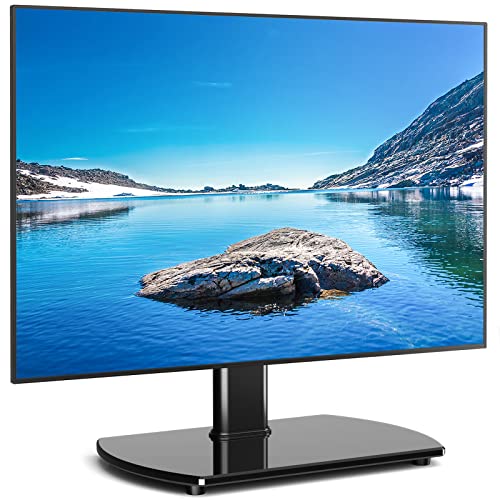
Rfiver Universal Swivel TV Stand for 27-50 55 60 Inch TVs
Included for 'TV Stands With Swivel Tops: Which Rotating Bases Hold Up' as a relevant option in this category; details come from the product listing.
View on Amazon60-Degree Swivel (30 degrees each side)
This is the most stable and durable option, common on mid-century and farmhouse-style stands with a dedicated swivel platform on top. It provides enough angle to cover an L-shaped living room or an open kitchen-living area without stressing cables. Because the rotation is limited, internal stops prevent the TV from over-rotating and pulling cords or hitting the wall.
90-Degree Swivel (45 degrees each side)
The sweet spot for most buyers. You can angle a 55 to 65-inch TV toward a dining area or second sofa and return it to center easily. Well-built 90-degree swivels use two metal stops inside the bearing, so the top clicks gently at center. This range still protects cables and requires only moderate rear clearance.
360-Degree Swivel
Full rotation sounds versatile but is rarely useful for a TV. It is designed for monitor stands, small screens under 32 inches, or displays used as room dividers. With a TV larger than 50 inches, a 360-degree top means the corners of the TV will swing well beyond the stand’s footprint, requiring 10 to 14 inches of clearance behind the stand and creating a tipping risk if children push the screen. These mechanisms also lack a positive center lock, so the TV drifts.
Metal Bearing vs Plastic Ring: What Holds Up
The mechanism under the swivel top determines wobble, noise, weight capacity, and lifespan. You can usually identify the type by the spec sheet description or by price range.
| Mechanism Type | How It Works | Typical Weight Rating | Rotation Feel | What Wears First | Price Range |
|---|---|---|---|---|---|
| Metal Ball-Bearing Turntable | Steel ball bearings in a circular race, often with a steel center pin | 80–120 lbs for the swivel top alone | Smooth, silent, stays level under load | Almost nothing for 5+ years; occasional tightening of center bolt | usually $250–$600 for the full stand |
| Metal Lazy Susan with Stops | Low-profile steel bearing with bent-metal stops at 60 or 90 degrees | 60–100 lbs | Firm center detent, slight click at ends | Stops can bend if forced past limit | usually $200–$500 |
| Plastic Ring / Nylon Glide Ring | TV sits on a plastic or nylon ring that slides on the base | 40–60 lbs | Scratchy, needs two hands, wobbles with screens over 50 inches | Ring warps or develops flat spots within 1–2 years, causing sag and squeak | usually $120–$280 |
If your TV weighs 35 to 55 lbs, which covers most 55 to 65-inch LED models, avoid any plastic-ring swivel rated under 60 lbs. A metal bearing rated for 80 lbs or more leaves headroom for the mount, soundbar, and the force of turning the screen, which adds momentary lateral load that a static weight rating does not show.
Weight Ratings: Top vs Shelf vs Whole Stand
Listings often bury three different numbers. For a tv stand with swivel top, only the swivel top rating matters for safety.
- Swivel top rating: The maximum weight the rotating platform itself can support. This should be 1.5 times your TV’s weight. A 50-lb TV needs at least a 75-lb top rating.
- Top surface rating (non-swivel portion): Often higher, 100–150 lbs, but irrelevant if your TV sits on the swivel disk.
- Shelf ratings: Usually 20–40 lbs per open shelf, for consoles and streaming boxes.
Also check how weight is distributed. Swivel tops are typically 16 to 22 inches in diameter. TVs with wide-set legs may overhang the disk, concentrating weight on the edge and causing tilt. A TV with a central pedestal stand or a VESA-mounted post is more stable on a swivel than one with two far-apart feet.
Clearance You Need Behind the Stand
This is the measurement product pages skip. When you rotate the TV, its back corners swing in an arc. If the stand is too close to the wall, the corner will hit the wall, the power cord will be pinched, and the swivel will be blocked.
Measure from the wall to the center pin of the swivel. You need enough depth so the widest point of the TV can complete its turn without contact.
| TV Size (16:9) | TV Width | Clearance Needed for 60-Degree Turn | Clearance Needed for 90-Degree Turn | Minimum Stand Depth Recommended |
|---|---|---|---|---|
| 50 inch | 44 inches | 4.5 inches behind swivel center | 7 inches behind swivel center | 15–16 inches |
| 55 inch | 48 inches | 5.5 inches behind swivel center | 8.5 inches behind swivel center | 15–18 inches |
| 65 inch | 57 inches | 6.5 inches behind swivel center | 11 inches behind swivel center | 18–20 inches |
| 75 inch | 66 inches | 7.5 inches behind swivel center | 13 inches behind swivel center | 20+ inches, or wall-mount instead |
In a typical 10×12 ft living room, a 15-inch deep stand placed 8 to 9 inches from the wall takes up 23 to 24 inches of total floor depth. That still leaves about 9 feet of usable room depth, but a 20-inch deep stand for a 75-inch TV will push you to within 7 feet of the opposite sofa, which feels cramped. For large screens, a narrower stand with a 60-degree limit is more room-friendly than a deep stand with 90 degrees.
Also leave 2 to 3 inches of open space behind the stand for cables. Swivel tops that rotate with cables attached need a loose service loop tied with a velcro strap, not a tight zip-tied bundle, otherwise you will feel resistance and eventually break an HDMI connector.
Which Swivel Should You Pick? A Decision Matrix
| Your Situation | Best Rotation Range | Best Mechanism | Why |
|---|---|---|---|
| Small apartment, one main sofa plus kitchen viewing angle | 60 degrees | Metal bearing with center detent | Minimal clearance needed, stable in tight traffic paths |
| Open-concept living/dining, TV needs to serve two zones | 90 degrees | Metal ball-bearing or metal lazy Susan with stops | Wide enough angle without requiring full room depth |
| Bedroom or kids’ room with TV under 50 inches | 60 degrees | Metal bearing, swivel top rated 60+ lbs | Prevents over-rotation and tipping, kids cannot spin it freely |
| Need to hide cables and use a soundbar | 60 to 90 degrees with cord cutouts | Metal bearing with hollow center post | Lets cables pass through the center so they do not wrap around the base |
| Renter who cannot wall-mount, TV over 65 inches | Do not use a swivel top; choose a fixed top stand 60+ inches wide | N/A | At this size the leverage and clearance make swivels unstable; a low, wide fixed stand is safer |
Assembly, Moving, and What Fails First
Swivel stands ship in one or two boxes weighing 45 to 85 lbs total. The swivel disk is often pre-assembled, but you will need to bolt the bearing to the stand top with 4 to 8 screws and align the center pin. Budget 45 to 75 minutes for assembly. The most common error is over-tightening the center bolt, which locks the bearing and creates wobble.
Check doorway and hallway fit before buying. Assembled width is typically 48 to 60 inches. If you live in an apartment with a 29 to 30-inch doorway, assemble in the room where the stand will live. Engineered wood stands with swivel tops are heavier and harder to move later without loosening the bearing screws, so keep the base level and lift, do not drag.
Durability realities by construction:
- Solid wood frame with metal bearing: Lasts longest. The screws bite into wood and stay tight. Main wear point is surface scratching on the swivel disk from rotating with grit underneath.
- Engineered wood (MDF/particleboard) with metal bearing: Common in the $200–$400 range. Holds well if the bearing uses through-bolts with washers. If it uses only short wood screws into particleboard, the screws loosen after a year of daily turning and the top develops play. Look for models that list metal reinforcement plates under the swivel.
- Glass or thin engineered wood with plastic ring: Feels smooth at first but warps under heat from consoles and develops a permanent dip where the TV sits. Once warped, the swivel grinds.
To make any swivel last, dust the bearing track every few months, keep the center bolt snug but not locked, and never force past the built-in stops. If the top starts to wobble, remove the TV, tighten all bearing fasteners evenly in a star pattern, and check that the floor is level. A 1/4-inch shim under one leg often eliminates wobble that looks like a bearing problem.
Final Spec Check Before You Buy
For a tv stand with swivel top that stays solid and fits your room, confirm these four numbers on the spec sheet before ordering: rotation range limited to 60 or 90 degrees, metal ball-bearing construction, swivel top weight rating at least 1.5x your TV weight, and stand depth plus required wall clearance that still leaves you at least 7 feet of viewing distance for a 55 to 65-inch screen. If any of those specs are missing, assume a plastic ring and plan for more clearance and earlier wear.