Key takeaways
- Using water on S-code microfiber. It leaves a brown ring as minerals and dissolved dirt dry at the edge.
- Soaking instead of misting. Liquid that reaches the foam causes odor and takes days to dry.
- Colored sponges or cloths. Blue sponge dye on a gray sectional is permanent.
- Scrubbing hard while wet. Wet microfiber pills and mats. Blot while damp, brush when dry.
- Cleaning only the stain. A spotless 6-inch circle on a slightly dingy cushion is more visible than the original stain.
- Bleach, peroxide, or “oxy” sprays. They lighten polyester dye unevenly.
- Skipping the nap brush. The most common reason home-cleaned microfiber looks worse than before.
- Reassembling sections while damp. Moisture trapped in the joints breeds mildew.
Microfiber is one of the most forgiving upholstery fabrics, which is exactly why people ruin it. Because it resists stains, owners wait too long, then attack a set-in mark with a wet rag and a scrub brush. The result is a stiff, darkened patch with a hard water ring around it, crushed nap that catches the light differently from the rest of the seat, and, on cheaper sectionals, a musty smell where water reached the foam and never dried. A sectional makes this worse because it has more surface area, more seams, and a chaise or sleeper deck that traps crumbs. The fix is not more effort. It is the right solvent for the fabric code, very little liquid, and a brush at the end to restore the nap.
What You Need
| Item | Why | Optional? |
|---|---|---|
| Vacuum with upholstery and crevice tools | Grit ground into microfiber acts like sandpaper on the nap | No |
| 70 percent isopropyl (rubbing) alcohol in a spray bottle | The correct cleaner for S-code microfiber; evaporates before it reaches the foam | No for S code |
| Clear dish soap and lukewarm water | Cleaner for W-code microfiber, 1 teaspoon per 2 cups | No for W code |
| White or light-colored sponges (2 to 3) | Colored sponges bleed dye into the fabric | No |
| Soft-bristle scrub brush or clean toothbrush | Restores nap after cleaning so patches disappear | No |
| White microfiber cloths (3 to 4) | Blotting and drying without lint | No |
| Baking soda | Odor absorption and grease lifting | Yes |
| Enzyme cleaner | Pet accidents and food protein | Yes |
| Distilled water | Rinse without mineral rings on light fabric | Recommended |
| Box fan | Cuts drying time from 6 hours to 2 | Recommended |
Step-by-Step
1. Find the cleaning code (2 minutes)
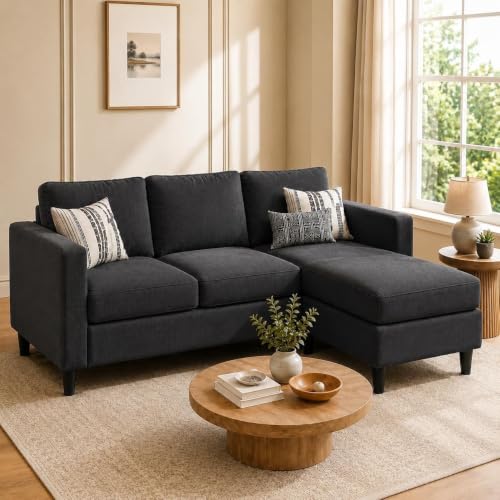
Check the tag under a seat cushion or on the frame under the deck. W means water-based cleaners. S means solvent only, which for home use means rubbing alcohol. WS means either. X means vacuum only. Most microfiber sectionals in the $250 to $600 range, such as a 73.6-inch small L-shaped sectional with ottoman or an L-shaped microfiber sleeper sectional, are polyester microfiber coded S or WS. If there is no tag, use alcohol; it is safe on nearly all synthetic microfiber and it will not leave water rings.
Our top picks

As an Amazon Associate we earn from qualifying purchases at no extra cost to you.
2. Strip and vacuum every section (15 to 20 minutes)
Pull the seat and back cushions off if they are loose. Vacuum both sides of each cushion, then the deck, the inside arms, the chaise, and the seams where sections meet. Use the crevice tool under the sleeper mechanism if you have one; a sleeper deck hides a surprising amount of debris. Slide the sections apart a few inches to reach the joint. Expect 20 minutes for a five-seat sectional.
3. Test in a hidden spot (5 minutes)
Spray a small area under a cushion or on the back of the chaise. Blot with a white cloth after 2 minutes. If color transfers or the fabric stiffens, stop and move to the professional section. Alcohol on polyester microfiber almost never causes problems, but a test costs 5 minutes and a ruined seat cushion costs a sectional.
4. Spot-clean stains (10 to 20 minutes)
Lightly mist the stain with alcohol until it is damp, not wet. Blot with a white sponge, working from the edge inward. Repeat with a fresh section of sponge until the sponge comes away clean. For grease or food, sprinkle baking soda first, wait 15 minutes, vacuum, then treat with alcohol. For pet urine, use an enzyme cleaner per label directions before the alcohol; alcohol alone kills odor bacteria at the surface but does not break down uric acid crystals deeper in the fabric.
5. Clean whole panels, not just spots (20 to 30 minutes)
Microfiber shows clean patches. Once a stain is out, mist the entire seat cushion or back panel and wipe in overlapping strokes with a damp sponge. Work one section of the sectional at a time. A three-seat run plus a chaise takes about 25 minutes. Keep the fabric barely damp; alcohol flashes off in 5 to 10 minutes, which is what prevents rings.
6. Rinse W-code fabric (10 minutes)
If you used soapy water on W-code microfiber, go over each panel with a cloth dampened in distilled water to remove soap film. Skip this step for alcohol; there is nothing to rinse.
7. Dry with airflow (1 to 4 hours)
Point a fan at the cleaned sections and leave cushions standing on edge so both faces dry. Alcohol-cleaned fabric is dry to the touch in about an hour; soap-and-water cleaning needs 3 to 4 hours. Do not put cushions back in place or sit on the sectional until it is fully dry, and never use a hair dryer or space heater, which can melt or glaze polyester fibers.
8. Brush the nap back (10 minutes)
Once dry, brush every cleaned panel firmly in one direction with the soft-bristle brush, then in the opposite direction. This lifts fibers that were flattened by the sponge and blends the cleaned area into the rest. Skipping this step is why cleaned microfiber often looks stiff or shiny. Finish by running the vacuum’s upholstery tool over everything once more.
Mistakes to Avoid
- Using water on S-code microfiber. It leaves a brown ring as minerals and dissolved dirt dry at the edge.
- Soaking instead of misting. Liquid that reaches the foam causes odor and takes days to dry.
- Colored sponges or cloths. Blue sponge dye on a gray sectional is permanent.
- Scrubbing hard while wet. Wet microfiber pills and mats. Blot while damp, brush when dry.
- Cleaning only the stain. A spotless 6-inch circle on a slightly dingy cushion is more visible than the original stain.
- Bleach, peroxide, or “oxy” sprays. They lighten polyester dye unevenly.
- Skipping the nap brush. The most common reason home-cleaned microfiber looks worse than before.
- Reassembling sections while damp. Moisture trapped in the joints breeds mildew.
How Often
Vacuum weekly, including the seams between sections and under loose cushions. Spot-treat spills immediately; alcohol lifts a fresh coffee or juice spill in under 5 minutes, while the same spill after a week needs two or three passes. Do a full panel cleaning every 3 to 4 months, or every 6 to 8 weeks with pets or young children. Rotate and flip loose seat cushions monthly so wear and cleaning frequency stay even across the sectional; the chaise usually gets the most use and fades first.
When to Call a Pro or Replace
Call a professional upholstery cleaner when the fabric is X-coded, when odor persists after enzyme treatment (the foam is contaminated), when a stain has resisted three careful attempts, or when the sectional has already developed water rings from a previous bad cleaning. Professional cleaning of a sectional typically costs $150 to $300 depending on the number of sections and takes 2 to 3 hours plus drying.
Replacement makes more sense when the fabric has worn shiny or thin at the front seat edges, when the nap no longer recovers after brushing, or when the frame or foam has failed. Budget microfiber sectionals in the $250 to $550 range often have 1.5-to-1.8-density foam that flattens within 3 to 5 years; at that point new cushion inserts run $150 to $250 for a full set, and a professional reupholstery quote of $800 or more will exceed the sofa’s value. In 2026 a new compact sectional often costs less than a deep clean plus new foam on an old one.
FAQ
Can I use a steam cleaner on a microfiber sectional?
Only on W or WS fabric, and only with a handheld upholstery attachment at low steam, held 6 inches away and kept moving. Steam is useful for lifting flattened nap and killing odor bacteria but drives moisture into the foam if you linger. Never steam S-code microfiber; the heat and moisture can leave permanent marks.
Why does my microfiber look blotchy after cleaning?
Two reasons: water rings from too much liquid, or crushed nap from sponging. Fix rings by misting the entire panel evenly with rubbing alcohol and letting it dry with a fan. Fix crushed nap by brushing the dry fabric firmly with a soft-bristle brush in both directions.
How do I get pet hair out of microfiber?
A rubber glove dampened with water and wiped across the fabric rolls hair into clumps you can pick up. A rubber squeegee or a lint brush works too. Finish with the vacuum upholstery tool. Microfiber holds static, so a light mist of water or an anti-static spray on the cloth before wiping helps.
Is rubbing alcohol safe on colored microfiber?
Nearly always, because polyester microfiber is solution-dyed and alcohol does not dissolve the dye. Still test a hidden spot first, especially on very dark colors like espresso or navy, and let it dry fully before judging. If the test cloth shows color, switch to a professional cleaner.