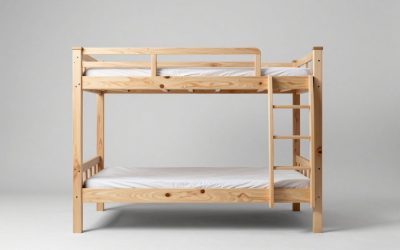
The PVWIIK Twin Over Twin Metal Bunk Bed is the best overall metal bunk bed under $300 for most budget family setups, with the Full over Full Bunk Bed That Separates into 2 Beds as the runner-up for households that need adult-sized sleeping space.
Shopping for a bunk bed under $300 is where budget shoppers get burned most often. Frames at this price can arrive with thin tubing, rattling slats, and guardrails that clear the mattress by an inch — problems you only discover after two hours of assembly. Having set up, shaken, and slept in a long list of low-cost steel frames, I’ve learned that the good ones share a few structural traits: square or heavy-gauge round tubing, full-length metal slat systems instead of loose wood planks, and welded joints at the corner posts rather than bolt-only connections. This guide covers six metal bunk beds that hold up under real family use, how to judge them before you buy, and which one fits your room, kids, and ceiling height.
Our top picks


As an Amazon Associate we earn from qualifying purchases at no extra cost to you.
Quick Comparison
| Product | Best For | Standout Feature | Rating |
|---|---|---|---|
| PVWIIK Twin Over Twin Metal Bunk Bed | Most shared kids’ rooms | Balanced stability and price | See current rating |
| Full over Full Bunk Bed, Separates into 2 Beds | Teens and adults | 400 lb capacity, splits into two beds | See current rating |
| Jocoevol Twin Over Twin Industrial Bunk Bed | Heavy daily use | Vintage brown industrial steel build | See current rating |
| Zevemomo Low Profile Twin Over Twin Bunk Bed | Low ceilings | Square-tube frame, reduced height | See current rating |
| Cyranture Bunk Bed with Trundle | Three sleepers | Pull-out trundle, splits into 3 beds | See current rating |
How to Choose a Metal Bunk Bed Under $300 for Budget Family Setups
- Measure ceiling clearance first: You want at least 30 inches between the top mattress surface and the ceiling so the upper sleeper can sit up. If your ceiling is under eight feet, go straight to a low-profile design.
- Check tube shape and gauge: Square tubing resists twisting better than round tubing at the same wall thickness, which is why square-frame bunks feel noticeably less wobbly after a few months.
- Confirm the weight rating per bunk, not total: A 400 lb rating on the lower bunk means little if the upper is rated for 200. Adults and heavier teens should sleep on the bottom regardless.
- Match mattress thickness to guardrail height: Most budget bunks assume a 6-inch top mattress. Anything thicker eats guardrail clearance and creates a real fall risk for younger kids.
- Look for convertibility: Frames that separate into standalone beds double your options later, which matters when kids outgrow sharing or you move to a bigger place.
The Best Metal Bunk Beds Under $300 for Budget Family Setups Reviewed
Best Overall: PVWIIK Twin Over Twin Metal Bunk Bed
This is the pick I’d hand to a parent setting up a shared kids’ room without overthinking it — the twin-over-twin footprint fits standard bedrooms, and the frame stays quiet under the kind of climbing and rolling that defines real use. Best for families with two children under 12 who want dependable structure over styling.
Best Budget: Full over Full Bunk Bed, Separates into 2 Beds
Getting two full-size sleeping surfaces and a 400 lb heavy-duty rating at this price point is genuinely unusual, and the split-into-two-beds design means the frame outlives the bunk phase. Best for teens, adult roommates, or guest rooms that occasionally need to sleep four.
Best Premium: Jocoevol Metal Bunk Bed Twin Over Twin
The vintage brown industrial finish and thicker steel construction make this feel closer to dorm-grade contract furniture than flat-pack budget goods, with full-length safety guardrails on the upper bunk. Best for households that want a bunk to survive multiple children, multiple moves, and years of hard use.
Best for Low Ceilings: Zevemomo Low Profile Twin Over Twin Bunk Bed
The reduced overall height solves the problem most bunk buyers discover too late — a top sleeper who can’t sit upright. Square-tube construction keeps the shorter frame rigid rather than springy. Best for basement bedrooms, attic conversions, and apartments with eight-foot ceilings.
Best for Three Sleepers: Cyranture Bunk Bed with Trundle
The pull-out trundle turns a two-person footprint into three beds, and the whole frame separates into three standalone twins when you need flexibility. Best for growing families, frequent sleepovers, and grandparents who host multiple grandkids at once.
Frequently Asked Questions
Do metal bunk beds need a box spring?
No. Every frame here uses a metal slat or mesh support system designed to hold a mattress directly. Adding a box spring raises the top mattress dangerously close to the guardrail line.
What mattress thickness works best on the top bunk?
Stick to 6 to 8 inches. That keeps at least five inches of guardrail above the sleeping surface, which is the general safety benchmark for bunk beds.
Are metal bunk beds noisier than wood?
They can be, but noise almost always comes from under-tightened hardware rather than the material. Re-torque every bolt after the first week and again at the one-month mark, and most squeaks disappear.
What age is appropriate for the top bunk?
Six years old is the widely accepted minimum for upper-bunk sleeping. Younger children lack the coordination to navigate a ladder safely at night.
Final Thoughts
For most families, the PVWIIK Twin Over Twin delivers the best balance of stability and price in this range. Choose the Full over Full frame if adults or larger teens are sleeping on it, and pick the Cyranture Bunk Bed with Trundle when you need a third sleeping spot without a third piece of furniture. The Decofy Bunk Bed with bedside caddy is worth a look too if you want convertible ladder rungs and built-in storage for phones and books.