Key takeaways
- Power source: Electric heaters are convenient at campgrounds with shore power, while propane models can be useful when electricity is unavailable. Check your RV’s power limits before choosing a 1,500-watt unit.
- Safety features: Prioritize automatic overheat protection, tip-over shutoff, a stable base, and a housing that stays reasonably cool during operation. Keep every heater clear of bedding, curtains, clothing, and furniture.
- Size and placement: A low-profile heater is easier to position safely in a narrow aisle, while a tower design can spread warmth across a larger living area. Wall-mounted models save floor space but require more permanent installation.
- Controls: A thermostat, timer, remote, and multiple heat settings make it easier to maintain comfort without repeatedly getting up or overheating the cabin.
- Noise and airflow: Fan noise is amplified in compact interiors. Look for quiet operation and adjustable airflow, especially if the heater will run near a bed or dining area.
What's inside
Heating an RV is more complicated than warming a conventional room. Space is tight, shore-power capacity may be limited, and a heater that seems quiet at home can sound surprisingly loud in a small cabin. You also need dependable tip-over and overheat protection, a stable footprint, and controls you can reach without climbing out of bed.
This guide focuses on practical RV comfort rather than headline wattage alone. We compare portable electric, wall-mounted, and propane options for different layouts and camping styles, with attention to noise, controls, portability, safety features, and how easily each heater fits into everyday RV routines.
As an Amazon Associate we earn from qualifying purchases.




How to Choose a/an Rv Space Heater (2026)
- Power source: Electric heaters are convenient at campgrounds with shore power, while propane models can be useful when electricity is unavailable. Check your RV’s power limits before choosing a 1,500-watt unit.
- Safety features: Prioritize automatic overheat protection, tip-over shutoff, a stable base, and a housing that stays reasonably cool during operation. Keep every heater clear of bedding, curtains, clothing, and furniture.
- Size and placement: A low-profile heater is easier to position safely in a narrow aisle, while a tower design can spread warmth across a larger living area. Wall-mounted models save floor space but require more permanent installation.
- Controls: A thermostat, timer, remote, and multiple heat settings make it easier to maintain comfort without repeatedly getting up or overheating the cabin.
- Noise and airflow: Fan noise is amplified in compact interiors. Look for quiet operation and adjustable airflow, especially if the heater will run near a bed or dining area.
The Best Rv Space Heater (2026)s Reviewed
DREO 2026 Upgraded Portable Heater
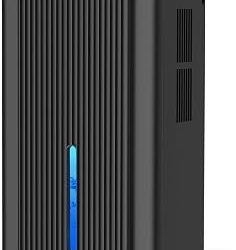
The 2026 upgraded DREO is a strong all-around electric choice for an RV bedroom, office nook, or lounge area. Its 34dB quiet rating, thermostat, five modes, remote, and 12-hour timer are especially useful in a small space where fan noise and temperature swings are hard to ignore.
Xtreme Heaters Boat Cabin RV Space Heater
Designed with compact cabins in mind, the Xtreme Heaters model has a stable low-profile base and straightforward 750- or 1,500-watt settings. Tip-over and overheat protection add welcome reassurance, while the six-foot cord gives you more flexibility when the nearest outlet is awkwardly positioned.
GiveBest Smart Wall Heater
The GiveBest Smart Wall Heater is appealing when floor space is at a premium. Its wall-mounted format, adjustable thermostat, remote, 24-hour timer, and Alexa compatibility can make scheduled heating convenient, though installation and outlet placement deserve extra planning in an RV.
Mr. Heater Little Buddy Propane Heater
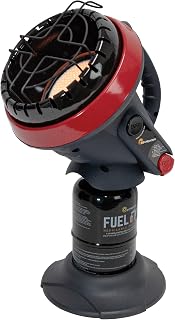
The 3,800 BTU Little Buddy is the standout for campers who need radiant propane heat rather than an electric fan heater. It is compact and useful for supplemental warmth, but propane appliances require careful ventilation, appropriate clearance, and strict attention to the manufacturer’s operating instructions and carbon-monoxide safety guidance.
DREO Oscillating Portable Heater
This second DREO option adds 70-degree oscillation, helping distribute warmth across a wider RV living area instead of concentrating it in one spot. ECO mode, five settings, a remote, and a 12-hour timer make it a versatile pick for owners who want broad, quiet heat without giving up portability.
Frequently Asked Questions
Can I use a 1,500-watt heater in an RV?
Usually, but it depends on the campsite connection, the RV’s electrical system, and what else is running. At 120 volts, a 1,500-watt heater draws roughly 12.5 amps, so avoid overloading the same circuit with coffee makers, microwaves, or other high-draw appliances.
Are ceramic heaters good for RVs?
Yes. Ceramic PTC heaters offer fast electric warmth, adjustable output, and compact designs that suit small interiors. They still need open airflow and a clear safety zone, and they should be placed on a solid, level surface.
Is a propane heater safe inside an RV?
Only when it is specifically approved for indoor use and operated exactly as directed. Maintain ventilation, keep it away from combustible materials, use a working carbon-monoxide detector, and never leave a fuel-burning heater unattended or running while sleeping unless the manufacturer explicitly permits it.
Where should an RV space heater go?
Place it on a level, nonflammable surface with generous clearance around the intake and outlet. Keep it away from curtains, bedding, clothing, slide-outs, and high-traffic walkways; a heater should never be used as a substitute for a properly installed RV heating system.
Final Thoughts
For most RV owners, the 2026 upgraded DREO is the best balance of quiet operation, controls, and everyday convenience, while the oscillating DREO is better for spreading warmth through a broader cabin. Choose the Xtreme Heaters model for a simple, low-profile portable design, or the Little Buddy when propane-powered radiant heat better matches your camping setup.