Key takeaways
- Measure from the floor to the top of your shoulders and compare that with the chair’s shoulder-zone guidance.
- Check whether the foot massagers accommodate your shoe size and calf width.
- Confirm the seat width and weight limit rather than relying on photographs.
- Leave enough room for the chair to recline, including clearance from walls and nearby furniture.
What's inside
A massage chair can turn an unused corner into a convenient relaxation zone, but choosing one is less straightforward than comparing a few features on a product page. Track design, chair size, programming, heat, noise, and setup quality all affect whether you will use it regularly—or quickly stop noticing it.
This guide takes a practical home-comfort view of the category. You will learn how massage technology translates into everyday comfort, which features deserve attention, how to check whether a chair will fit your room and body, and which compromises are reasonable at different budgets. The models shown below are useful starting points, not substitutes for checking measurements and return policies.
As an Amazon Associate we earn from qualifying purchases.


🛒 Best Price Today on Amazon
Prime members get fast, free shipping on everything above, plus member-only deals. New members get a 30-day free trial — cancel anytime.
Start with the massage track
The track is the rail guiding the rollers along your back. An S-track follows the natural curve of the spine, while an L-track continues beneath the seat toward the glutes and upper thighs. For most home users, an L-track offers broader coverage, particularly if you like pressure around the hips. A longer track is not automatically better, however: roller placement and adjustment range matter just as much.
Some chairs add 3D or 4D movement. In simple terms, 3D rollers can move in and out to vary pressure, while 4D systems attempt to vary speed as well. These features can make a session feel more nuanced, but they are worth paying for only if the controls let you reduce intensity easily. A chair that feels impressive for five minutes but too forceful after fifteen is not a comfortable upgrade.
Match the chair to your body
Massage chairs are not one-size-fits-all. Look for the manufacturer’s recommended height range, maximum user weight, and shoulder, calf, and foot dimensions. A body scan can help the chair position rollers more accurately, but it cannot overcome a poor physical fit. If the headrest pushes your neck forward or your feet do not sit securely in the foot wells, extra programs will not solve the problem.
- Measure from the floor to the top of your shoulders and compare that with the chair’s shoulder-zone guidance.
- Check whether the foot massagers accommodate your shoe size and calf width.
- Confirm the seat width and weight limit rather than relying on photographs.
- Leave enough room for the chair to recline, including clearance from walls and nearby furniture.
Choose controls you will actually use
Touchscreens, LCD remotes, phone controllers, and app control can all work well, but convenience depends on execution. A dedicated handset is useful when you want to adjust pressure without reaching for a phone. Apps are handy for saving preferences, while voice prompts can make a session easier to follow. Look for clearly labeled intensity, zone, pause, and stop controls.
Automatic programs are a good way to begin, especially if you are new to massage chairs. Five to fifteen modes may cover relaxation, stretching, recovery, and targeted sessions, but the number itself is not a quality measure. Manual controls that let you adjust roller speed, airbag pressure, heat, and massage area are usually more valuable than a long list of nearly identical presets.
Assess comfort features and construction
Zero-gravity reclining raises the legs and distributes pressure across the back and seat. It can feel restful after a long day, although it also increases the chair’s footprint. Airbags around the shoulders, arms, hips, and calves provide compression rather than a roller massage; some people enjoy that enveloping sensation, while others find it too tight. Make sure air pressure can be reduced or switched off.
Heat is most useful when it is localized and adjustable. Waist or lower-back heating may suit people who prefer gentle warmth, while heated calf sections can make a longer session feel more comfortable. Bluetooth speakers are a pleasant extra, but they should not outweigh upholstery quality, stable reclining, quiet motors, or a responsive warranty process. Features such as a child lock and a physical pause button are sensible in busy homes.
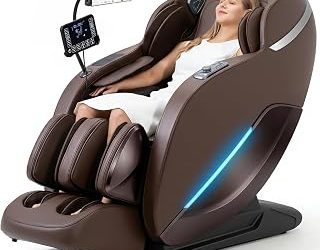
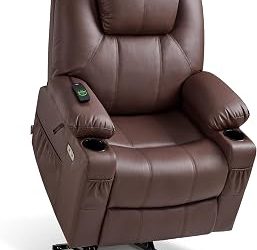
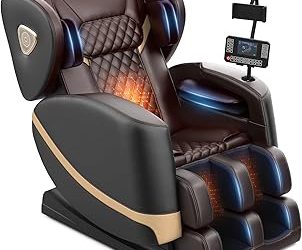
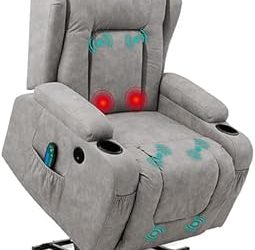
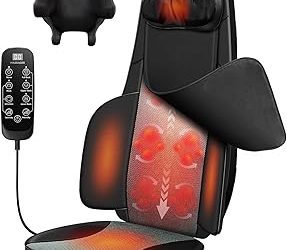
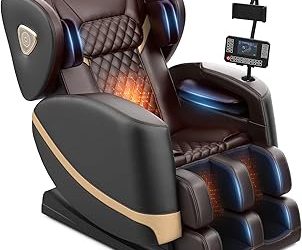
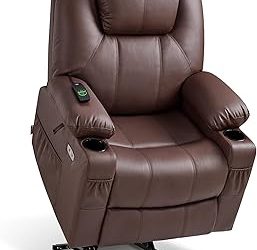
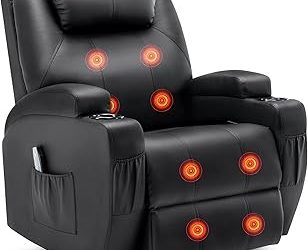
Among the listed options, the FURNIMAT Full Body Zero Gravity Recliner combines a relatively straightforward feature set—heat, foot massage, airbags, and a touchscreen—with the appeal of a newer model. The 4D 55-inch SL-Track chair is aimed at shoppers who want extensive programming, body scanning, yoga stretch, and app control. Real Relax models range from the Favor-06 with a phone controller and body measurements to simpler chairs with dual-core S-tracks, LCD controls, or the 2026 SL-track design with an upgraded screen and voice broadcast. The pre-assembled Real Relax full-body model may be especially attractive if setup is a concern.
Consider installation, maintenance, and safety
Before ordering, check delivery details carefully. A large massage chair may arrive in multiple boxes, require two or more people to move, or need a doorway and stairwell wider than expected. Pre-assembled delivery can save time, but confirm whether room placement and packaging removal are included.
Use the chair as directed, begin with short, low-intensity sessions, and stop if you experience pain, numbness, dizziness, or unusual discomfort. People who are pregnant or managing conditions involving circulation, blood pressure, implanted medical devices, recent surgery, or significant back and joint problems should ask a qualified healthcare professional before using one. Keep children away from moving mechanisms, and never treat a chair’s massage programs as medical treatment.
Tips
- Try to test a chair for at least ten minutes, including reclining, foot massage, and the lowest and highest practical intensities.
- Measure doorways, turns, ceiling heights, and the final reclining clearance before delivery day.
- Prioritize a clear return policy, parts availability, and warranty support over an impressive feature count.
- Start with a gentle automatic mode, then save a manual setting once you know which areas and pressures suit you.
Frequently Asked Questions
Are massage chairs worth the space?
They can be if you use one several times a week and have a dedicated location. They are substantial pieces of furniture, so occasional users may prefer a compact recliner, massage cushion, or handheld device instead.
Is an L-track better than an S-track?
Neither is universally better. An L-track reaches farther under the seat, while an S-track may provide a simpler, more compact design. Choose based on the areas you want covered, the chair’s fit, and the quality of its roller adjustment.
How long should a massage-chair session last?
Follow the manufacturer’s guidance and begin with a short session, often around 10 to 15 minutes. Increase duration only if the experience remains comfortable, and avoid assuming that stronger or longer is more beneficial.
What is the most important feature for a first-time buyer?
Reliable intensity and position control is usually more important than advanced terminology. A well-fitting chair with adjustable rollers, manageable air pressure, comfortable padding, and dependable support is more likely to become part of your routine.
Conclusion
The best massage chair for 2026 is the one that fits your body, room, routine, and tolerance for pressure—not simply the model with the most airbags or programs. Compare track coverage, controls, heat, reclining clearance, delivery, and after-sales support together. Whether you lean toward the feature-rich FURNIMAT, a 4D SL-track model, or one of Real Relax’s more straightforward recliners, careful measuring and a gentle test session will do more for long-term satisfaction than a long specification sheet.