Key takeaways
- A modular sectional is a strong choice when you want seating that can adapt to different room layouts, additional household members, or future moves. Its most meaningful advantage is the ability to rearrange compatible components rather than replacing the entire sofa.
Modular sectional sofa vs alternatives is a comparison of flexibility, comfort, floor space, and long-term furniture value. Modular seating can be rearranged or expanded, but traditional sofas, fixed sectionals, sleeper sofas, and loveseats may better suit certain rooms and budgets. This guide explains the practical trade-offs so you can choose seating that matches your home.
Quick Verdict: Is a Modular Sectional Worth It?
A modular sectional is a strong choice when you want seating that can adapt to different room layouts, additional household members, or future moves. Its most meaningful advantage is the ability to rearrange compatible components rather than replacing the entire sofa.
However, traditional and fixed seating can be better investments when the room layout is unlikely to change.
A conventional sofa may occupy less floor space and cost less. A fixed sectional can provide comfortable corner seating without the complexity of a large modular system. A sleeper sofa offers additional overnight accommodation, while a loveseat may be more practical in an exceptionally narrow living room.
The best option depends on what the furniture needs to do most often.
Quick Comparison Table
| Seating type | Main advantage | Main limitation | Best use |
|---|---|---|---|
| Modular sectional | Reconfigurable seating | Cost and multiple components | Changing households and layouts |
| Fixed sectional | Integrated L or U shape | Usually limited orientation | Permanent family seating |
| Traditional sofa | Simple footprint | Limited lounging area | Narrow or formal living rooms |
| Sofa with ottoman | Flexible lounging | Ottoman can shift | Multipurpose apartments |
| Sleeper sofa | Additional sleeping surface | Mechanism and mattress trade-offs | Occasional overnight guests |
| Convertible sofa bed | Seating and sleeping functions | May compromise conventional sofa comfort | Studios and guest spaces |
| Loveseat | Compact two-person seating | Limited capacity | Small apartments |
| Reclining sofa | Adjustable seating posture | Requires mechanism clearance | Individual lounging comfort |
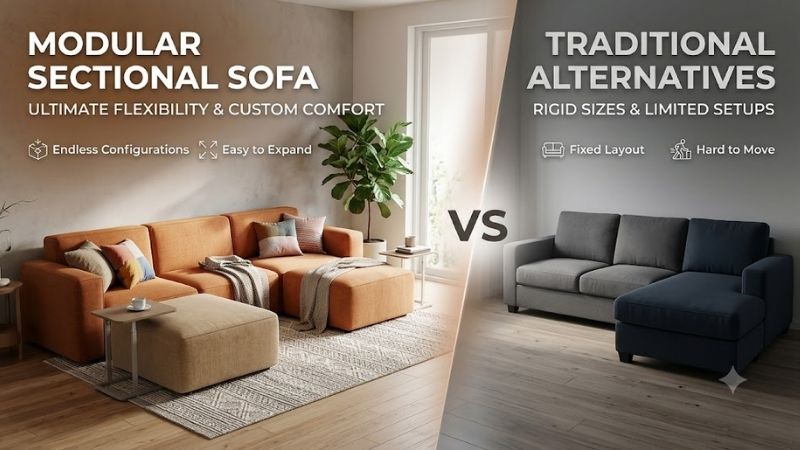
Modular Sectional vs Fixed Sectional
A fixed sectional is designed around a particular shape, usually an L or U configuration.
The components may arrive separately, but they are not necessarily intended for frequent rearrangement.
A modular sectional is designed around compatible sections that can form more than one supported layout.
This difference matters most when the owner’s room or seating needs change.
Layout Flexibility
A modular system may allow the owner to move a compatible seat, chaise, or ottoman into a different arrangement.
A fixed sectional may have only one intended orientation.
For someone expecting to move apartments, that flexibility can be valuable.
However, not every modular component works in every position. Some designs use dedicated corner or chaise pieces.
The exact configuration rules matter.
Comfort and Structural Stability
A fixed sectional may provide a continuous frame structure or more integrated appearance.
A modular system relies on separate units and their connectors.
Neither approach is automatically more comfortable or durable.
Seat cushioning, back support, frame quality, and connection hardware determine how the finished furniture performs.
Price and Ownership
Modular systems can cost more because they require compatible components and specialized connection systems.
A fixed sectional may offer comparable seating capacity at a lower purchase price.
However, if the owner later needs a different orientation, replacing the entire fixed sofa could be more expensive than rearranging a suitable modular system.
Which Is Better?
Choose modular seating when future rearrangement and expansion matter.
Choose a fixed sectional when the existing room layout is stable and the configuration already fits perfectly.
Modular Sectional vs Traditional Sofa
A traditional straight sofa provides one of the simplest alternatives.
It generally occupies a predictable rectangular footprint along a wall, making it easier to plan around in narrow living rooms.
However, it usually provides less integrated lounging area than an L-shaped sectional.
Floor-Space Efficiency
A straight sofa does not include a permanent chaise extending into the room.
This can preserve circulation space, particularly in apartments where the living area connects directly to a kitchen or hallway.
A modular sofa arranged in a straight configuration may provide similar benefits.
However, deep modular seats or wide arms may still occupy more space than a compact traditional sofa.
Seating Capacity
A conventional three-seat sofa may comfortably accommodate several people, depending on its actual dimensions.
A modular sectional can provide more positions and may use adjacent walls efficiently.
However, nominal seat count can be misleading.
A corner module does not necessarily function like an independent straight seat, and oversized arms can reduce usable room.
Everyday Comfort
Traditional sofas can be designed for upright sitting, relaxed lounging, or both.
Modular sectionals also vary widely.
The correct choice depends on seat depth, height, cushions, and the posture occupants prefer.
A sofa should not be selected solely because the sectional appears more comfortable in a promotional photograph.
Which Is Better?
Choose a straight sofa when floor-space efficiency and simplicity are priorities.
Choose modular seating when the additional layout flexibility provides meaningful value.
Modular Sectional vs Sofa With Ottoman
A separate ottoman can provide occasional leg support without permanently extending the sofa into the room.
This makes a sofa-and-ottoman combination especially relevant to apartments where the floor plan changes throughout the day.
Flexibility
An ottoman can be moved aside when additional walking space is needed.
Some suitable designs can also provide occasional seating.
A compatible modular sectional may offer a similar function when an individual seat or ottoman module can be detached.
However, rearranging connected sectional modules may require more effort than moving one ordinary ottoman.
Lounging Comfort
A fixed chaise creates a continuous lounging surface.
An ottoman may leave a small gap between its cushion and the sofa seat, and its height may not match perfectly.
That can affect comfort.
If daily lounging is a major priority, an integrated chaise may be more satisfying.
Storage
Some ottomans incorporate storage.
However, this feature is not universal, and load limits vary.
A storage ottoman may provide practical value in a small room when it replaces another container.
Which Is Better?
Choose a sofa with a movable ottoman when open floor space and flexibility matter most.
Choose a sectional with an integrated chaise when a continuous lounging surface will be used frequently.
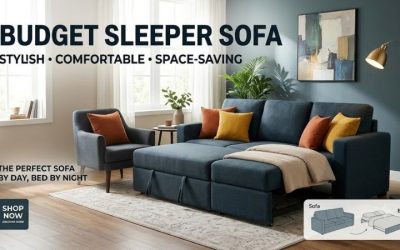
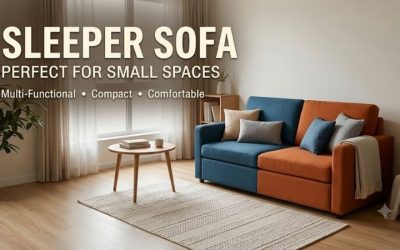
Modular Sectional vs Sleeper Sofa
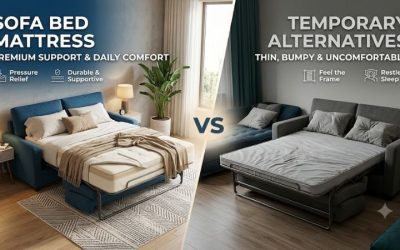
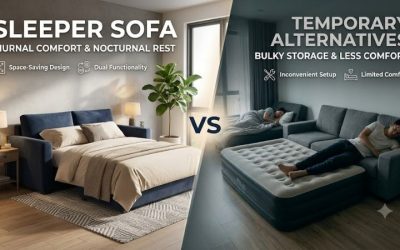
A sleeper sofa incorporates a sleeping mechanism or mattress arrangement intended for overnight use.
A modular sectional generally prioritizes seating arrangements rather than dedicated sleeping accommodation.
Some modular collections provide sleep accessories or convertible configurations, but they should not be assumed equivalent to a conventional sleeper sofa.
Guest Accommodation
A sleeper sofa can be valuable when a household regularly hosts overnight guests but lacks a separate bedroom.
However, the sleeping surface must be evaluated independently from the sofa’s seating comfort.
A sofa that feels comfortable for watching television may have a mattress or fold-out mechanism that is unsuitable for an extended stay.
Floor-Space Requirements
A sleeper sofa may fit against a wall when closed but require substantial clearance when opened.
This is particularly important in small apartments.
A modular sectional may have a larger permanent footprint yet require no additional opening space.
Measure both the normal and sleeping configurations.
Moving and Assembly
A conventional sleeper sofa can be heavy because of its internal mechanism.
A modular system may arrive in smaller sections.
However, smaller pieces do not automatically make transport easy, and a large modular arrangement can contain many heavy components.
Long-Term Value
A sleeper sofa provides a distinct additional function.
If overnight guests are rare, the extra mechanism may not justify the cost or weight.
If guests visit frequently, that capability may be more important than modular rearrangement.
Which Is Better?
Choose a sleeper sofa when providing a genuine guest bed is a major requirement.
Choose a modular sectional when seating adaptability is more important.
Modular Sectional vs Convertible Sofa Bed
A convertible sofa bed may transform by folding the backrest, extending the seat, or rearranging cushions.
These designs often prioritize multifunctionality rather than extensive modular configurations.
Space-Saving Appeal
A convertible sofa can replace both ordinary seating and a separate guest bed.
For a studio apartment, this may be a major advantage.
However, the product needs enough floor space in its sleeping configuration.
A compact sofa that becomes a large flat surface may block access to other furniture when unfolded.
Sitting and Sleeping Trade-Offs
A convertible mechanism often requires a particular cushion or frame design.
This may affect the comfort of ordinary sitting compared with a dedicated sofa.
The sleeping surface may also differ from a conventional mattress in firmness and support.
A product advertised as multifunctional should be evaluated separately for each intended function.
Which Is Better?
Choose a convertible sofa bed when occasional sleeping accommodation is essential.
Choose a modular sectional when comfortable everyday seating and layout flexibility are the primary goals.
Modular Sectional vs Loveseat
A loveseat is usually designed to seat two people within a relatively compact frame.
It can be a practical solution when the room is too narrow for a full sectional.
Compact Footprint
A loveseat generally requires less wall space than a large sectional.
This can preserve access to doors, shelves, or work areas.
However, a loveseat may not provide adequate seating for a household that entertains frequently.
Comfort and Lounging
Some loveseats offer deep seats, while others prioritize upright sitting.
A modular sectional may provide more space for reclining or stretching out.
However, additional comfort is useful only if the room can accommodate the larger furniture.
Expandability
A conventional loveseat generally cannot be expanded.
Certain modular sofa systems allow a smaller starter configuration to gain additional sections later.
This can justify choosing modular furniture when the household expects to move into a larger home.
Which Is Better?
Choose a loveseat when compact size is the overriding priority.
Choose modular seating when future expansion or additional lounging space matters enough to justify the footprint.
Modular Sectional vs Reclining Sofa
A reclining sofa incorporates seating positions that allow occupants to lean back and raise their legs through a mechanical or powered system.
This provides a different kind of flexibility from rearranging modular seats.
Comfort Adjustment
A recliner changes an individual sitting position.
A modular sectional changes the arrangement of furniture sections.
Someone who wants adjustable back and leg support may benefit more from reclining than from rearrangement.
Floor Clearance
Certain recliners need space behind or in front of the sofa when operated.
Wall-hugging designs may require different clearance.
The manufacturer-specific operating dimensions are essential.
A modular sectional may not have moving recliner components unless the selected system includes them.
Electrical Requirements
Powered recliners may require electrical outlets and cables.
This affects room planning.
A conventional modular sofa without electronic accessories is often simpler.
Which Is Better?
Choose reclining furniture when adjustable seated posture is the main goal.
Choose modular furniture when reconfiguration and expansion are more important.
Some premium systems combine both functions, but at additional cost.
Which Seating Type Fits Different Homes?
Small Studio Apartment
A straight sofa, loveseat, or compact modular configuration may be practical.
The final choice depends on whether sleeping accommodation, lounging, or flexible floor use is the main priority.
A large modular L shape should not be purchased merely because its components are separable.
Family Living Room
A modular sectional can be useful when seating needs change and multiple people use the sofa.
Washable covers and replaceable components may provide practical advantages.
However, a fixed sectional can also be suitable when the room layout is permanent.
Rental Home
Modularity may make future moves easier because individual pieces can be transported separately.
A reversible configuration can also help when the next room has a different orientation.
However, verify the actual available arrangements.
Home With Frequent Overnight Guests
A sleeper sofa or convertible sofa bed may be more valuable than pure modularity.
The sleeping function should be evaluated for comfort and setup requirements.
Formal Living Room
A traditional sofa or fixed sectional may create the desired appearance with fewer components.
Modular seating remains possible, but the benefit of rearrangement may be less important.
Cost Comparison: What Provides the Best Value?
A modular sectional may cost more upfront but offer rearrangement and expansion potential.
A traditional sofa may have a lower initial price.
A sleeper sofa adds another function that can reduce the need for a separate guest bed.
However, each category has different ownership costs.
Compare Equivalent Seating Capacity
Do not compare the price of a two-seat modular starter arrangement with a fully finished four-seat fixed sectional.
The appropriate comparison must include all components needed for the desired layout.
Consider Replacement and Repair
Some modular systems allow individual covers or components to be replaced.
That can provide long-term value when parts remain available.
However, proprietary replacement pieces may be expensive, and their availability can change.
Evaluate Moving Costs
A modular sofa may be easier to transport in smaller pieces.
However, disassembly and reassembly still require labor.
A heavy sleeper sofa may present different delivery and moving challenges.
Avoid Paying for Unused Functions
A sofa offering modular expansion, power reclining, built-in storage, and wireless charging can be attractive.
However, these features only create value when used.
A simpler product may provide better overall satisfaction when the room and household needs are stable.
Durability and Maintenance Comparison
Modular furniture has additional connection points that require proper assembly.
Fixed sofas may have more continuous structures but can still suffer frame, cushion, or upholstery problems.
Sleeper sofas introduce mechanical systems that need appropriate operation and maintenance.
There is no universal category winner for durability.
The meaningful comparison concerns frame materials, construction, support components, upholstery, hardware, warranty coverage, and ease of obtaining replacement parts.
Common Comparison Mistakes
Assuming Modular Means Compact
A modular sofa can have oversized seats and a deep footprint.
Measure the finished arrangement.
Assuming Every Sectional Can Be Rearranged
Some sectionals have fixed left- or right-facing configurations.
Separate delivery pieces do not establish genuine modularity.
Paying for a Sleeper Mechanism That Is Never Used
A sleeper sofa’s extra function may be unnecessary when overnight guests are rare.
Choose according to actual use.
Ignoring Clearance Around Recliners
Reclining mechanisms need operating space.
Check the exact product’s dimensions in every position.
Choosing Based on Seat Count Alone
Nominal seating capacity does not establish comfort.
Compare usable seat width, depth, and actual household needs.
Frequently Asked Questions
Is a Modular Sectional Better Than a Regular Sectional?
It is better when rearrangement and expansion are useful. A regular fixed sectional may offer better value when the room layout will remain unchanged. Comfort and durability depend on product construction rather than modularity alone.
Are Modular Sectionals Worth the Higher Price?
They can be when compatible modules, replacement covers, and flexible layouts extend the furniture’s usefulness. However, the added cost may not be justified when a traditional sofa already fits the room perfectly.
Is a Modular Sectional Better for an Apartment?
It may be easier to transport and rearrange, but its finished footprint still matters. A compact loveseat or straight sofa may fit better in a very narrow apartment.
Is a Modular Sectional Better Than a Sleeper Sofa?
A modular sectional generally prioritizes adaptable seating, while a sleeper sofa provides an additional sleeping surface. Choose according to whether seating flexibility or overnight accommodation matters more.
Can Modular Sectionals Be Converted Into Different Shapes?
Many can, but the available shapes depend on component compatibility. A modular label does not guarantee unlimited configurations or reversible chaises.
Do Modular Sectionals Last Longer Than Traditional Sofas?
Not necessarily. Frame construction, connectors, cushions, upholstery, and maintenance determine durability. Replaceable modular components can help with long-term ownership when compatible parts remain available.
Conclusion
A modular sectional sofa is the better option when rearrangement, future expansion, and adaptable seating are genuine priorities. Fixed sectionals suit established layouts, traditional sofas and loveseats can save floor space, and sleeper sofas provide overnight guest accommodation. A movable ottoman offers flexibility without requiring a large permanent chaise, while recliners focus on adjustable sitting comfort. Choose based on actual room dimensions, daily use, and total ownership cost.