Key takeaways
- Frame material not stated. If the listing does not name the wood or steel, it is engineered wood.
- Side-to-side wobble in the reclined position in a showroom. Bare pivots or thin steel.
- Footrest that slams shut. Weak tension springs or no damper, and it will get worse.
- No weight rating listed. Assume 250 pounds or less.
- Motor with no force rating or a rating under 1,200 newtons.
- Mechanism warranty of 1 year on a sofa costing more than $1,000.
- No manual release on a power unit. A power outage leaves you stuck reclined.
- Sealed mechanism with no consumer parts. A $5 spring failure becomes a $400 service call.
- Gap of 2 inches or more between seat cushion and footrest pad when extended. Uncomfortable behind the knees.
A reclining sofa is two products bolted together: a piece of upholstered furniture and a machine. Most buying mistakes come from judging only the first. People sit for 30 seconds in a showroom, like the cushion, and never ask what the frame is made of or how the mechanism is rated. Two years later the seat that gets used most sits an inch lower than the others, the footrest closes with a clunk, and the power motor hums but does not move. Other common errors: buying a wall-hugger without measuring the actual clearance it needs, choosing manual because it is cheaper without considering who has to pull the lever, and assuming a metal frame is automatically better than wood. It is not; it depends on which metal and which wood.
Decide These 3 Things First
1. Manual or power. Manual recliners use a lever or a pull-tab and a spring-assisted mechanism; they cost $200 to $500 less per seat, weigh 10 to 20 pounds less, and need no outlet. Power recliners use a 24-volt DC motor per seat, draw 40 to 90 watts while moving and under 1 watt at rest, and stop at any angle. Anyone with limited arm or core strength should choose power. Anyone who wants the sofa to float in the room with no visible cord should choose manual or budget for a battery pack at $80 to $150.
Our top picks
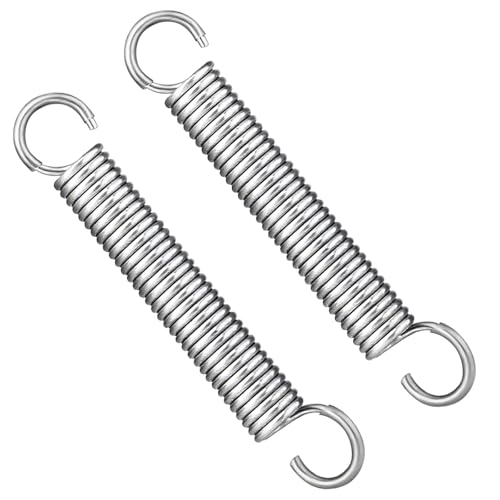

![Souldershop 3-5/8 inch Replacement Recliner Chair Mechanism Furniture Tension Springs Long Neck Style [3.46'' Inside Hook to Hook] (Pack of 1)](https://m.media-amazon.com/images/I/31GY-uOKtEL._SL500_.jpg)

As an Amazon Associate we earn from qualifying purchases at no extra cost to you.
2. Standard or wall-hugger geometry. A standard recliner tilts the back rearward and needs 12 to 18 inches behind it to fully recline. A wall-hugger (also called wall-saver or zero-wall) slides the seat forward as the back tilts and needs only 3 to 6 inches. Wall-huggers extend farther forward, typically 30 to 36 inches from the front of the seat to the footrest tip, so they eat space in front instead of behind.
3. Who will sit in it. Mechanisms carry weight ratings, usually 250 to 300 pounds per seat at the budget end and 350 to 400 pounds on heavy-duty units. Seat depth of 20 to 22 inches suits most adults; taller users over 6 feet 2 inches want 22 to 24 inches and a back height that supports the head in the reclined position, usually 40 inches or more from the seat.
Frame Material
The frame carries the mechanism, so it works harder than a stationary sofa’s frame. Kiln-dried hardwood such as oak, maple, or poplar, dried to 6 to 8 percent moisture, resists warping and holds screws for decades. It is the standard on sofas above $1,500. Furniture-grade plywood of 7 to 11 plies, at least 0.75 inch thick, is nearly as strong and is common from $800 to $1,500. Solid softwood such as pine is acceptable if the pieces are thick and joined with glue and screws, but it splits along fastener lines under mechanism stress.
Engineered wood, meaning particleboard or MDF, is the weak point in sofas under $700. It holds screws poorly and crushes where the mechanism bolts through. Metal frames appear in two forms: welded steel in the seat box, which is excellent, and thin stamped or tubular steel in budget sofas, which flexes and creaks. A reclining sofa’s total weight is a decent proxy; a three-seat power recliner under 200 pounds is probably engineered wood, while 250 to 350 pounds indicates hardwood or plywood with a steel mechanism.
Mechanism Construction
The mechanism is a linkage of stamped steel arms, pivots, and springs that move the footrest and back. Look at the steel gauge where you can; heavy-duty units use 11-to-12-gauge steel (about 0.1 inch thick) at the main arms and 14 gauge elsewhere. Budget units use 16-to-18 gauge throughout and are the ones that bend under heavy or sideways loads.
Pivot points should have nylon or bronze bushings, not bare metal on metal. Bare pivots wear oval within a few years and produce the side-to-side wobble that makes a recliner feel cheap. Rivets should be tight with no visible gap.
Tension springs are the part most likely to fail or lose strength, and they are cheap to replace if you can reach them: a pair of 4.5-inch mechanism tension springs costs about $5, 3-5/8-inch long-neck-style springs run $7 to $9 for one or two, and 5-1/8-inch stainless steel replacements are around $10 a pair. A mechanism that uses standard-size, accessible springs is far easier to keep running than a sealed or proprietary one. Ask whether replacement parts are sold to consumers.
Motor and Power Components
Power recliners use a linear actuator, a motor that drives a threaded rod to push the mechanism. Single-motor units move the back and footrest together; dual-motor units move them independently and add $150 to $300 per seat. Look for a motor rated at 1,500 newtons (about 340 pounds of force) or more; budget actuators at 1,000 to 1,200 newtons strain under heavier users. Duty cycle matters: most are rated for 2 minutes on, 18 minutes off, which is fine for reclining but will overheat if someone plays with the buttons repeatedly.
Check for a battery backup or manual release so the seat can be returned upright in a power outage. USB ports on the arm are convenient but draw from the same transformer; a 2.4-amp port is standard, and USB-C at 3 amps or higher is appearing on newer models. A single transformer typically powers two seats and is rated for about 100 to 150 watts.
Comfort in the Reclined Position
Recline angle ranges from about 120 degrees (a TV recline) to 160 or 170 degrees (near-flat). Sofas with a footrest that rises to at least seat height and a back that reaches 140 degrees or more are comfortable for napping; those that stop at 125 degrees are for viewing only. Zero-gravity positions, which lift the legs above heart level, require a mechanism rated for it and add $200 to $500.
Seat cushion foam should be 1.8 pounds per cubic foot or denser, and the chaise pad (the padded footrest that connects to the seat) should be continuous rather than a separate flap, so there is no gap behind the knees. Test the closing action; a well-built footrest closes with steady resistance and no bang.
Price Tiers
Under $800 for a three-seat reclining sofa, expect engineered wood or thin steel frames, 16-gauge mechanisms, single-motor power or lever manual, and 250-pound ratings. From $1,200 to $2,500, expect plywood or hardwood frames, 12-to-14-gauge mechanisms with bushings, dual motors available, USB ports, and 300-to-350-pound ratings. Above $3,000, expect kiln-dried hardwood, heavy-duty mechanisms rated to 400 pounds, lay-flat or zero-gravity options, power headrests and lumbar, and often real leather.
Warranty
Reclining sofa warranties are split by component, and the mechanism line is what matters. Budget sofas offer 1 year on everything. Mid-range brands typically give lifetime on the frame, 3 to 5 years on the mechanism, and 1 to 3 years on motors and electronics. Premium brands offer lifetime on frame and mechanism and 5 years on motors. Cushions and fabric are almost always 1 year. Also confirm whether labor is covered; a mechanism replacement under warranty can still cost $150 to $300 in service fees if labor is excluded after the first year.
Delivery and Assembly
Reclining sofas are heavy and often arrive in sections. A three-seat power recliner typically ships in two or three boxes totaling 250 to 350 pounds. Sections connect with slide brackets and the backs usually drop into the seat frames with a pressure latch, which takes 20 to 40 minutes for two people. Measure doorways: a seat section is often 36 to 40 inches deep and needs a 32-inch clear opening on its side. Power units need an outlet within 6 feet of each transformer, or you will be running extension cords under the sofa. Ask whether delivery includes removing the old sofa; many freight services do not.
Spec Checklist
| Spec | Budget (under $800) | Mid ($1,200 to $2,500) | Premium ($3,000 and up) |
|---|---|---|---|
| Frame | Particleboard, softwood, or thin steel | 7-to-11-ply plywood or hardwood | Kiln-dried hardwood, welded steel seat box |
| Mechanism steel gauge | 16 to 18 | 12 to 14 | 11 to 12 heavy duty |
| Pivot bushings | None | Nylon | Nylon or bronze, sealed |
| Weight rating per seat | 250 lb | 300 to 350 lb | 350 to 400 lb |
| Motor | Single, 1,000 to 1,200 N | Single or dual, 1,500 N | Dual or triple, 2,000 N or more |
| Recline angle | 120 to 135 degrees | 135 to 150 degrees | 150 to 170 degrees, zero-gravity option |
| Wall clearance | Standard, 12 to 18 in | Wall-hugger option, 3 to 6 in | Wall-hugger standard |
| Replacement parts | Rarely available | Springs and motors sold | Full parts catalog |
| Mechanism warranty | 1 year | 3 to 5 years | Lifetime |
| Motor warranty | 1 year | 1 to 3 years | 5 years |
| Total weight (3-seat) | 150 to 200 lb | 220 to 300 lb | 300 to 400 lb |
Red Flags
- Frame material not stated. If the listing does not name the wood or steel, it is engineered wood.
- Side-to-side wobble in the reclined position in a showroom. Bare pivots or thin steel.
- Footrest that slams shut. Weak tension springs or no damper, and it will get worse.
- No weight rating listed. Assume 250 pounds or less.
- Motor with no force rating or a rating under 1,200 newtons.
- Mechanism warranty of 1 year on a sofa costing more than $1,000.
- No manual release on a power unit. A power outage leaves you stuck reclined.
- Sealed mechanism with no consumer parts. A $5 spring failure becomes a $400 service call.
- Gap of 2 inches or more between seat cushion and footrest pad when extended. Uncomfortable behind the knees.
FAQ
Is a metal or wood frame better for a reclining sofa?
The best builds use both: a kiln-dried hardwood or plywood outer frame with a welded steel seat box that carries the mechanism. A sofa that is all thin tubular steel flexes; one that is all particleboard crushes at the bolts. If you must pick a single descriptor, “kiln-dried hardwood frame with steel mechanism” is what to look for.
How much space does a reclining sofa need behind it?
Standard mechanisms need 12 to 18 inches between the sofa back and the wall to recline fully. Wall-hugger mechanisms need 3 to 6 inches but extend 30 to 36 inches forward from the seat front. Measure your room depth with the coffee table in place before choosing between them.
Do power recliners use a lot of electricity?
No. A motor draws 40 to 90 watts only while moving, which is a few seconds at a time, and under 1 watt on standby. Even with daily use, a three-seat power sofa adds well under $2 a year to an electric bill. The transformer should be plugged into a surge protector, since the control boards are the most common electrical failure.
What is the most important spec on a reclining sofa in 2026?
The mechanism’s steel gauge and weight rating, followed by the frame material. Fabric, cushion softness, and features like USB ports can be upgraded or lived with; a bent mechanism arm or a crushed particleboard bolt hole ends the sofa’s life. Choose a 12-to-14-gauge mechanism rated for at least 300 pounds per seat on a plywood or hardwood frame, and confirm that springs and motors are sold as replacement parts.