Our Top Picks
 FLEXISPOT Hako G2 Japanese Joinery Bed Frame QueenQueen (U.S. Standard)84.84 x 64.65 x 14.17 inches90 poundsCheck on Amazon
 FLEXISPOT Hako G1 Queen Solid Wood Platform BedQueen (U.S. Standard)85.43 x 63 x 29.13 inches106.9 poundsCheck on Amazon
 FLEXISPOT Hako G2 Japanese Joinery Bed Frame KingKing (U.S. Standard)84.76 x 80.55 x 38.98 inches116.6 poundsCheck on Amazon
 FLEXISPOT Hako G1 King Solid Wood Platform BedKing (U.S. Standard)85.43 x 78.98 x 41.34 inches155 poundsCheck on Amazon
 Softa Mikor Queen Japanese Joinery Bed FrameQueen, With Headboard84.3 x 64.1 x 39 inchesCheck on Amazon
The FlexiSpot Hako is better understood as a family of low-profile, Japanese-inspired platform beds than as one fixed product. Listings seen in different countries and marketplaces use names such as Hako, Hako G1, G2, G3, and G4, and their wood species, headboards, charging features, slat systems, dimensions, and stated load limits are not necessarily interchangeable. This specification-based review explains what can be verified and what a buyer must confirm on the exact listing.
Editorial illustration, not a photograph of a particular Hako model.
The cards below are separate listings that differ by generation (G1 or G2), size (Queen or King), headboard option and finish (Natural Oak, Walnut or Brown), so match the card to the exact variant you want before comparing prices.
FLEXISPOT Hako G2 Japanese Joinery Bed Frame Queen, No-Tool Assembly
One of the home product options compared in this guide.
View on AmazonFLEXISPOT Hako G1 Queen Solid Wood Platform Bed with Tool-Free Assembly
One of the home product options compared in this guide.
View on Amazon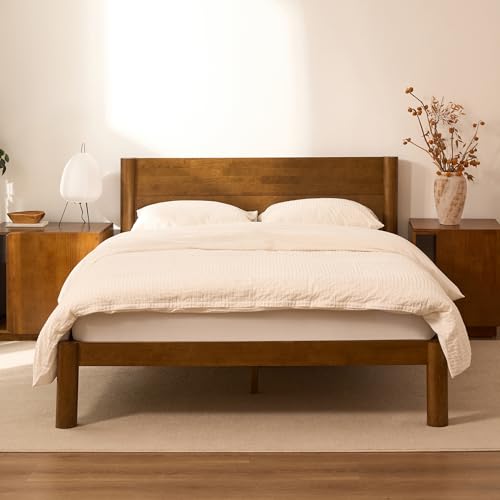
FLEXISPOT Hako G2 Japanese Joinery Bed Frame Queen, No-Tool Assembly
One of the home product options compared in this guide.
View on AmazonFLEXISPOT Hako G2 Japanese Joinery Bed Frame King, No-Tool Assembly
One of the home product options compared in this guide.
View on Amazon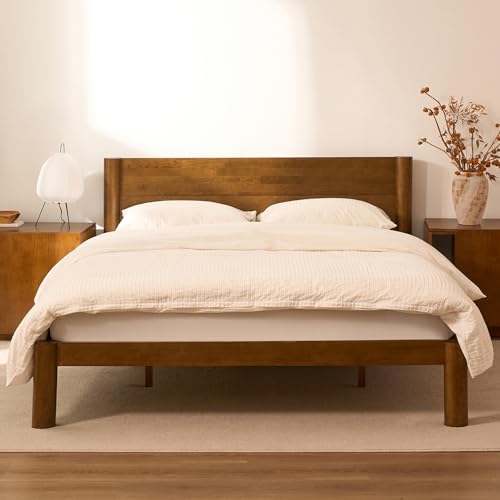
FLEXISPOT Hako G2 Japanese Joinery Bed Frame King, No-Tool Assembly
One of the home product options compared in this guide.
View on Amazon
FLEXISPOT Hako G1 Queen Solid Wood Platform Bed with Tool-Free Assembly
One of the home product options compared in this guide.
View on Amazon
FLEXISPOT Hako G1 Queen Solid Wood Platform Bed with Tool-Free Assembly
One of the home product options compared in this guide.
View on AmazonFLEXISPOT Hako G1 King Solid Wood Platform Bed with Tool-Free Assembly
One of the home product options compared in this guide.
View on AmazonQuick verdict: If you searched for the flexispot haku bed frame, the product is the FlexiSpot Hako, a tool-free solid-wood platform bed sold in three main versions. Choose the Hako G1 for a low, floating look with a headboard shelf that holds power outlets and USB ports. Choose the Hako G2 for Japanese joinery and about 10.2 inches of under-bed clearance for bins or a robot vacuum. Choose the Hako G3 for an acacia frame with a storage headboard and no charging station.
All three are listed in Queen and King with 1,500 lb ratings on most current listings and a 10-year warranty, but figures vary by seller, so confirm the manual for your exact SKU. Skip the Hako if you need a Full size, drawers, or a tall upholstered headboard.
Updated October 2026 – This FlexiSpot Hako review covers the G1, G2 and G3 platform beds, including the common misspelling “flexispot haku bed frame”, Queen and King sizes, and the Hako G1 King solid wood platform bed with Japanese joinery styling. It is based on listings, manuals and published coverage, not our own use of the bed.
Start with the model and market
FlexiSpot’s Japanese store maintains an official Hako product page, while United States shoppers may encounter Hako variants through marketplaces rather than the main FlexiSpot US bedroom catalog. Check the current FlexiSpot US bedroom catalog to see which models it lists; the related Kana Japanese Joinery Bed is covered in our Hako versus Kana comparison. That difference matters because a warranty, accessory, or specification published for one country may not apply to an imported or marketplace unit.
Before comparing price, record the complete model name, seller, country, size, finish, and listing date. Save the product page and manual because marketplace titles can change. Confirm that the seller is authorized and that the invoice identifies the model you expect. A generic title such as “Hako solid wood bed” is insufficient when several generations are circulating.
The first purchasing rule is therefore simple: buy a documented SKU, not the family name. If the seller cannot provide a manual, dimension drawing, material breakdown, warranty terms, and replacement-parts contact, postpone the order.
Hako G1 vs G2 at a Glance: What Listings State and What to Confirm
The two generations most US shoppers see are the Hako G1 and Hako G2. The table below summarizes how current marketplace listings and published coverage describe each one. Treat every cell as a claim tied to a particular listing, not a universal specification, and use the last column as the checklist for the exact SKU in your cart.
| Feature | Hako G1 (as commonly listed) | Hako G2 (as commonly listed) | What to confirm |
|---|---|---|---|
| Positioning | Solid wood platform bed with tool-free assembly | Japanese joinery bed frame with no-tool assembly | Full model code, size, and finish on the invoice |
| Main wood | Rubberwood named in listings | Solid rubberwood named in listings | Material of slats, headboard face, shelf, and panels |
| Headboard | Low storage headboard with a charging shelf described in many listings; check photos and drawings | Storage headboard with a hidden shelf described | Usable headboard height above your mattress |
| Noise control | Foam padding and hook-and-loop straps at contact points described, plus adjustable feet | Joinery-based connections; detailed anti-noise parts not always listed | Which pads or straps ship in the box |
| Under-bed clearance | Check the dimension drawing | Roughly 10 inches cited in third-party coverage | Clearance for storage bins or a robot vacuum |
| Stated load rating | Figures between about 1,100 and 1,500 lb appear across sources | Figures between about 1,200 and 1,500 lb appear across sources | The number printed in your model’s manual |
| Certifications | Confirm on the listing | IAS and SGS certifications mentioned in listings | Certificate scope, not just the logo |
| Warranty | Confirm for your market | 10-year warranty mentioned in listings | What is covered: structure, finish, electronics, labor |
| Shipping | Confirm carton count and weights | Two cartons noted in third-party coverage | Whether both cartons arrive together |
| Typical queen price | Varies | Varies | Seller, model generation, and included headboard |
The wide price spread for the G2 is itself a warning sign. Two listings with similar titles may differ in headboard, finish, seller, or included accessories, so compare the full product details rather than the headline price.
FlexiSpot Hako Sizes and Headboard Options: Full, Queen and King
Shoppers often search for a FlexiSpot Hako in full size with a headboard. In the US listings we reviewed in October 2026, every Hako generation was offered in Queen and King only; we found no Full-size Hako. If you need a Full, look at the alternatives further down or confirm availability directly with FlexiSpot before ordering.
| Model | Sizes | Listed dimensions (L x W x H) | Headboard | Wood |
|---|---|---|---|---|
| FlexiSpot Hako G1 | Queen, King | Queen about 85.4 x 63 in; King about 85.4 x 79 in; heights of roughly 29 or 41 in depending on the headboard | Low storage headboard with charging; base-only and taller-headboard versions also listed | Rubberwood |
| FlexiSpot Hako G2 | Queen, King | Queen 84.8 x 64.7 x 39 in with headboard (14.2 in high without); King 84.8 x 80.6 x 39 in | Optional; hidden shelf behind the headboard | Rubberwood |
| FlexiSpot Hako G3 | Queen, King | Queen 83.6 x 61.8 x 38.2 in; King 83.5 x 77.8 x 38.2 in | Storage headboard, no charging station | Acacia |
FlexiSpot Hako G1 King: Solid Wood Platform Bed or Japanese Joinery?
Both, depending on the listing title. The Hako G1 King is a rubberwood platform bed that assembles without tools, and some newer G1 titles describe it as a “Japanese bed frame.” Its listing describes a tool-free, precision-fit structure rather than the slot-together Japanese joinery marketed for the G2, so check the manual to see how each connection locks. The King G1 listing with the 41.5-inch headboard shows an item weight of 155 pounds, so plan for two people to carry the cartons upstairs. The G1 sits low, which limits under-bed storage.
FlexiSpot Hako G3 Queen — The Acacia Version
The G3 is the newest family member we found. It swaps rubberwood for solid acacia with a walnut-brown Sherwin-Williams finish and keeps a storage headboard, but FlexiSpot’s own comparison lists no charging station.

FLEXISPOT Hako G3 Queen Solid Acacia Wood Bed, Tool-Free Assembly
One of the home product options compared in this guide.
View on Amazon- Wood: solid acacia, walnut brown finish
- Size: Queen 83.6 x 61.8 x 38.2 in, listed at 145 pounds
- Rating: 1,500 lb on most listings (one Queen description still says 1,100 lb)
- Assembly: tool-free; no box spring needed
- Warranty: 10-year limited
Pros: usually priced below the G1; darker acacia hides scuffs; storage headboard included.
Cons: no published under-bed clearance; no charging; conflicting load figures between listings.
Skip it if: you want built-in outlets or need confirmed clearance for a robot vacuum.
Materials require component-level verification
Some Hako listings describe rubberwood, others acacia, and others bamboo. “Solid wood frame” does not automatically mean every visible panel, shelf, slat, or drawer is made from the same solid material. Headboards may use different construction from rails and legs. Veneer, engineered panels, coatings, and adhesives also require separate disclosure.
Ask for the material of each major component: side rails, foot rail, center beam, support legs, slats, headboard face, shelf, and storage panels. This is more useful than debating whether one species is universally superior. Rubberwood and acacia can both make serviceable furniture when properly dried, machined, joined, and finished. Bamboo products are engineered from laminated strips and should be judged by construction and finish rather than treated as a single solid timber.
Inspect the current listing for finish-care instructions and indoor emissions or material certifications. A certification logo should link to a valid scope or certificate; it should not be treated as proof of every durability claim. Buyers sensitive to odors should allow ventilation and follow the manual rather than relying on anecdotal “no smell” reports.
Joinery and assembly: attractive idea, model-specific execution
Hako marketing commonly emphasizes tool-light or tool-free assembly inspired by Japanese joinery. That can reduce loose hardware and make the frame easier to understand, but it does not prove that every connection will remain silent or tight. Fit depends on machining tolerance, shipment damage, floor level, center support, and correct assembly.
Read the manual before delivery. Check whether connectors slide, rotate, or lock by hand; whether any bolts remain; and whether two people are required. Note package weights and stair access. Solid-wood cartons can be heavy enough that a quick assembly claim says little about safe handling. Arrange help rather than dragging a carton or lifting an assembled frame alone.
During setup, inventory every piece, protect the floor, and compare labels with the diagram. Do not force a joint that stops early. Photograph cracks, crushed corners, misaligned holes, unfinished splinters, or warped parts before proceeding. A connection that requires impact beyond the manufacturer’s method may be damaged or mismatched.
After assembly, verify that all feet contact the floor, the center beam is correctly supported, slats sit fully in their retainers, and the frame is square. Recheck the manual after the mattress settles. Do not add brackets, drill rails, or substitute fasteners without written manufacturer approval because modifications can weaken a joint or affect warranty coverage.
Headboard, shelf, outlets, and real bedroom fit
Hako variants may be offered with different headboard heights or storage arrangements. Mattress thickness changes how much headboard remains visible and where pillows meet a shelf. Measure from the floor to the slat surface, add the mattress thickness, then compare that total with the usable headboard height. A thick mattress can make a low headboard feel shorter than product photography suggests.
If the headboard includes outlets or USB ports, confirm the electrical listing, cord length, plug orientation, total ratings, and whether the module is replaceable. Built-in charging is convenient but does not justify daisy-chaining extension leads or trapping a cord beneath the frame. Keep the cable away from pinch points and follow local electrical guidance.
Measure room circulation as well as mattress size. Record the frame’s outside width and length, not only “queen” or “king.” Include shelf depth, baseboard clearance, drawer travel, and space required to make the bed. Rounded corners may reduce painful bumps, but they do not compensate for a walkway that is too narrow.
Slats and mattress compatibility
A platform bed must support the mattress according to the mattress maker’s warranty. Verify slat count, slat width, maximum gap, center support, and whether a foundation is allowed or required. Do not assume upgraded slats sold for another FlexiSpot family fit the Hako. Similar dimensions and joinery styling do not establish compatibility.
Foam and hybrid mattresses often specify a maximum gap between supports. Exceeding it can contribute to sagging and may affect warranty coverage. Heavy mattresses also reduce the practical capacity available for sleepers and bedding. Treat a published load rating as a manufacturer claim under stated conditions, not an invitation to load-test the bed at home.
An adjustable base is a separate system. The Hako’s internal rails, slats, and center beam may conflict with a freestanding adjustable foundation even if the mattress size matches. Obtain written confirmation for the exact Hako model and adjustable base. Our bed frames for adjustable bases guide explains the measurements to compare.
Noise, stability, and long-term serviceability
No specification sheet can prove that a bed will stay silent in every room. Noise can come from loose joints, slat movement, an uneven floor, headboard contact with a wall, or the mattress foundation. Claims such as “noise-free” should be interpreted as marketing unless supported by a defined test.
The more useful questions concern service: Can a damaged slat, charging module, or connector be ordered separately? Does the warranty cover structural parts, electronics, finish, and labor for the same period? Who pays return freight for multiple heavy cartons? Is original packaging required? Obtain answers before discarding boxes.
Check the assembled frame after the first week and periodically thereafter using only the manufacturer’s maintenance procedure. Never improvise lubricant on wood connections or tighten a component beyond instructions. New movement, cracking, a center leg lifting from the floor, or a damaged electrical cord warrants stopping use and contacting support.
What Owners and Published Reviews Report About the FlexiSpot Hako
We did not assemble a Hako ourselves. The points below summarize published coverage and recurring owner comments, so treat them as reports rather than guarantees.
- Assembly is quick. SFGATE’s reviewer built a Hako frame alone in about 15 minutes; the same article quotes one G2 buyer who needed about 30 minutes with a second person.
- It is quiet once seated. The same review noted no creaks or shifting after assembly.
- The headboard can flex. Both SFGATE and some G2 owners describe slight movement when the bed stands away from the wall. Pushing it flush, and in one owner’s case adding felt pads, solved it.
- The G2 hidden shelf is shallow. One owner reports it is roughly 3 inches deep, enough for a phone or a slim book, not a lamp.
- The G1 charging shelf is the standout extra. The listing describes dual outlets plus USB and Type-C ports in the headboard shelf.
- Low profile cuts storage. The G1 leaves little room for bins; the G2’s 10.2-inch clearance is the better pick for storage.
FlexiSpot Hako vs Thuma: Which Joinery Bed Is Worth It?
The Thuma Bed made the tool-free Japanese joinery look popular, and many Hako buyers are comparing the two. Both use solid wood and slot together without hardware. The main differences are price, sizes and support terms.
| Feature | FlexiSpot Hako G1 / G2 / G3 | Thuma Bed |
|---|---|---|
| Wood | Rubberwood (G1, G2); acacia (G3) | Solid upcycled wood (rubberwood legs reported) |
| Sizes | Queen, King | Twin through California King |
| Headboard | Wood storage headboard; outlets on G1 | Optional upholstered headboard |
| Warranty | 10-year listed | Lifetime advertised |
| Where sold | Mainly marketplace listings in the US | Direct from Thuma |
| Queen price tier | Varies | Varies |
Choose the Hako if price and built-in storage or charging matter most. Choose Thuma if you need a Twin, Full or California King, want a single direct seller for returns, or prefer an upholstered headboard.
Hako Pros and Cons at a Glance
Pulling the specification review together, these are the strengths and weaknesses that apply across the Hako family. Individual listings can add or remove items on either side.
Pros
- Tool-free joinery concept reduces loose bolts and hardware that can work loose over time
- Low-profile Japandi styling that suits minimalist bedrooms
- Rubberwood construction named in current G1 and G2 listings, with certification claims on some versions
- Storage headboard with a hidden shelf on some versions
- Long warranty terms advertised on some listings
- Published assembly reports describe a fast build compared with conventional bolted frames
Cons
- Several generations share one family name, which makes like-for-like comparison difficult
- Load ratings and other figures differ across sources
- At least one published review noted slight headboard flex when the bed was not pushed against a wall
- Heavy solid-wood cartons may arrive separately
- Charging ports are not standard on every version
- Prices for similar-looking listings vary widely
Who should shortlist the Hako?
The Hako can suit a buyer who wants a low-profile wood platform, restrained Japandi styling, and an assembly system designed to reduce conventional hardware. It is most appealing when the exact SKU has a clear component list, suitable slat spacing, dimensions that work with the mattress, and local warranty support.
Skip or delay it when the listing mixes photographs from several models, omits the manual, describes only the frame material while leaving the headboard unclear, or cannot confirm return logistics. Buyers who need a specific adjustable-base fit, a very tall headboard, under-bed drawers, or easily sourced replacement parts should verify those requirements before focusing on appearance.
For the category context, compare the surviving Japanese joinery bed-frame guide. Buyers choosing between the two FlexiSpot families should use our Hako versus Kana comparison and match exact model codes rather than treating the names as two fixed specifications.
Which FlexiSpot Hako Should You Buy? Pick by Situation
- You charge a phone, watch and tablet at night: FlexiSpot Hako G1 · rubberwood · dual outlets + USB and Type-C ports in the headboard shelf · Queen or King.
- You use a robot vacuum or under-bed bins: FlexiSpot Hako G2 · rubberwood joinery · 10.2-inch clearance · 3.6-inch legs · headboard optional.
- You want a darker wood and a storage headboard without paying for charging: FlexiSpot Hako G3 · solid acacia · storage headboard · no charging.
- You need a King for two adults: any generation, but compare listed weights (G1 King about 155 lb) and stair access before delivery.
- You need a Full size: skip the Hako and use one of the alternatives below.
In every case, the deciding step is the same: match the exact model code on the listing to its manual, and confirm slat gap and load rating against your mattress warranty.
Alternatives to Consider if the Hako Listing Falls Short
If the exact Hako SKU you find lacks a manual, clear slat details, or local warranty support, the same tool-free, low-profile idea is available from other brands. The four options below cover a premium rival, two mid-priced choices, and a budget pick. Apply the same checks: component materials, slat spacing, clearance, warranty, and seller.
Softa Mikor Queen — Best Premium Alternative
Softa Mikor Queen Japanese Joinery Bed Frame, Solid Wood, No-Tool Setup
One of the home product options compared in this guide.
View on AmazonIt is listed as a solid wood Japanese joinery bed frame with no-tool setup, so it competes directly with the Hako on concept. The headboard version is listed with USB-A and USB-C ports, a slim shelf behind the headboard, about 10.5 inches of under-bed clearance, a 1,500 lb rating, SGS certification and a 10-year warranty. That answers several gaps buyers raise about certain Hako versions, but a base-only listing may omit the headboard features, so confirm each one on the exact version you are viewing.
It suits buyers who like the Hako idea but find a better-documented listing, clearer warranty terms, or more convenient delivery from Softa. As with any solid-wood joinery bed, ask for the slat gap and center support layout before matching it with a foam or hybrid mattress.
Pros
- Direct joinery-style rival with no-tool setup
- Solid wood frame named in the listing
- Possible charging and warranty advantages to verify
Cons
- Premium price similar to top Hako listings
- Feature set may differ between versions
AllForWood Thor Queen — Best Mid-Priced Joinery Frame
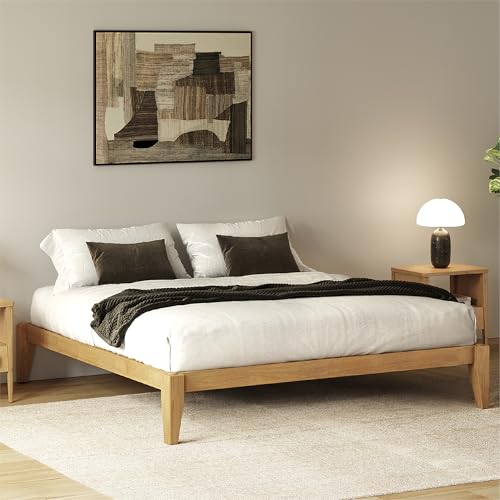
AllForWood Thor Japanese Joinery Bed Frame Queen, Solid Wood (Light Oak)
One of the home product options compared in this guide.
View on AmazonThe AllForWood Thor is a Japanese joinery bed frame listed in solid wood, shown here in a light oak finish. That price gap matters for buyers who want the tool-free look but do not need a storage headboard.
The trade-off is that lower-priced joinery frames often simplify the headboard or skip storage, and component materials can differ from the rails. Check what the slats are made from, how many center supports there are, and how long the warranty runs. A light finish brightens a small room but shows scuffs from vacuums and luggage more readily than darker walnut tones.
Pros
- Joinery-style frame at a lower price tier
- Solid wood construction named in the listing
- Light oak finish suits Scandinavian and Japandi rooms
Cons
- Fewer storage or headboard features than some Hako versions
- Slat material and warranty length need confirming
Nectar Bamboo Platform Bed — Best for Clearly Stated Specs
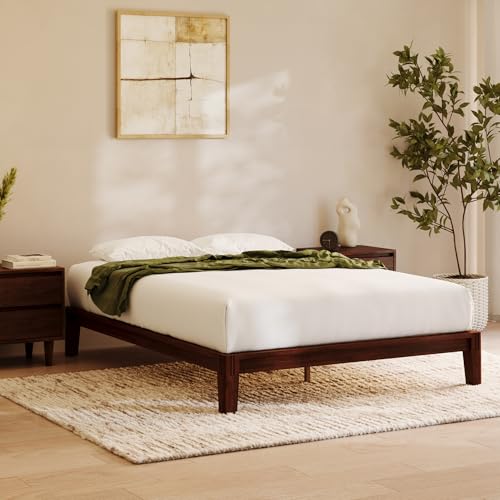
Nectar Bamboo Platform Bed Frame - Queen - Walnut - Floating Center Support Legs - 12” Height - Easy Tool Free Set Up - Contemporary and Durable - Sturdy Wooden Support Slats - Holds Up to 800 Pounds
Chosen because it uses a bamboo-derived cover.
View on AmazonThe Nectar bamboo frame is positioned as a minimalist bamboo platform rather than a joinery-first design, but it shares the low look and the tool-free setup. Its listing is unusually specific: queen size in a walnut tone, floating center support legs, a 12-inch height, sturdy wooden support slats, and a stated capacity of up to 800 pounds.
That clarity is the main reason to consider it alongside the Hako. Where Hako buyers must reconcile different load figures across sources, Nectar publishes one number that is easy to check against your mattress and sleepers. Bamboo is a laminated material, so judge it on construction and finish rather than treating it as solid timber. The floating legs create a lighter visual profile, though it is worth confirming clearance for storage or a robot vacuum.
Pros
- Specific, consistent specifications in the listing
- Tool-free setup with floating center support legs
- Well-known mattress brand behind it
Cons
- Lower stated capacity than figures quoted for Hako listings
- No headboard storage in this configuration
Bme Dinkee 15-Inch Platform Bed — Best Budget Alternative

Bme Dinkee 15-Inch Solid Wood Queen Platform Bed Frame - Japanese Joinery, Minimalist Style - Wood Slats, Easy Assembly, No Box Spring Needed - Chocolate
One of the home product options compared in this guide.
View on AmazonFor buyers who want the Japandi look at a fraction of the Hako price, the Bme Dinkee is a 15-inch solid wood queen platform bed with Japanese joinery styling, wood slats, easy assembly, and no box spring needed.
The 15-inch height places the mattress a little higher than many low-profile Hako setups, which can make getting in and out easier and leaves more room for under-bed storage. At this price, expect a simpler frame without a storage headboard, and confirm slat spacing against your mattress warranty before ordering. It is a sensible choice for guest rooms, first apartments, or buyers who plan to add a separate headboard later.
Pros
- Budget price tier for a solid wood platform
- Taller 15-inch frame for easier access and storage
- No box spring required
Cons
- No integrated headboard or shelf
- Simpler construction than premium joinery frames
Hako and Alternatives Compared
| Bed frame | Style | Notable stated features | Typical queen price |
|---|---|---|---|
| FlexiSpot Hako G1 / G2 | Japanese joinery, low profile | Tool-free assembly; storage headboard on some versions | Varies |
| Softa Mikor | Japanese joinery | Solid wood, no-tool setup | Varies |
| AllForWood Thor | Japanese joinery | Solid wood, light oak finish | Varies |
| Nectar Bamboo Platform | Minimal platform | 12-inch height, floating legs, up to 800 lb stated | Varies |
| Bme Dinkee | Joinery-styled platform | 15-inch height, wood slats, no box spring needed | Varies |
FlexiSpot Hako G2 vs Softa Mikor: Which Joinery Bed Fits Your Room?
The Softa Mikor is the closest rival to the Hako G2: both are rubberwood joinery beds with a 1,500 lb listed rating and a 10-year warranty. The practical difference is the headboard.
| Bed | Spec line | Pick it if |
|---|---|---|
| FlexiSpot Hako G2 | Rubberwood · 84.8 x 64.7 x 39 in Queen · 10.2 in clearance · hidden headboard shelf · no USB charging · 10-year warranty | You want shelf storage without outlets, and a second carton is fine |
| Softa Mikor | Rubberwood · 84.3 x 64.1 x 39 in Queen · about 10.5 in clearance · USB-A and USB-C ports · slim shelf · SGS listed · 10-year warranty | You want charging built into the headboard and slightly more clearance |
Third-party comparisons describe near-identical durability and capacity, so decide on charging, price on the day, and which seller gives you a manual and clear return terms. If built-in outlets matter most, the Hako G1 is the other FlexiSpot route. Confirm the slat gap against your mattress warranty on whichever bed you choose.
Verdict
The FlexiSpot Hako concept is promising, but the family name alone is not enough for a responsible recommendation. Its practical value depends on the actual generation, market, wood and panel construction, headboard, slat geometry, electrical module, warranty, and seller. Verify those items in writing, measure the mattress and room, and keep the documentation.
In short: the G1 is the pick for built-in charging, the G2 for under-bed clearance and a hidden shelf, and the G3 for an acacia frame without outlets. This review does not assign an unqualified score because no single Hako specification represents every listing. The best candidate is the model whose manual and support terms match the buyer’s real requirements—not whichever marketplace title carries the largest load number or shortest assembly claim.
Frequently Asked Questions
What is the difference between the Hako G1 and Hako G2?
Current listings present the G1 as a solid wood platform bed with tool-free assembly and describe noise-control details such as foam padding, hook-and-loop straps, and adjustable feet. The G2 is presented as a Japanese joinery bed frame with no-tool assembly and, in several listings, a storage headboard with a hidden shelf. Because titles and features change between sellers, compare the manuals and dimension drawings for the two exact SKUs rather than relying on the generation name.
Is the Hako really tool-free?
Listings for both generations describe tool-free or no-tool assembly, and published assembly reports describe a build of roughly 15 to 30 minutes. Tool-free does not mean effort-free: the cartons are heavy, two people make handling safer, and every joint still needs to seat fully according to the manual. Check the parts list for any remaining fasteners before delivery day.
How much weight can a Hako bed hold?
Published figures vary, with numbers from about 1,100 to 1,500 pounds appearing across listings and coverage. That spread is why the safest answer is the figure printed in the manual for your exact model and size. Remember that a heavy mattress uses part of the stated capacity, and a load rating describes a manufacturer test condition, not a target to load-test at home.
Does the Hako need a box spring?
The Hako is a slatted platform design, so it is generally intended to support a mattress directly. The more important question is whether the slat count, slat width, and maximum gap meet your mattress maker’s warranty requirements. If the mattress warranty calls for a specific foundation, get written confirmation that it can sit on the Hako without blocking joints or overloading the slats.
Does every Hako include USB or power outlets?
No. Some Hako versions are marketed with charging features, while third-party coverage of at least one G2 version notes no charging ports. If built-in charging matters to you, confirm the electrical module, its listing, and replacement availability on the exact SKU before ordering.
Will the headboard wobble?
At least one published review observed slight headboard flex when the bed stood away from the wall, with the issue fading once the frame was positioned against it. Placing the bed flush with a wall, confirming every headboard joint is fully seated, and following the manual’s checks after the first week are the practical steps. Do not add brackets or drill the frame without written approval from FlexiSpot.
How does the Hako compare with a Thuma bed?
Both follow the same idea of a low-profile frame assembled with Japanese-inspired joinery and no tools. Thuma is the better-known premium brand and is typically priced well above most Hako listings, while the Hako is often chosen as a lower-cost route to a similar look. Compare slat systems, headboard construction, warranty length, return shipping costs, and real dimensions rather than assuming the two are equivalent.
Is it the FlexiSpot Hako or Haku bed frame?
The correct name is FlexiSpot Hako. “Haku” is a common misspelling; searches for a FlexiSpot Haku bed frame refer to the same Hako G1, G2 and G3 platform beds.
Does the FlexiSpot Hako come in full size with a headboard?
Not in the US listings we found in October 2026. The Hako G1, G2 and G3 are offered in Queen and King; for a Full with a headboard, consider a different joinery-style frame.
Which Hako has the most under-bed clearance?
The Hako G2, at a listed 10.2 inches. That is enough for most robot vacuums and low storage bins, while the G1’s floating base sits much lower.
What is Japanese joinery on a bed frame?
It is a way of locking wooden parts together with cut interlocking joints instead of bolts and brackets. On a Hako, rails, legs and headboard slot or lock together by hand. It cuts loose hardware, but the fit still depends on accurate machining and correct assembly.
Is the FlexiSpot Hako worth buying?
It is worth a look if you want a low Japandi platform bed in Queen or King and the exact listing includes a manual, slat details and warranty terms. Choose the G1 for charging, the G2 for clearance and storage, or the G3 for acacia without outlets. Skip it for a Full size, drawers or a tall upholstered headboard.
Sources
- FlexiSpot Japan: official Hako Bed product page
- FlexiSpot US: bedroom collection
- FlexiSpot support center
- Federal Trade Commission: warranties