Key takeaways
- Use distilled water in the reservoir during cleaning cycles to avoid adding new minerals while removing old ones.
- Set a phone reminder for three months out every time you clean, so the routine never slips your mind.
- Never use bleach or generic household descaler meant for coffee machines — the chemical concentration can damage food-contact surfaces.
- Wipe the exterior condenser coils with a dry brush every month to keep the compressor running cool and efficient.
What's inside
If you’ve ever noticed your ice tasting faintly like metal or your maker slowing down to a trickle, mineral buildup is almost certainly the culprit. Hard water leaves calcium and lime deposits inside the evaporator plate, water lines, and reservoir, and those deposits don’t go away on their own. Over time they reduce ice output, strain the compressor, and create the kind of damp environment where mold and bacteria thrive. A ten-minute cleaning session every few months keeps the machine efficient and your ice genuinely tasteless — exactly what it should be.
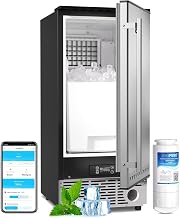
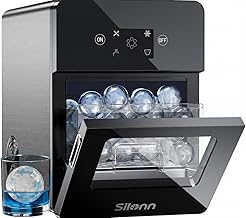
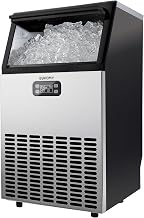
This guide walks you through the cleaning process step by step, explains what to look for in a descaling solution, and highlights gear that works well without breaking the bank. Whether you own a countertop nugget ice maker, a freestanding commercial unit, or a compact under-counter model, the fundamentals are the same. By the end you’ll know exactly how often to clean, which products do the job, and a few tricks that make the whole routine painless.
As an Amazon Associate we earn from qualifying purchases.




How Often Should You Clean an Ice Maker?
The short answer: at least once every three to six months, depending on your water hardness. If your home’s water tests above 120 parts per million of dissolved minerals, lean toward the three-month mark. Families that run the machine daily or live in areas with especially hard water should consider monthly cleaning to keep ice output consistent and mineral scaling under control. Many ice makers have indicator lights that remind you, but don’t rely solely on those — they track elapsed time, not actual mineral load.
How to Clean Your Ice Maker Step by Step
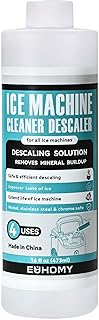
Start by unplugging the unit and removing all ice from the bin. Empty any standing water in the reservoir. Prepare your cleaning solution according to the product’s directions — most tablet-based descalers like the Ice Machine Cleaner Maker and Descaler dissolve in a full reservoir of warm water, while liquid options like EUHOMY Ice Machine Cleaner require a measured pour per tank. Pour or circulate the solution through the machine using the manufacturer’s recommended cycle, typically a “clean” or “rinse” mode. Let it sit for the full contact time indicated, usually twenty to thirty minutes, so the acid can dissolve scale without you having to scrub. Run two or three full cycles with plain fresh water afterward to flush any residue before making ice for consumption.
Choosing the Right Descaling Product
Not all ice maker cleaners are interchangeable, though most share a similar acidic active ingredient. The real differences lie in concentration, format, and safety rating. Look for three things: nickel-safe formulation (critical for machines with nickel-plated evaporators), food-grade ingredients, and clear dilution instructions. Tablet-based products such as ACTIVE Ice Machine Cleaner Maker Descaler and the Ice Machine Cleaner Descaler Tablets 36-Pack are convenient because each dose is pre-measured — no guessing. If you prefer liquid, EUHOMY Ice Machine Cleaner offers four uses per bottle, which is good value for smaller households. For anyone who wants bulk economy, Nickel Safe 1-Gallon Ice Maker & Machine Cleaner meets Manitowoc spec GES-6 and is USDA authorized, making it a solid choice for larger machines or multiple units. Affresh Ice Machine Cleaner remains a reliable mainstream option that is widely stocked and well-tested across popular brands.
What About Mold and Sanitizing?
Descaling removes mineral scale; sanitizing kills biological growth. They serve different purposes and ideally both should happen. After descaling, wipe internal surfaces with a solution of one tablespoon white vinegar per quart of warm water, or use a food-safe sanitizer if your manufacturer recommends one. Pay attention to the ice chute, the bin door gasket, and any rubber seals — these spots stay moist and are prime territory for mildew. Let the interior air dry with the lid or door open for at least fifteen minutes before restarting.
Signs Your Ice Maker Needs Cleaning Sooner
Watch for cloudy or hollow ice cubes, a slower-than-normal freeze cycle, white chalky residue on visible surfaces, or a musty smell coming from the bin. Any of these means mineral or biological buildup has progressed enough to affect performance. Don’t wait for the scheduled interval — go ahead and run a cleaning cycle immediately.
Tips
- Use distilled water in the reservoir during cleaning cycles to avoid adding new minerals while removing old ones.
- Set a phone reminder for three months out every time you clean, so the routine never slips your mind.
- Never use bleach or generic household descaler meant for coffee machines — the chemical concentration can damage food-contact surfaces.
- Wipe the exterior condenser coils with a dry brush every month to keep the compressor running cool and efficient.
Frequently Asked Questions
Can I use vinegar instead of a commercial cleaner?
White vinegar works in a pinch for light mineral deposits, but it lacks the targeted acidity of a purpose-made descaler. For heavy buildup or nickel-safe requirements, a commercial product is far more effective and safer for the machine’s internal components.
Will cleaning void my warranty?
Routine cleaning with the manufacturer-recommended product is almost always required to maintain the warranty, not a violation of it. Check your owner’s manual — most explicitly list cleaning intervals and approved solutions.
Do tablets work as well as liquid descalers?
Yes. Tablets like ACTIVE Ice Machine Cleaner Maker Descaler and the 36-Pack tablets dissolve into the same active solution that liquids provide, just in a pre-measured form. Many users actually prefer tablets because they eliminate the risk of over- or under-dosing.
What if my ice still tastes bad after cleaning?
Check the water supply line and filter, since the problem may sit upstream of the machine itself. Replacing an inline carbon filter or switching to a softener can resolve lingering taste issues that cleaning alone won’t fix.
Conclusion
Cleaning an ice maker is one of those simple maintenance tasks that pays off disproportionately in taste, efficiency, and longevity. Pick a descaler that matches your machine’s needs, set a recurring reminder, and give yourself twenty minutes every few months. Your ice — and your appliances — will thank you.