Our Top Picks
 COMFORT ZONE Reversible Twin Window Fan with 3-Speeds9 inch (3-Speed)4.88 x 22.5 x 10.88 inches4.6 poundsCheck on Amazon
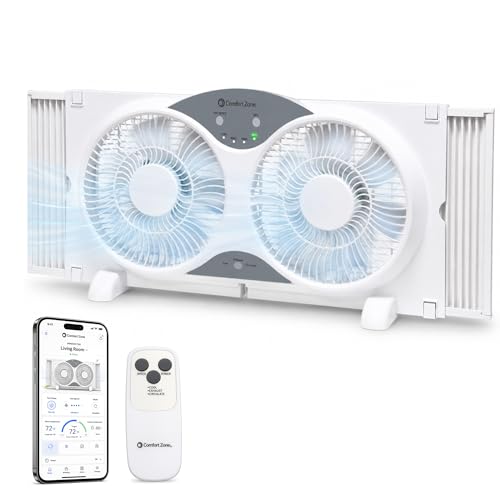 COMFORT ZONE 9" Smart Reversible Twin Window Fan9 inch (3-Speed+Remote+WiFi)5.5 x 23.5 x 12.5 inches7 poundsCheck on Amazon
A reversible twin window fan from a maker such as Lasko, Bionaire or Comfort Zone suits renters with a standard double-hung window who want to push hot air out and pull cooler evening air in, while a single-motor box fan suits anyone who only needs one direction of airflow on a tighter budget. Twin fans pair two small fans in one expandable frame, so one blade set can exhaust while the other intakes. This guide explains how to judge fit, controls, noise and safety, then maps common product types to common buyer needs.
Twin Window Fans at a Glance
| Type | Best for | Typical stated features | Limits |
|---|---|---|---|
| Basic twin reversible fan (Lasko, Comfort Zone style) | Bedrooms and small living rooms with a standard sash window | Two blades, expandable side panels, 2 or 3 speeds, reversible airflow | Basic dial controls, fit depends on window width |
| Thermostat twin fan (Bionaire style) | Buyers who want automatic switching between speeds | Makers list a thermostat, multiple speeds, sometimes a remote | Thermostat is coarse, higher cost tier than basic |
| Remote-control twin fan | Hard-to-reach windows, bedside use | Remote, timer, digital display on some models | Remote batteries, more parts to fail |
| Single-fan expandable window fan | Small windows, tight budgets | One motor, expandable frame | Only moves air in one direction at a time |
| Box fan in a window | Occasional use, wide openings | Large blade, simple switch | Not designed to seal the opening, needs support |
How a Twin Window Fan Works
Most twin models place two fan heads side by side in a plastic or metal frame. The frame has extendable side panels that fill the gap between the window sash and the frame. Each fan can usually be set separately: one on exhaust, one on intake. Many owners use this to remove warm room air with one fan while letting cooler outside air flow in through the other, which is the main reason people buy a twin rather than a single fan. Makers typically also allow both fans to run in the same direction when you want maximum movement.
COMFORT ZONE Reversible Twin Window Fan with 3-Speeds & Expandable Width | Draw Cool Air In or Manually Reverse to Pull Warm Stale Air Out, Removeable Bug Screen, ETL Certified for Home and Kitchen
Chosen because it specifies Removeable Bug Screen and ETL Certified for Home and Kitchen.
View on Amazon
COMFORT ZONE Reversible Twin Window Fan with 2-Speeds & Expandable Width | Draw Cool Air In or Manually Reverse to Pull Warm Stale Air Out, With Bug Screen & Fabric Cover, ETL Certified for Home
Chosen because it specifies With Bug Screen & Fabric Cover and ETL Certified for Home.
View on AmazonCOMFORT ZONE 9" Smart Reversible Twin Window Fan with WiFi & Remote | Draw cool air in, exhaust warm air out, or cross-ventilate with 3 modes. Includes remote, removable bug screen & dust cover
Chosen because it specifies Draw cool air in and exhaust warm air out.
View on Amazon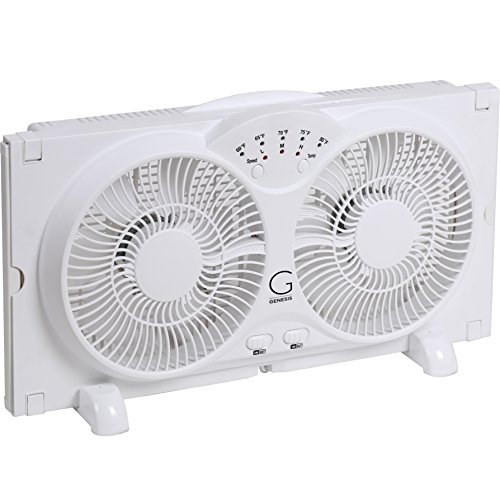
Genesis Twin Fan High Velocity Reversible AirFlow Fan, LED Indicator Lights Adjustable Thermostat & Max Cool Technology, ETL Certified, White (A1WINDOWFAN)
Chosen because it specifies ETL Certified and White (A1WINDOWFAN).
View on AmazonAirflow is usually listed in cubic feet per minute (CFM) by the maker, but the figure is measured under lab conditions with no insect screen and no window resistance. Real-world airflow in a window is lower, so treat CFM as a way to compare models from the same maker rather than a promise of room-cooling power.
Fit and Sizing: Measure Before Buying
Fit is the most common reason window fans are returned. Measure these three things first:
- Window opening width: Twin fans are wide. Makers list a minimum and maximum width the side panels cover, so your open sash width must fall between them.
- Opening height: Many twin fans need a minimum vertical opening. Check the maker’s stated height against how far your window opens.
- Window type: Double-hung and sliding windows suit most models. Casement windows, tilt-and-turn windows and windows with built-in air conditioner brackets usually do not.
Insect screens matter. Some fans fit inside a screen, others require removing it, which lets bugs in if the fan is off. Read the maker’s instructions on whether the fan is meant to sit in front of or behind a screen.
Features That Change Daily Use
Reversible airflow
Reversing is done with a switch or dial on the frame. It allows the same fan to work as an exhaust at night and an intake in the morning. Models without reversing are really just window box fans.
Thermostat and auto functions
Some makers, including Bionaire in its thermostat models, list an auto setting that switches fan speeds depending on room temperature. Reviewers generally describe the sensing as basic rather than precise, so think of it as a convenience.
Remote and timer
A remote helps when the window is above a bed or a desk. A timer lets you fall asleep and have the fan shut off. Both add cost and more parts, so only pay for them if you will use them.
Noise
Noise is rarely stated reliably by makers. Reviewers commonly report that the lowest speed is acceptable for sleep while the highest speed is closer to a loud box fan. Rattling often comes from loose side panels, which can be reduced by seating the panels firmly and following the maker’s installation steps.
Build and materials
Budget models use lightweight plastic frames and plastic blades. Mid-range and premium models tend to use thicker plastic or metal elements, sturdier locking panels and more consistent controls. Heavier frames are steadier in the window but are harder to install one-handed.
Budget Tiers
Budget
Basic twin fans with two or three speeds and simple dials. They are fine for a spare room or occasional use. Expect lightweight frames, basic panel locks and a louder top speed.
Mid-range
Models that add thermostat control, a remote, digital controls or a more solid frame. This tier is the usual choice for buyers who run the fan every night through summer.
Premium
Premium window fans are rarer. Some brands offer higher-airflow or quieter motors and better finishing. If you want the quietest possible night setup, premium or a different fan format such as a tower fan may serve better than a window unit.
Pick X If…
| If you want… | Pick |
|---|---|
| The simplest, most affordable twin setup | Basic Lasko or Comfort Zone style twin reversible fan |
| Automatic speed changes overnight | Thermostat model such as the Bionaire twin type |
| Control from bed or sofa | Remote-control twin fan |
| A narrow or small window | Single expandable window fan |
| Occasional use in a wide opening | Box fan with a stable stand |
| Quiet sleeping with no window access | Tower or pedestal fan instead of a window unit |
Safety and Care Notes
- Follow the maker’s manual for installation. Windows should be positioned so the fan cannot fall out or inward.
- Keep children and pets away from blades. Never put objects in the guard.
- Unplug before cleaning. Dust builds up on blades and reduces airflow, so a damp cloth wipe every few weeks is typical advice.
- Use the fan only on a properly grounded outlet. Avoid extension cords unless the manual allows them. If an outlet feels warm or a plug sparks, stop using it and ask a licensed electrician.
- Do not run a window fan in rain unless the maker explicitly says the unit is weather-resistant. Most are indoor appliances.
- If your window has security locks or fire egress requirements, ask your landlord or local authority before blocking the opening. A fan should not block an emergency exit.
Alternatives to Consider
Single-motor window fan
Good for narrow windows. You lose the simultaneous intake and exhaust but gain a better fit.
Window air conditioner
If nights stay hot and humid, a window air conditioner cools rather than just moves air. It uses more power and has installation weight and bracket needs.
Tower or pedestal fan
Placed inside the room, these avoid window fit problems and are often quieter, but they do not exchange indoor and outdoor air.
Frequently Asked Questions
Is a twin window fan better than a single window fan?
A twin fan can intake and exhaust at the same time, which helps swap warm indoor air for cooler outdoor air. A single fan is simpler and fits narrower windows. Choose the twin when the opening is wide enough and you want both directions at once.
Which direction should the fans face at night?
A common approach is to set one fan to draw cooler air in and the other to push warm air out, usually with the exhaust fan on the warmer side of the room. Results depend on layout and outdoor temperature, so adjust until the room feels comfortable.
Will a twin window fan fit any window?
No. Fit depends on the opening width and height listed by the maker. Double-hung and sliding windows work best, while casement and awning windows are generally unsuitable. Measure the open space and compare it with the stated range before buying.
Are window fans safe to leave on overnight?
Many people run them overnight, but follow the manual and use a grounded outlet in good condition. Avoid damaged cords and do not cover the unit. If you have any doubt about the wiring, ask a licensed electrician.
How can I reduce the noise?
Use a lower speed, seat the side panels firmly so they do not rattle, and make sure the sash is closed snugly on the frame. A fan with a heavier frame is generally steadier, and a rubber strip between the sash and the fan can cut vibration.
Can I use a window fan with an insect screen?
Some models are designed to sit against the screen, others require removing it. Read the maker’s instructions. If the screen has to come out, consider whether insects will be an issue when the fan is not running.
More from Amazon
Programs that pair well with the guide above. Offers and eligibility are set by Amazon and may change.
Collect the home and kitchen items you want in one registry that guests can shop from.
Create a wedding registrySet up recurring deliveries of everyday items on eligible products. Terms and savings are set by Amazon.
Explore Subscribe & SaveFree shipping on eligible items, Prime Video and more. Eligible new members can start with a free trial.
Start a Prime free trialAudiobooks and podcasts to listen to on the go. Eligible new members can start with a free trial.
Try Audible freeAs an Amazon Associate we earn from qualifying purchases.