Our Top Picks
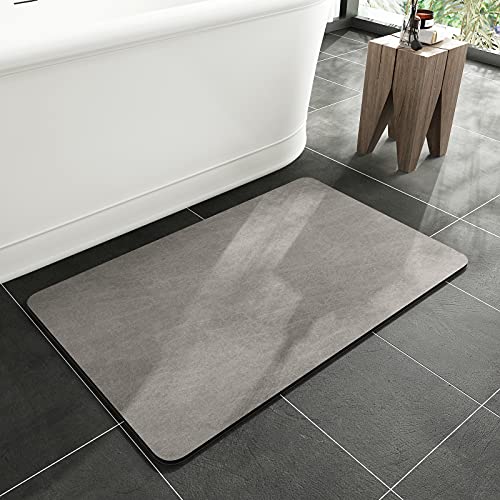 MontVoo -Bath Mat-Rubber Backing Non SlipThin Bathroom Rugs24" x 16"0 x 0 x 0.2 inches1.21 poundsCheck on Amazon
 chakme Bathroom Rugs Mat 24x171'5" x 2' (Rectangular)24 x 17 x 0.33 inches1.21 poundsCheck on Amazon
A thin bath mat suits shoppers with sliding doors, floor heating, tight clearances under a door, or anyone who wants a mat that dries quickly and lies flat, while a thick plush mat suits those who prioritise cushioning over drying speed. Thin mats are generally made from woven cotton, flat microfiber, stone-like diatomite composites, or rubber-backed low-pile fabrics, and each trades softness for speed and slim profile.
Why Choose a Thin Bath Mat?
Thick memory-foam mats can catch on doors, hold water for hours and take a long time to dry. A thin mat sits flat, folds easily and typically dries sooner between uses. People with mobility concerns also sometimes prefer a flat profile because a deep pile can be a tripping hazard. Anyone with balance concerns should talk to a doctor or occupational therapist about bathroom safety, since a mat alone is not a safety device.
MontVoo -Bath Mat-Rubber Backing Non SlipThin Bathroom Rugs Fit Under Door- Quick Dry Absorbent Faux Suede Surface Grey Bathroom Floor Mats-Shower Rug for in Front of Bathtub Shower Gray 16x24
Picked as a relevant option in this category.
View on Amazonchakme Bathroom Rugs Mat 24x17, Ultra Thin Non Slip Bath Mat Small Quick Dry Absorbent Bath Mat for Bathroom Floor, (Dark Beige, 24"x17")
Chosen because it specifies (Dark Beige and 24"x17").
View on Amazon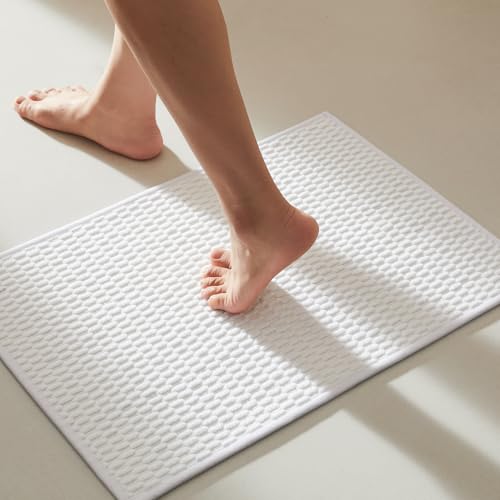
TYUU Bathroom Rugs Non Slip Washable, Super Absorbent Thin Bath Mat Small Quick Dry Low Pile Bathroom Rug, White 16"x24" / 1'4" x 2'
Chosen because it specifies White 16"x24" / 1'4" x 2'.
View on Amazon
TYUU Bathroom Rugs Non Slip Washable, Super Absorbent Thin Bath Mat Small Quick Dry Low Pile Bathroom Rug, Sage Green 16"x24"
Chosen because it specifies Sage Green 16"x24".
View on AmazonAt a Glance: Thin Mat Types
| Type / example | Best for | Key stated specs | Limits |
|---|---|---|---|
| Woven cotton flatweave, e.g. Turkish cotton or waffle mats from towel brands such as Parachute or Brooklinen | Spa look, machine-washable use | Makers list cotton, flat or terry weave, machine washable | Slower to dry than synthetics; may need a non-slip pad |
| Ultra-thin microfiber with rubber backing | Quick drying, daily use | Makers state absorbent microfibre with a non-slip base | Backing can wear; check the care label |
| Diatomite stone mats, e.g. Dorai Home style | Instant-dry feel, minimalist bathrooms | Makers describe a hard, absorbent diatomaceous earth surface | Firm underfoot; can chip if dropped; surface can mark |
| Quick-dry drying mats, e.g. Drymate style | Under-sink, shower floor edge | Makers state absorbent top with waterproof backing | Basic appearance |
| Flat bamboo or teak slat mats | Wet-room and shower floors | Makers describe slatted wood or bamboo | Needs air drying and maintenance |
Key Features to Compare
Thickness and clearance
Makers sometimes state pile height. If a door has to swing over the mat, measure the clearance before buying. A flat weave of a few millimetres works with most doors.
Slip resistance
Look for a rubber or silicone backing, and read whether the maker says it is suitable for tile, vinyl or wood. A backing can discolour some finishes over time, so follow the manufacturer’s guidance and lift the mat to dry the floor beneath it periodically. A mat that slides is a risk regardless of thickness; stop using it if it does and consider a gripper pad.
Drying speed
Microfiber and diatomite dry fastest. Cotton is slower but feels more natural. Hanging a mat over the tub edge after use helps any material dry.
Washing
Check whether the mat is machine washable and at what temperature. Rubber backing may degrade in a hot dryer, so many makers say to air dry.
Size
Common sizes are small rectangle, 17 by 24 inches, and longer runners around 20 by 30 or 24 by 60 inches. Measure the space in front of the tub or vanity.
Pick X If: Decision Table
| Pick this | If you |
|---|---|
| Cotton flatweave | Want a natural, washable, low-profile mat for a modern bathroom |
| Thin microfiber with backing | Need fast drying and a grippy base |
| Diatomite stone mat | Want a mat that feels dry within seconds and do not mind a firm surface |
| Wood slat mat | Have a wet room and want a mat that does not hold water |
| Plush mat instead | Value cushioning over drying speed |
Budget Tiers
Budget thin mats are usually microfiber or basic cotton with simple backing. They do the job but may curl at the edges and lose grip over time. Mid-range mats tend to use denser weaves, better backing and clearer care instructions. Premium options include Turkish cotton, stone composites and hardwood pieces, offering more design and longevity at a higher outlay. Independent reviewers regularly note that a thin mat’s real life depends on the backing, so look at how the maker describes it.
Care and Safety Notes
- Lift and dry the mat regularly; trapped moisture leads to odour and can mark flooring.
- Follow the care label on washing temperature and drying.
- Place mats on a dry, clean surface; a mat on a wet floor can slide.
- Do not rely on a mat for fall prevention. If you or a family member are unsteady on wet floors, talk to a doctor or occupational therapist about grab bars and other options.
- If a rubber backing leaves residue on a floor, stop using the mat on that floor and follow the flooring maker’s cleaning advice.
- Diatomite mats can be cleaned according to the maker’s instructions; avoid harsh abrasives unless the maker says they are safe.
Placement and Fit Tips
For a vanity, a small rectangle is typically enough. For a tub, choose a width matching the tub length if you want full coverage, or a smaller mat if you only step out at one end. With underfloor heating, thin cotton or microfiber is usually fine, but follow the heating system maker’s guidance on what may be placed over the floor, since thick insulating layers can matter. Layering a thin mat over a bathroom rug is generally unnecessary.
Alternatives to Consider
- Shower mats with suction cups: a different product category for inside the shower.
- Bath rugs in wool or jute blends: for dry bathrooms with little splash.
- Absorbent floor towels: a folded towel works as a temporary option and is easy to launder.
Thin Mats in Different Bathrooms
Thin mats make the most difference in bathrooms where a thick pile causes problems. Doors that open inward often scrape plush mats, and a flat mat avoids that. In rentals, thin mats are easy to roll up and carry on moving day. In wet rooms and walk-in showers, flat mats or slatted wood sit better against a threshold and allow water to drain beneath. In households with young children, a thin mat is less likely to bunch when kids run in with wet feet, although a grip pad or backing is still important.
Thin mats also pair well with a separate soft rug placed outside the splash zone if you want comfort elsewhere in the room. This split approach keeps the wet area quick-drying and the comfortable area dry.
How Thin Mats Wear Over Time
The main failure points are the backing, the edges and the surface. Rubber and TPR backings can lose flexibility and begin to peel after repeated washing and drying; makers often advise air drying to extend life. Edges can fray or curl if the stitching is thin, and a mat that curls is a trip hazard, so replace it or flatten it under a gripper pad. Surfaces can mat down or hold soap residue, which makes them feel stiff; a regular wash restores some softness for fabric mats, while stone mats can usually be cleaned according to the maker’s instructions.
Reviewers often note that thin mats show wear sooner than thick ones, so they suit households that accept replacing a mat periodically or that choose a mid-range or premium construction. Rotating two mats extends the life of each and gives one time to dry.
Quick Shopping Checklist
- Measure the space and door clearance before ordering.
- Read what the maker says about the backing and which floors it suits.
- Look for clear washing and drying instructions.
- Choose a colour that hides soap marks if the mat will see daily use.
- Buy two if you want one drying while the other is in use.
Buying Tips by Priority
If drying speed is your top priority, shortlist stone, thin microfiber or slatted wood and skip thick foam. If grip is your top priority, read the maker’s description of the backing, choose a mat large enough not to shift, and keep the floor clean and dry. If comfort matters most, accept that a plush mat needs airing and more frequent washing. If appearance matters most, cotton and stone options tend to suit modern and spa-style bathrooms, while chenille suits traditional looks. Whatever the priority, buy from a maker that gives clear dimensions, materials and care instructions, because vague listings often lead to returns.
It also helps to think about how the mat will be used day to day. A mat by the shower sees much more water than one by the vanity, so you might choose a fast-drying mat for the shower side and a softer one elsewhere. Washing frequency should match use: heavily used mats benefit from a weekly wash, and lightly used ones can go longer. Finally, remember that mats are consumables. Even a good one wears out, and replacing it on a sensible schedule keeps the bathroom safer and fresher than hanging on to a tired mat for years.
Shoppers who live with children, older relatives or anyone who is unsteady on their feet should treat the mat as one part of a wider bathroom safety plan. Good lighting, a dry floor, secure grab bars where appropriate and a clear path all matter at least as much as the mat itself, and a doctor or occupational therapist can give personalised advice.
Frequently Asked Questions
Are thin bath mats less safe?
Thickness is not the main safety factor; grip is. A thin mat with a reliable non-slip backing on a dry floor is generally more stable than a thick mat that bunches.
How often should I wash a thin bath mat?
Many care guides suggest washing weekly or every couple of weeks depending on use. Follow the maker’s label and air dry if the backing is rubber.
Do stone bath mats get slippery?
Makers describe them as absorbent, but a wet surface can still be slippery. Stand on the mat only after drying your feet and follow the maker’s advice about any backing.
Can I use a thin mat with underfloor heating?
Many thin mats are fine, but follow the heating system manual and the mat maker’s instructions before placing anything over the floor.
Why does my mat keep sliding?
The backing may be worn, or the floor may be damp or dusty. Clean the floor, dry it, and replace the mat or add a gripper pad if it keeps moving.
What size should I choose?
Measure the space where you step out. A small rectangle is typically enough for a vanity, and a longer runner suits a full-length tub.
More from Amazon
Programs that pair well with the guide above. Offers and eligibility are set by Amazon and may change.
Collect the home and kitchen items you want in one registry that guests can shop from.
Create a wedding registrySet up recurring deliveries of everyday items on eligible products. Terms and savings are set by Amazon.
Explore Subscribe & SaveFree shipping on eligible items, Prime Video and more. Eligible new members can start with a free trial.
Start a Prime free trialAudiobooks and podcasts to listen to on the go. Eligible new members can start with a free trial.
Try Audible freeAs an Amazon Associate we earn from qualifying purchases.