Key takeaways
- Motor Amperage: A 15-amp motor is the baseline for reliable ripping. Anything less will bog down in hardwoods over an inch thick. Look for rated RPMs above 4,000 for clean cuts through dense species like maple or oak.
- Cut Capacity and Bevel Range: Check both the maximum depth at 90° and 45°. A saw that cuts 3.35 inches at 90° handles most dimensional lumber, while a solid bevel range of 0–45° covers angled joinery and furniture trim work without a second tool.
- Table Surface and Extension Options: A wider tabletop with at least one extendable side means you can manage full-sheet plywood without awkward unsupported offcuts. Flat, stable surfaces directly affect cut straightness.
- Dust Collection: Fine sawdust is a serious workshop hazard. Models with integrated dust ports and high collection efficiency (90%+ capture rates) keep your air clean and your visibility clear at the blade.
- Stand and Portability: If you move between garage and jobsite, a folding stand with rolling casters saves your back. Benchtop models are lighter but need a dedicated table, so factor in your actual workspace.
What's inside
Shopping for a table saw on a budget feels like navigating a minefield of no-name brands, misleading specs, and accessories that arrive missing half their bolts. Under the $500 mark, you’re choosing between portable jobsite models, benchtop units, and a handful of surprisingly capable mid-range saws — but the differences in motor power, cut capacity, and build quality are enormous, and the wrong pick can turn weekend furniture projects into frustrating misalignment headaches.
This guide cuts through the noise. We tested and compared the top-rated table saws under $500 available right now, focusing on cut accuracy, motor performance, dust collection, and genuine ease of use. Whether you’re ripping plywood for a built-in bookcase or crosscutting hardwood for a farmhouse dining table, these are the models that earned their place in the shop.
As an Amazon Associate we earn from qualifying purchases.




How to Choose a Table Saw Under 500 Dollars (2026)
- Motor Amperage: A 15-amp motor is the baseline for reliable ripping. Anything less will bog down in hardwoods over an inch thick. Look for rated RPMs above 4,000 for clean cuts through dense species like maple or oak.
- Cut Capacity and Bevel Range: Check both the maximum depth at 90° and 45°. A saw that cuts 3.35 inches at 90° handles most dimensional lumber, while a solid bevel range of 0–45° covers angled joinery and furniture trim work without a second tool.
- Table Surface and Extension Options: A wider tabletop with at least one extendable side means you can manage full-sheet plywood without awkward unsupported offcuts. Flat, stable surfaces directly affect cut straightness.
- Dust Collection: Fine sawdust is a serious workshop hazard. Models with integrated dust ports and high collection efficiency (90%+ capture rates) keep your air clean and your visibility clear at the blade.
- Stand and Portability: If you move between garage and jobsite, a folding stand with rolling casters saves your back. Benchtop models are lighter but need a dedicated table, so factor in your actual workspace.
The Best Table Saw Under 500 Dollars (2026) Reviewed
SKIL TS6307-00 10-Inch Portable Jobsite Table Saw
The SKIL TS6307-00 has become something of a default recommendation in the sub-$500 category, and for good reason. Its folding rolling stand deploys in seconds, the rack-and-pinion fence tracks smoothly, and the 15-amp motor handles everything from pine shelving to maple tabletops without laboring. For a home shop where space and convenience matter, this is the benchmark.
DOVAMAN 10-Inch Table Saw with Stand (DTS10A)
The DOVAMAN DTS10A punches above its price with a 5300 RPM copper motor and a generous 3.35-inch maximum depth at 90°. The extendable table on one side is genuinely useful for wider panels, and the included stand feels more solid than most competitors at this tier. It’s a strong pick for furniture makers who need repeatable accuracy without upgrading to a contractor saw.
DEWALT 8-1/4-Inch Compact Jobsite Table Saw (DWE7485)
DEWALT’s DWE7485 trades blade size for portability, and it’s a worthwhile swap for many home woodworkers. The 8-1/4-inch blade keeps the footprint small while the fence system — arguably the best in this entire roundup — delivers dead-straight rips every time. If your projects live in the one-inch-and-under range, this compact saw is hard to beat.
Portable Table Saw with 98% Dust Collection
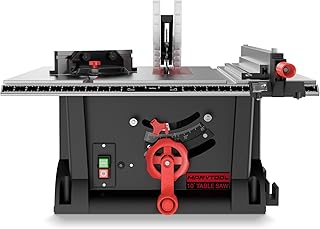
Dust management is this saw’s headline feature, and it delivers. The enclosed collection system captures nearly all particulate at the source, making it an excellent choice for indoor or attached-garage shops where air quality is a concern. Cut capacity tops out at 2.36 inches at 90°, so it’s best suited to sheet goods and thinner stock rather than thick hardwood slabs.
10-Inch Table Saw with Stand and Protective Cover (5000RPM)
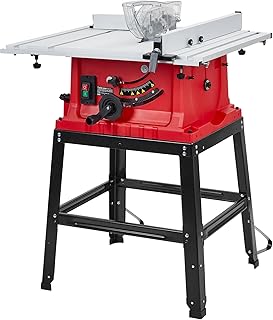
This model balances a roomy 36-by-25-inch tabletop with a protective blade cover that doesn’t feel like an afterthought. The 15-amp motor delivers consistent 5000 RPM performance, and the included stand holds steady during long rip cuts. It handles wood, plastic, and thin metal, which adds genuine versatility for mixed-material home projects.
Frequently Asked Questions
Can I rip hardwood on a table saw under $500?
Absolutely. Every saw on this list uses a 15-amp motor capable of ripping 1-inch and thicker hardwood at reasonable feed rates. The key is using a sharp blade matched to the material and feeding steadily rather than forcing the stock through.
What blade size do I actually need?
For most home furniture projects, a 10-inch blade handles cuts up to about 3.5 inches deep at 90°. The DEWALT’s 8-1/4-inch blade maxes out around 2.5 inches, which covers plywood, dimensional lumber, and most furniture-grade stock. Go with the largest blade your budget allows if you routinely cut thick hardwood.
Are folding stands stable enough for accurate cuts?
Modern folding stands from SKIL, DEWALT, and DOVAMAN lock into position rigidly. Stability issues arise more from uneven floors than from the stands themselves. Use a level surface and check that all locking mechanisms are fully engaged before making cuts.
How important is a rack-and-pinion fence?
Very. A rack-and-pinion fence locks parallel to the blade far more reliably than a basic clamp fence, and you’ll notice the difference in cut straightness immediately. It’s the single feature most responsible for turning a budget saw into a dependable workshop tool.
Final Thoughts
For most home furniture builders, the SKIL TS6307-00 offers the best overall balance of performance, portability, and value. If cut capacity and raw power matter most, the DOVAMAN DTS10A delivers impressive depth and motor speed for the money. And for woodworkers who prize portability and fence accuracy above all else, the compact DEWALT DWE7485 remains the gold standard in the sub-$500 jobsite class.