Key takeaways
- Motor Power: A 15-amp motor is the sweet spot for beginners. Anything less struggles with hardwoods, and anything more adds cost without meaningful benefit at this stage. Look for consistent torque, not just peak RPM.
- Rip Capacity: This determines the widest board you can cut lengthwise. A 25-inch rip capacity handles most sheet goods and dimensional lumber you’ll encounter in home projects. Below 20 inches and you’ll feel cramped fast.
- Stand Quality: A wobbly stand is a safety hazard, not just an annoyance. Folding stands save space in small shops, while rolling stands offer better portability. Either way, solid steel construction beats thin tubing every time.
- Blade and Bevel Range: A 10-inch blade with 36 teeth handles most crosscuts and rip cuts adequately. Bevel capability up to 45 degrees gives you angled cuts for furniture joints without needing a separate tool.
- Safety Features: A blade guard, riving knife, and push stick should come standard — no exceptions. Anti-kickback pawls are a bonus. Never buy a saw that forces you to purchase these essentials separately.
What's inside
Shopping for your first table saw can feel surprisingly overwhelming. You’re bombarded with specs that sound impressive but don’t tell you much — RPM figures, amp ratings, rip capacities — and the price gap between budget options and professional-grade machines is enough to make anyone hesitate. The real risk isn’t overspending; it’s buying a saw that frustrates you so badly you lose interest in woodworking altogether before you’ve even started.
This guide cuts through the noise. I’ve narrowed the field to five table saws that actually make sense for someone picking up a circular blade for the first time in 2026. Each one has been selected based on safety features, ease of setup, build quality, and real-world value — not just spec sheets. Whether you’re building a bookshelf in your garage or cutting joinery for your first dining table, here’s what’s worth your money right now.
As an Amazon Associate we earn from qualifying purchases.




🛒 Best Price Today on Amazon
Prime members get fast, free shipping on everything above, plus member-only deals. New members get a 30-day free trial — cancel anytime.
How to Choose a Table Saw For Beginner Woodworker (2026)
- Motor Power: A 15-amp motor is the sweet spot for beginners. Anything less struggles with hardwoods, and anything more adds cost without meaningful benefit at this stage. Look for consistent torque, not just peak RPM.
- Rip Capacity: This determines the widest board you can cut lengthwise. A 25-inch rip capacity handles most sheet goods and dimensional lumber you’ll encounter in home projects. Below 20 inches and you’ll feel cramped fast.
- Stand Quality: A wobbly stand is a safety hazard, not just an annoyance. Folding stands save space in small shops, while rolling stands offer better portability. Either way, solid steel construction beats thin tubing every time.
- Blade and Bevel Range: A 10-inch blade with 36 teeth handles most crosscuts and rip cuts adequately. Bevel capability up to 45 degrees gives you angled cuts for furniture joints without needing a separate tool.
- Safety Features: A blade guard, riving knife, and push stick should come standard — no exceptions. Anti-kickback pawls are a bonus. Never buy a saw that forces you to purchase these essentials separately.
The Best Table Saw For Beginner Woodworker (2026)s Reviewed
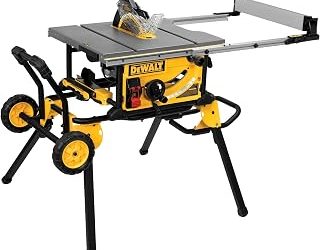
DEWALT DWE7491RS with Rolling Stand
This is the saw most beginner-to-intermediate woodworkers outgrow last. The 4800 RPM motor cuts cleanly through hardwoods, and the 32-1/2 inch rip capacity genuinely handles full plywood sheets. The folding rolling stand is a standout — it’s sturdy enough to work on and compact enough to roll into a corner when you’re done. If your budget allows one premium choice, this is it.
SKIL TS6307-00 with Folding Stand
SKIL’s jobsite table saw delivers surprising build quality at a price that won’t derail your workshop budget. The folding stand collapses quickly for storage, and the 15-amp motor handles most softwood and plywood tasks without complaint. Setup is straightforward even if you’ve never assembled power tools before. It’s the most beginner-friendly option on this list from a “unbox and start cutting” perspective.
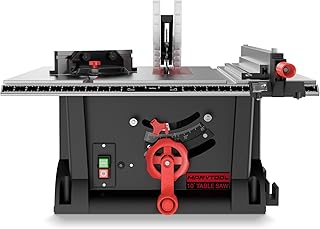
15 Amp 4600RPM Compact Benchtop Table Saw
This compact benchtop unit carves out a niche for apartment woodworkers and anyone short on floor space. The 4600 RPM motor pairs with a 36-tooth blade for clean crosscuts, and the dual 90-degree and 0-45-degree bevel capability covers the angles most furniture projects demand. It won’t handle large sheet goods gracefully, but for smaller furniture pieces and shelf-building, it punches well above its price point.
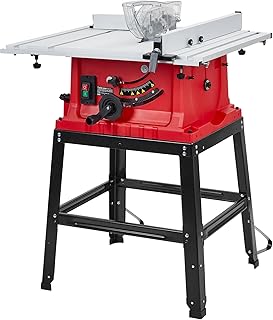
10 Inch 15A Multifunctional Saw with Stand and Push Stick
What sets this model apart is the included push stick and solid steel stand right out of the box — two things many competitors skimp on at this tier. The 5000 RPM motor provides more cutting speed than most budget alternatives, and adjustable blade height lets you dial in cuts for different material thicknesses. It’s a genuinely complete package for someone who wants everything ready to go on day one.
15 Amp 5000RPM Table Saw with Protective Cover
The integrated protective cover addresses dust management, which is something most budget saws ignore entirely. The generous 36 by 25 inch tabletop gives you ample workspace for mid-size furniture projects, and the 5000 RPM motor handles wood, soft metals, and plastics without bogging down. If keeping your workshop clean matters to you — and it should — this saw makes that considerably easier.
Frequently Asked Questions
Do I need a table saw if I only do occasional projects?
If you’re building more than two or three pieces of furniture per year, a table saw will save you significant time and deliver cleaner, more accurate cuts than a circular saw or miter saw alone. For casual one-off projects, a portable jobsite model offers the best balance of capability and storage convenience.
What’s the difference between a jobsite and a benchtop table saw?
Jobsite saws include their own stands and are built for mobility between work sites. Benchtop models sit on an existing table or workbench and are lighter and more compact. For a home garage or workshop, either works well — the jobsite option is better if you need to move it frequently, while the benchtop suits a dedicated small workspace.
Is a 10-inch blade enough for most beginner woodworking?
A 10-inch blade is the industry standard for a reason. It handles ripping dimensional lumber, crosscutting boards, and cutting sheet goods with no trouble. Larger 12-inch saws exist, but they’re heavier, pricier, and overkill for the vast majority of home furniture projects.
How important is rip capacity for a first table saw?
Critical. If you plan to cut plywood or MDF sheets — which most furniture builders eventually do — look for at least 24 inches of rip capacity. Anything less means you’ll need to make awkward secondary cuts to break down sheet goods, which defeats the purpose of owning a table saw in the first place.
Final Thoughts
For most beginners stepping into woodworking in 2026, the DEWALT DWE7491RS remains the gold standard if your budget stretches that far, thanks to its rip capacity and rock-solid rolling stand. The SKIL TS6307-00 is the smarter pick if you want proven reliability without the premium price tag. And for space-constrained workshops, the 15 Amp 4600RPM Compact Benchtop model delivers surprising versatility in a small footprint. Any of these three will serve you well as your skills grow — and none will collect dust the moment you tackle your second project.