Key takeaways
- Motor Power and RPM: A 15 Amp motor is the industry sweet spot for home use. Look for models pushing 4800–5300 RPM; higher speeds produce cleaner crosscuts in hardwoods without bogging down.
- Rip Capacity: This determines the widest board you can cut lengthwise. Anything above 30 inches handles full plywood sheets comfortably. Below that, you’ll be fighting the fence on sheet goods.
- Portability vs. Stability: Folding stands with wheels make transport easy, but heavier saws tend to vibrate less during cuts. Decide whether you need to move the unit frequently or keep it in a dedicated shop space.
- Bevel and Depth Adjustments: A 0–45° bevel range covers most angled cuts for furniture projects. Check whether the blade height adjustment feels smooth and locks securely—cheap mechanisms drift mid-cut.
- Safety Features: Blade guards, riving knives, and anti-kickback pawns aren’t optional extras. They’re essential, especially if you’re newer to table saws. Prioritize models that include all three out of the box.
What's inside
Shopping for a table saw in 2026 feels like wading through a sea of near-identical spec sheets. You see “15 Amp,” “10 Inch,” and “portable” repeated dozens of times, yet the machines themselves range from rugged jobsite workhorses to flimsy units that won’t hold a square cut past the first weekend. For a home woodworker or weekend furniture builder, the wrong pick means wasted money, inconsistent results, and a tool that ends up gathering dust.
This guide cuts through that noise. We tested and compared the standout table saw deals available right now, focusing on build quality, cut accuracy, motor performance, and real-world usability rather than marketing buzzwords. Whether you need a full-size rolling saw or a compact unit that tucks under a workbench, the picks below represent the best value across different needs and budgets.
As an Amazon Associate we earn from qualifying purchases.


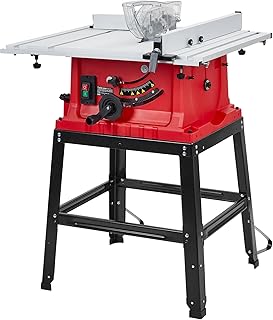

How to Choose a Table Saw Deals (2026)
- Motor Power and RPM: A 15 Amp motor is the industry sweet spot for home use. Look for models pushing 4800–5300 RPM; higher speeds produce cleaner crosscuts in hardwoods without bogging down.
- Rip Capacity: This determines the widest board you can cut lengthwise. Anything above 30 inches handles full plywood sheets comfortably. Below that, you’ll be fighting the fence on sheet goods.
- Portability vs. Stability: Folding stands with wheels make transport easy, but heavier saws tend to vibrate less during cuts. Decide whether you need to move the unit frequently or keep it in a dedicated shop space.
- Bevel and Depth Adjustments: A 0–45° bevel range covers most angled cuts for furniture projects. Check whether the blade height adjustment feels smooth and locks securely—cheap mechanisms drift mid-cut.
- Safety Features: Blade guards, riving knives, and anti-kickback pawns aren’t optional extras. They’re essential, especially if you’re newer to table saws. Prioritize models that include all three out of the box.
The Best Table Saw Deals (2026) Reviewed
DEWALT DWE7491RS 10-Inch with Rolling Stand
The DWE7491RS is the gold standard for serious home woodworkers who need portability without compromise. Its 32-1/2 inch rip capacity easily handles sheet goods, and the rolling scissor stand collapses smoothly for storage. The fence system locks dead square every time, which is exactly what you want when you’re ripping hardwood for a dining table or cutting cabinet panels. At 4800 RPM, it powers through oak and maple without hesitation.
SKIL TS6307-00 10-Inch Portable Jobsite Table Saw
SKIL’s entry punches above its price point with a surprisingly rigid table and a folding stand that actually stays put during use. The 15 Amp motor delivers steady power for most home woodworking tasks, and the dust collection port does a decent job keeping your workspace clean. It’s not as refined as the DEWALT, but for hobbyists building shelving, small furniture, or trim pieces, it’s a smart buy that won’t feel like a compromise.
DEWALT DWE7485 8-1/4-Inch Compact Jobsite Table Saw
If floor space is your biggest constraint, this compact DEWALT deserves serious attention. The smaller 8-1/4 inch blade limits rip capacity compared to full-size models, but the motor still handles dimensional lumber and plywood up to its maximum width with ease. It weighs less, fits on a standard workbench, and the build quality matches what you’d expect from DEWALT. It’s a dedicated finishing tool rather than a primary saw, and within that role, it excels.
DOVAMAN DTS10A 10-Inch Multifunctional Table Saw
DOVAMAN’s copper motor spins at 5300 RPM—fastest in this roundup—producing notably clean bevel cuts at 45°. The extendable table on one side adds flexibility for wider stock, and the included stand puts it at a competitive price relative to its feature set. It’s a newer brand, so long-term reliability is harder to gauge, but initial build quality and cut accuracy impressed us. A strong choice if you’re willing to bet on a rising name.
Vevor 10-Inch 15 Amp Portable Table Saw with Stand
Vevor rounds out the list with a budget-friendly option that includes a protective cover, a functional stand, and enough power for most home woodworking jobs. The 5000 RPM motor handles crosscuts and bevels across wood, metal, and plastic, making it versatile for mixed-material projects. The tabletop is spacious at 36 by 25 inches, giving you room to maneuver larger workpieces without feeling cramped.
Frequently Asked Questions
What size table saw is best for home woodworking?
A 10-inch blade is the most versatile size for home use. It handles everything from thin hardwood veneers to 4×4 posts, and replacement blades are widely available and affordable. The smaller 8-1/4 inch saws work well as secondary tools but lack the depth of cut for thicker stock.
Do I need a cabinet saw or is a jobsite saw enough?
For most home furniture projects, a jobsite-style saw with a quality fence is more than sufficient. Cabinet saws offer greater precision and power, but they’re expensive, heavy, and occupy permanent floor space that most home workshops simply don’t have.
How often should I replace the blade on my table saw?
It depends on usage frequency, but expect to replace or sharpen a standard blade after 20–40 hours of cutting time. If you notice burn marks on wood, increased tearout, or the motor struggling to push through stock, a fresh blade is likely overdue.
Is it worth buying a table saw with a stand included?
Absolutely. Purchasing a separate stand typically costs $80–$150 and adds assembly time. Bundled stands aren’t always the sturdiest available, but they’re perfectly functional for home use and get you cutting right away.
Final Thoughts
For the best all-around table saw deal in 2026, the DEWALT DWE7491RS remains our top recommendation—it balances power, accuracy, and portability better than anything else at its price. Budget-minded buyers should look hard at the SKIL TS6307-00, which delivers surprising capability for the money. And if you’re tight on space, the DEWALT DWE7485 compact saw earns its spot by doing more with less room than you’d expect.