Key takeaways
- Tooth Count: For plywood crosscuts and finish work, aim for 60–80 teeth on a 10-inch blade. Fewer teeth leave tear-out; more teeth beyond 80 yield diminishing returns and slower feed rates.
- Tooth Grind: Alternate Top Bevel (ATB) grinds slice cleanly through cross-laminated veneer. A high ATB or “Hi-ATB” configuration with a steeper bevel angle (around 15°) further reduces fuzzing on delicate faces.
- Blade Diameter and Arbor: Match the blade to your saw. Most jobsite and contractor table saws accept a 10-inch blade with a 5/8-inch arbor, but compact or older saws may need an 8¼- or 8½-inch blade. Always verify before ordering.
- Kerf Thickness: Full-kerf blades (roughly 1/8 inch) resist deflection and stay straighter through thick stock. Thin-kerf options waste less material and demand less motor power but can wander under heavy feed pressure.
- Carbide Quality and Tip Count: Tungsten carbide tips hold an edge far longer than hardened steel. Look for thicker, precision-ground tips on blades you plan to resharpen — they survive more honing cycles and maintain flatness over time.
What's inside
Anyone who has ripped a sheet of plywood on a table saw and watched the edge blow out into a ragged, splintered mess knows the frustration. The wrong blade turns a clean project into extra sanding, filler, and compromised joinery. Choosing the right blade for plywood in 2026 means sorting through dozens of nearly identical listings that all promise “ultra-fine finish” without explaining what actually makes one blade outperform another on engineered wood.
This guide breaks down six real-world options across price points and arbor sizes, explains the tooth-count and grind characteristics that matter most for plywood, and gives you straightforward recommendations you can act on today.
As an Amazon Associate we earn from qualifying purchases.


🛒 Best Price Today on Amazon
Prime members get fast, free shipping on everything above, plus member-only deals. New members get a 30-day free trial — cancel anytime.
How to Choose a Table Saw Blade For Plywood (2026)
- Tooth Count: For plywood crosscuts and finish work, aim for 60–80 teeth on a 10-inch blade. Fewer teeth leave tear-out; more teeth beyond 80 yield diminishing returns and slower feed rates.
- Tooth Grind: Alternate Top Bevel (ATB) grinds slice cleanly through cross-laminated veneer. A high ATB or “Hi-ATB” configuration with a steeper bevel angle (around 15°) further reduces fuzzing on delicate faces.
- Blade Diameter and Arbor: Match the blade to your saw. Most jobsite and contractor table saws accept a 10-inch blade with a 5/8-inch arbor, but compact or older saws may need an 8¼- or 8½-inch blade. Always verify before ordering.
- Kerf Thickness: Full-kerf blades (roughly 1/8 inch) resist deflection and stay straighter through thick stock. Thin-kerf options waste less material and demand less motor power but can wander under heavy feed pressure.
- Carbide Quality and Tip Count: Tungsten carbide tips hold an edge far longer than hardened steel. Look for thicker, precision-ground tips on blades you plan to resharpen — they survive more honing cycles and maintain flatness over time.
The Best Table Saw Blades For Plywood (2026) Reviewed
KENDO 10-Inch Circular Saw Blade Set (40T/60T)
This two-pack covers both ripping and crosscutting plywood with purpose-matched blades. The 60-tooth ATB blade produces a noticeably clean edge on cabinet-grade plywood, and getting both in a single purchase simplifies the buying decision for anyone building out a basic blade rotation without overcommitting budget.
Benchmark Abrasives TCT 8½-Inch, 60-Tooth
A standout for compact table saws and benchtop models that can’t take a full 10-inch blade. The tungsten carbide tips are generously sized for a blade this diameter, and the 60-tooth layout delivers surprisingly smooth results on plywood, MDF, and hardwood — a rare combination at this price tier.
FOXBC 10-Inch Table Saw Blade, 80-Tooth
The FOXBC 80-tooth blade targets finish-quality crosscuts on sheet goods, and it delivers. Feed it at a moderate pace and you get an edge clean enough to glue up without tape or masking. The 5/8-inch arbor fits standard saws, and the blade runs true with minimal vibration out of the box.
8¼-Inch Miter Saw Blade, 80-Tooth
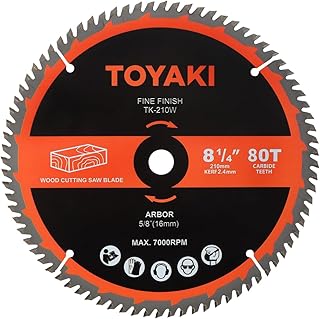
If your saw maxes out at 8¼ inches, this 80-tooth blade is one of the best-finish options in that underserved size. It works on miter saws, table saws, and circular saws with the right arbor, making it a flexible choice for shops running multiple small-format tools.
10-Inch 80-Tooth Carbide Tipped Blade
An affordable 80-tooth option that covers plywood, plastic composites, and light hardwood crosscuts. The carbide tips handle repeated use without dulling quickly, and the blade maintains a flat profile under load — two things that matter when you are processing multiple sheets in a single session.
Frequently Asked Questions
Can I use a single blade for both ripping and crosscutting plywood?
You can, but the results will be mediocre in both directions. A 60-tooth ATB blade is the best compromise if you must use one blade for everything, yet a dedicated rip blade paired with a crosscut blade will still outperform it noticeably on long rip cuts and clean end-grain edges.
What does “Hi-ATB” mean, and does it matter for plywood?
Hi-ATB refers to an alternate top bevel grind with a steeper angle — typically 15° rather than the standard 5° to 10°. The sharper slicing action is especially beneficial on plywood because it cuts through veneer plies with less lifting and less tear-out on the exit side.
How often should I replace or sharpen a table saw blade used on plywood?
Carbide-tipped blades can be resharpened multiple times before replacement. For a blade used in a typical home shop, expect to sharpen every 15 to 25 sheets of plywood or roughly once a year with moderate use. Signs of dulling include burning on the cut edge and increased effort feeding the workpiece.
Is a thin-kerf blade a problem for plywood?
Thin-kerf blades remove less material and place less demand on your saw’s motor, which is helpful on smaller contractor saws. The trade-off is slightly more blade deflection under heavy feed pressure. For plywood up to ¾ inch thick, a quality thin-kerf blade works perfectly well if you feed steadily and use proper blade-guide setup.
Final Thoughts
For most home shop owners cutting cabinet-grade plywood, the FOXBC 10-Inch 80-Tooth and the KENDO two-pack offer the best balance of cut quality and value. If you run a compact saw that won’t accept a full 10-inch blade, the Benchmark Abrasives TCT 8½-Inch fills that niche without asking you to compromise on finish. Match the blade to your arbor, keep a dedicated plywood blade sharp, and the tear-out problems disappear.