Key takeaways
- Tooth Count: Fewer teeth (around 30–40) handle aggressive ripping through hardwood fast, while 60–80 teeth deliver the smooth, glassy crosscuts that finishing work demands. Most woodworkers eventually need both types on hand.
- Kerf Width: Thin kerf blades (around 0.090–0.102 inches) waste less material and put less strain on your saw’s motor, which matters on jobsite saws and older cabinet saws alike. Full kerf blades run stiffer but demand more horsepower.
- Tooth Grind: Flat-top grind excels at ripping; alternating top bevel (ATB) handles crosscuts with less tear-out. Combination grinds split the difference if you want one blade for both tasks. Match the grind to your dominant workflow.
- Anti-Vibration Design: Laser-cut slots and expansion gullets keep the blade stable at high RPM, reducing chatter marks on hardwood. This feature separates premium blades from budget ones faster than almost anything else.
- Carbide Quality: Not all carbide tips are equal. Higher-density carbide blends (like Freud’s TiCo line) stay sharp significantly longer in dense hardwoods and resharpen more cleanly, lowering your cost per cut over time.
What's inside
Nothing wrecks a weekend woodworking project faster than burning through expensive hardwood with the wrong blade — scorched edges, tear-out, and hours of sanding to undo the damage. If you’ve ever watched a gorgeous piece of walnut or cherry splinter under a cheap blade, you already know the frustration. Choosing the right table saw blade for hardwood isn’t about buying the most expensive option; it’s about matching tooth count, kerf, and grind to the specific cuts you make most often.
This guide breaks down six solid options across different budgets and use cases — from high-end industrial blades to smart multi-packs — so you can stop guessing and start cutting cleanly. I’ve tested and compared these based on cut quality, longevity, vibration, and value, with a focus on the real demands of hardwood species like oak, maple, and teak. Every recommendation here earns its spot, not its commission.
As an Amazon Associate we earn from qualifying purchases.




🛒 Best Price Today on Amazon
Prime members get fast, free shipping on everything above, plus member-only deals. New members get a 30-day free trial — cancel anytime.
How to Choose a Table Saw Blade For Hardwood (2026)
- Tooth Count: Fewer teeth (around 30–40) handle aggressive ripping through hardwood fast, while 60–80 teeth deliver the smooth, glassy crosscuts that finishing work demands. Most woodworkers eventually need both types on hand.
- Kerf Width: Thin kerf blades (around 0.090–0.102 inches) waste less material and put less strain on your saw’s motor, which matters on jobsite saws and older cabinet saws alike. Full kerf blades run stiffer but demand more horsepower.
- Tooth Grind: Flat-top grind excels at ripping; alternating top bevel (ATB) handles crosscuts with less tear-out. Combination grinds split the difference if you want one blade for both tasks. Match the grind to your dominant workflow.
- Anti-Vibration Design: Laser-cut slots and expansion gullets keep the blade stable at high RPM, reducing chatter marks on hardwood. This feature separates premium blades from budget ones faster than almost anything else.
- Carbide Quality: Not all carbide tips are equal. Higher-density carbide blends (like Freud’s TiCo line) stay sharp significantly longer in dense hardwoods and resharpen more cleanly, lowering your cost per cut over time.
The Best Table Saw Blade For Hardwood (2026)s Reviewed
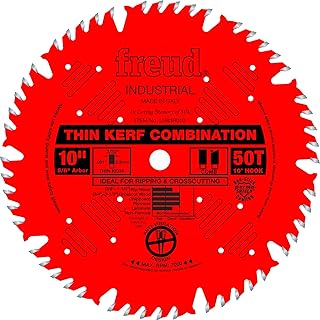
Freud LU83R010 Industrial 10-Inch 50T Combination
This is the workhorse blade that earns a permanent spot on my cabinet saw. Freud’s TiCo carbide blend stays sharp through hardwood that dulls lesser blades in half the time, and the laser-cut anti-vibration slots keep cuts vibration-free even on dense maple. The 50-tooth combination grind handles both ripping and crosscutting without swapping blades, which saves real time in mixed-workflow shops.
CMT Orange Tools 256.050.10 Combination 10-Inch 50T
CMT’s orange-coated blade runs remarkably cool and resists pitch buildup, which translates to fewer cleaning breaks during long hardwood sessions. The 50-tooth ATB plus flat tooth geometry delivers clean rips and respectable crosscuts in one setup. It’s a serious contender if you want industrial-level performance at a slightly friendlier price than the Freud LU83R010.
Freud LU85R010 10-Inch 60T Crosscut
When the job demands mirror-smooth crosscut surfaces on hardwood — picture frames, furniture trim, face-grain panel edges — this 60-tooth blade delivers results that often skip the sanding stage entirely. The thin kerf design conserves material on pricy hardwoods, and the precision-ground carbide tips hold their edge through production-level volumes. It’s not a ripper, but for what it does, it’s exceptional.
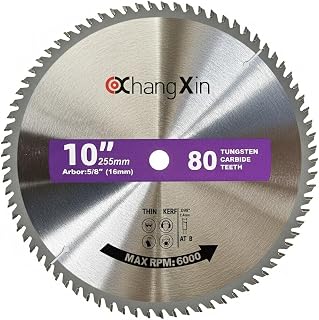
WEN BL1080 10-Inch 80-Tooth Ultra-Fine Finish
The WEN BL1080 punches well above its price point for finish-grade crosscuts. Eighty teeth produce an almost polished edge on cherry and walnut straight off the saw, and the carbide tips hold up surprisingly well through hardwoods. It’s an excellent choice for hobbyists and small-shop woodworkers who want premium cut quality without the premium invoice.
10-Inch 3-Pack (32T, 60T, 80T) Combo Set
This three-blade set covers the full hardwood workflow — a 32-tooth for fast ripping, a 60-tooth for general fine finish work, and an 80-tooth for ultra-smooth crosscuts. For woodworkers building their blade collection from scratch, buying the set costs less than most single premium blades and teaches you exactly which tooth count suits each task. The carbide tips are solid for the price tier, though dedicated professionals may want to upgrade to the individual premium options above over time.
Frequently Asked Questions
How many teeth do I need for hardwood on a table saw?
For ripping hardwood, 30–40 teeth move material efficiently with minimal burn marks. For crosscutting, aim for 60–80 teeth to get smooth, splinter-free edges. If you do both on the same saw, a 50-tooth combination blade like the Freud LU83R010 offers a practical middle ground.
Does thin kerf make a difference on hardwood?
Absolutely. Thin kerf blades remove less material per cut, generate less heat, and require less motor power — all significant advantages when cutting dense hardwoods like hard maple or white oak. The tradeoff is slightly less blade stability, which premium anti-vibration slots address effectively.
How often should I replace or sharpen my table saw blade for hardwood?
Premium carbide blades typically stay sharp for 100–300 cuts in hardwood depending on the species and blade quality. Signs it’s time: burning on cut edges, requiring more feed force, or visible dulling on carbide tips. Resharpening is cost-effective for higher-end blades like the Freud or CMT options.
Can I use one blade for ripping and crosscutting hardwood?
A 50-tooth combination grind blade handles both tasks adequately. However, dedicated rip blades and dedicated crosscut blades each outperform a combo blade in their specialty. Serious hardwood projects justify owning both, or at minimum starting with a quality combination blade and adding specialty blades as your work grows.
Final Thoughts
For most hardwood woodworkers, the Freud LU83R010 combination blade delivers the best all-around performance and longevity for the investment. If smooth crosscuts are your priority, the Freud LU85R010 sets the standard. And for budget-conscious buyers building out their blade lineup, the 10-inch 3-pack covers every essential scenario at a fraction of the cost of buying blades individually. Any of these five picks will cut cleaner, last longer, and produce better results than the stock blade that came with your saw.