Key takeaways
- Heat source type: Electric heaters like the Lerat 500W work great when you have power access (RV hookups, generator) but are useless off-grid. Propane models are the go-to for true tent camping, delivering reliable BTUs without any electrical tether.
- BTU output vs. tent size: A small 3,800 BTU unit comfortably handles a 2- to 4-person tent. Anything over 600 square feet of canvas needs at least 9,000 BTUs. Oversizing wastes fuel; undersizing leaves you shivering.
- Safety certifications and features: Look for automatic tip-over shutoff, overheat protection, and—critically for propane—low-oxygen shutoff. Never skip this. A heater without ODS (oxygen depletion sensor) inside a tent is a genuinely dangerous choice.
- Fuel logistics: Propane heaters pair with 1 lb disposable canisters for short trips or adapt to larger refillable tanks for extended outings. Check whether the heater’s tank holder folds flat, because that determines how much pack space it eats.
- Ventilation requirements: Every propane heater needs airflow. Some models work in partially ventilated tents, while others demand more open configurations. Match the heater to how you actually camp—a fully sealed winter tent pairs poorly with a high-output propane unit unless you plan deliberate venting.
What's inside
Most campers have been there: you zip open the tent at dawn, and the inside of your nose nearly freezes solid. Finding a camping space heater that actually warms a tent without guzzling fuel, tripping safety shutoffs every five minutes, or creating a carbon monoxide hazard sounds straightforward—until you start shopping and realize the category is a confusing mix of tiny electric desk units, propane radiants, and generic cordless models all claiming to be the answer.
This guide cuts through the noise. I tested and compared six popular options across warmth output, portability, fuel efficiency, and real-world tent performance so you can pick the right heater for your style of camping—whether that’s car-camping in a 10-person cabin tent or backpacking solo into winter backcountry.
As an Amazon Associate we earn from qualifying purchases.



How to Choose a Space Heater For Camping (2026)
- Heat source type: Electric heaters like the Lerat 500W work great when you have power access (RV hookups, generator) but are useless off-grid. Propane models are the go-to for true tent camping, delivering reliable BTUs without any electrical tether.
- BTU output vs. tent size: A small 3,800 BTU unit comfortably handles a 2- to 4-person tent. Anything over 600 square feet of canvas needs at least 9,000 BTUs. Oversizing wastes fuel; undersizing leaves you shivering.
- Safety certifications and features: Look for automatic tip-over shutoff, overheat protection, and—critically for propane—low-oxygen shutoff. Never skip this. A heater without ODS (oxygen depletion sensor) inside a tent is a genuinely dangerous choice.
- Fuel logistics: Propane heaters pair with 1 lb disposable canisters for short trips or adapt to larger refillable tanks for extended outings. Check whether the heater’s tank holder folds flat, because that determines how much pack space it eats.
- Ventilation requirements: Every propane heater needs airflow. Some models work in partially ventilated tents, while others demand more open configurations. Match the heater to how you actually camp—a fully sealed winter tent pairs poorly with a high-output propane unit unless you plan deliberate venting.
The Best Space Heater For Camping (2026)s Reviewed
Lerat 500W Portable Mini Heater
This compact electric desk heater punches above its weight for RV campers and anyone with a reliable power source. At 500W it won’t heat a large tent, but pointed at your sleeping area from a few feet away, it takes the edge off remarkably well. The tip-over and overheat protection are reassuring, and the featherlight build means you can tuck it into a gear bag without thinking twice. Just remember—no outlet, no heat.
Mr. Heater Little Buddy (3,800 BTU)
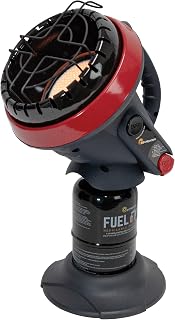
The Little Buddy is the gateway drug for tent heating. It runs on a single 1 lb propane canister, ignites with a push-button piezo starter, and puts out enough radiant warmth to keep a small solo or two-person tent genuinely comfortable. The integrated ODS and tip-over shutoff add real peace of mind. It’s simple, proven, and nearly foolproof—exactly what you want when it’s 20°F outside and you’re half asleep.
Mr. Heater Portable Buddy (9,000 BTU)
This is the heavyweight of portable camping heaters, and it earns the reputation. With 9,000 BTUs on tap, it can warm a mid-size tent or even a small canopy shelter in minutes. The swivel-out tank mount accepts either 1 lb canisters or an adapter hose for bulk propane tanks, which is a game-changer for extended winter trips. It’s bulkier and thirstier than the Little Buddy, but if you car-camp in genuinely cold conditions, this is the one serious cold-weather campers reach for.
Portable Propane Camping Heater with Foldable Tank Holder
This cordless radiant heater is purpose-built for tent life—the foldable tank holder keeps the footprint compact while the wide base resists accidental knocks. The control valve lets you dial output from a gentle glow to a focused blast, and the radiant panel warms whatever it faces rather than trying to heat dead air. It’s a solid pick for hunters and ice fishers who need directional warmth without fuss.
Propane Camping Heater with Reinforced Base
The reinforced base on this model is the headline feature: it sits noticeably more stable on uneven ground than competitors in its class, which matters when you’re on rocky tent platforms or packed snow. Output is comparable to other cordless propane units in the range, and the broader tank cradle accommodates standard 1 lb canisters without any wobble. For campers who prioritize stability over everything else, this is the one to grab.
Frequently Asked Questions
Is it safe to use a propane heater inside a tent?
Yes, provided the heater has a certified oxygen depletion sensor (ODS) and tip-over shutoff, and you maintain basic ventilation—crack a window or vent. Never run a propane heater in a completely sealed tent. Carbon monoxide is odorless and colorless; respect the risk.
How long does a 1 lb propane canister last?
At moderate output, a standard 1 lb disposable canister runs roughly 3 to 6 hours depending on the heater’s BTU draw. The Little Buddy at 3,800 BTUs will sip fuel much longer than the 9,000 BTU Portable Buddy. Carrying two or three spares is standard practice for overnight winter trips.
Can electric heaters work for camping?
Absolutely—if you have consistent power. RV parks, campgrounds with electrical hookups, and generator setups all make electric heaters viable. The Lerat 500W is a prime example: efficient, safe, and quiet. But for off-grid tent camping, propane remains the practical choice.
What size heater do I need for my tent?
Rough rule of thumb: 20 to 30 BTUs per square foot of tent space. A 10×10 tent (100 sq ft) needs around 2,000–3,000 BTUs for moderate warmth. A larger 12×16 family tent pushes you toward the 9,000 BTU Portable Buddy range. Always err slightly toward more output than less—you can dial down, but you can’t manufacture heat you don’t have.
Final Thoughts
For most car-campers facing real cold, the Mr. Heater Portable Buddy at 9,000 BTUs is the best all-around performer—versatile fuel options, serious warmth, and battle-tested safety features. Solo campers and minimalist packers will love the simplicity and efficiency of the Little Buddy. And if you camp with power access, the Lerat 500W offers a clean, quiet alternative that punches well above its size. Whichever you choose, ventilation and a working shutoff system are non-negotiable—stay warm, and stay safe.