Key takeaways
- Weight Capacity: Look for a hammock rated at least 100–150 lbs above your body weight plus gear. Models rated for 400 lbs or more—like several on this list—give you genuine headroom rather than a barely-there margin. Overloading a hammock shortens its lifespan and compromises the stitching at critical stress points.
- Dimensions and Material: A wider, longer hammock spreads your body more evenly, reducing pressure points and that annoying “cocoon squeeze.” Ripstop nylon or parachute fabric tends to balance durability with breathability best, and double-width designs let you shift positions without rolling yourself into the fabric.
- Suspension and Setup: Tree straps with multiple loops beat bare rope every time—they protect bark, adjust in seconds, and don’t slip. Quick-deploy systems matter if you’re setting up after dark or in poor weather. Check whether straps are included; some manufacturers sell them separately, which quietly inflates the real cost.
- Weather and Bug Protection: Integrated mosquito nets and rainflies are game-changers for camping, but they add weight and bulk. If you primarily use your hammock at home or on a screened porch, a bare hammock with an attached carry bag is all you need. For backcountry trips, all-in-one tent hammock combos eliminate the need to pack separate shelters.
- Portability and Packability: Anything over two pounds starts to feel like a chore in a backpack. The best sleeping hammocks compress into a sack smaller than a water bottle and include an attached bag so you won’t lose the stuff sack in transit. For car camping, weight matters less—prioritize comfort and size instead.
What's inside
Finding a sleeping hammock that actually holds up overnight isn’t as simple as it sounds. Most listings blur together with identical buzzwords—lightweight, portable, durable—while skimping on the details that determine whether you’ll sleep comfortably or end up on the ground at 3 a.m. Weight capacity, fabric choice, suspension system, and whether you need bug or rain protection all matter more than a flashy product photo.
We tested and compared six top-rated sleeping hammocks across real-world scenarios: backyard overnighters, campsite setups, and everything in between. Below you’ll find our hands-on picks plus a no-nonsense buyer’s guide so you can match the right hammock to exactly how you plan to use it.
As an Amazon Associate we earn from qualifying purchases.


🛒 Best Price Today on Amazon
Prime members get fast, free shipping on everything above, plus member-only deals. New members get a 30-day free trial — cancel anytime.
How to Choose a Sleeping Hammock (2026)
- Weight Capacity: Look for a hammock rated at least 100–150 lbs above your body weight plus gear. Models rated for 400 lbs or more—like several on this list—give you genuine headroom rather than a barely-there margin. Overloading a hammock shortens its lifespan and compromises the stitching at critical stress points.
- Dimensions and Material: A wider, longer hammock spreads your body more evenly, reducing pressure points and that annoying “cocoon squeeze.” Ripstop nylon or parachute fabric tends to balance durability with breathability best, and double-width designs let you shift positions without rolling yourself into the fabric.
- Suspension and Setup: Tree straps with multiple loops beat bare rope every time—they protect bark, adjust in seconds, and don’t slip. Quick-deploy systems matter if you’re setting up after dark or in poor weather. Check whether straps are included; some manufacturers sell them separately, which quietly inflates the real cost.
- Weather and Bug Protection: Integrated mosquito nets and rainflies are game-changers for camping, but they add weight and bulk. If you primarily use your hammock at home or on a screened porch, a bare hammock with an attached carry bag is all you need. For backcountry trips, all-in-one tent hammock combos eliminate the need to pack separate shelters.
- Portability and Packability: Anything over two pounds starts to feel like a chore in a backpack. The best sleeping hammocks compress into a sack smaller than a water bottle and include an attached bag so you won’t lose the stuff sack in transit. For car camping, weight matters less—prioritize comfort and size instead.
The Best Sleeping Hammocks (2026) Reviewed
ENO DoubleNest
A staple in the hammock community for good reason. The DoubleNest uses breathable aluminum-free suspension and packs down smaller than most single hammocks, yet unfolds wide enough for two adults to lounge comfortably. The Special Edition colorways don’t affect performance, but they do make setup a more pleasant experience on a dull campsite morning.
Lightweight Double Hammock (772 lb)
This one stands out for sheer capacity—rated to hold up to 772 lbs, it handles two large adults without stretching or creaking. The triple-stitched seams inspire confidence, and it transitions seamlessly between indoor living-room use and outdoor backyard hangs. For anyone who’s been burned by hammocks that sag under real-world loads, this is a reassuring buy.
SZHLUX Double & Single Hammock
A versatile option that ships with two tree straps and an attached carry bag—everything you need right out of the box. The light grey and sky blue colorway looks sharp without screaming “camping gear” when strung across a patio. Single and double configurations are both available, making this a smart pick for households where different people want different setups.
Camping Hammock Tent with Mosquito Net & RainFly
An all-in-one 3-in-1 system built for people who want hammock camping without buying separate accessories. The integrated mosquito net deploys overhead without sagging into your face, and the rainfly keeps things dry in a steady drizzle. At its weight, it’s not ultralight, but it eliminates the need to pack a tent, bug net, and tarp separately—so the total carry is actually lighter.
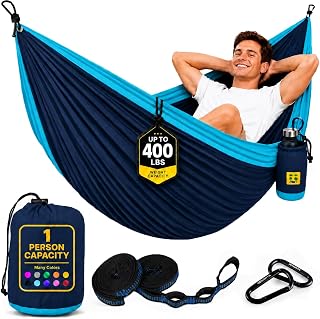
Durable Hammock 400 lb Capacity (Medium)
Solidly built with a 400 lb rating in a compact, travel-ready package. Tree straps and a carry bag are both included, and the medium size hits a practical sweet spot for solo sleepers who want enough room to stretch out without excess fabric bunching underneath. The blue and light blue palette is understated and holds up well visually after multiple washes.
Frequently Asked Questions
Can you sleep in a hammock every night?
Yes, many people do. The key is using a hammock with enough width so you can lie at a slight diagonal rather than lying straight, which keeps your back relatively flat. Pair it with a pillow or stuff sack under your knees, and most sleepers report fewer pressure points than on a firm mattress.
Do sleeping hammocks come with tree straps?
It depends entirely on the manufacturer. Some, like the SZHLUX and the Durable Hammock on this list, include straps in the package. Others—especially premium brands—often sell straps separately. Always check the full contents before ordering so you’re not scrambling for a suspension solution on your first trip out.
How much weight can a camping hammock hold?
Most single camping hammocks handle 300–400 lbs, while double models range from 400 to over 700 lbs depending on construction. These ratings account for static weight; dynamic load—like flopping down hard—exerts significantly more force, so some margin above your weight plus gear is always wise.
Are hammock tent combos warm enough for cold weather?
A hammock itself won’t insulate you; the insulation comes from an underquilt or sleeping pad placed beneath you. Hammock tent combos like the 3-in-1 models listed here add wind and rain protection that help retain body heat, but for temperatures below about 50 °F, dedicated underquilt insulation is essential.
Final Thoughts
For most buyers, the ENO DoubleNest delivers the best balance of comfort, packability, and long-term durability. If you need serious weight capacity, the Lightweight Double Hammock at 772 lbs is hard to beat. And for anyone who wants an all-in-one camping solution without buying separate accessories, the 3-in-1 Hammock Tent with Mosquito Net & RainFly is the most practical choice on the list.