Our Top Picks
The best scissors for rag quilts are spring-loaded snips for clipping the seam allowances, a sharp pair of dressmaker shears or a rotary cutter for cutting the squares, and a comfortable grip so your hand lasts through hundreds of clips. If you are making one baby quilt, a pair of general-purpose snips will do; if you are making several full-size quilts, ergonomic spring-action snips are worth the extra spend. This guide covers tool types, what to look for, and care tips.
Why Rag Quilts Are Hard on Hands
A rag quilt has exposed seams on the front. After sewing, you clip each seam allowance every half inch or so, then wash and dry the quilt so the clipped edges fray into a soft fringe. A throw can need hundreds or even thousands of snips, often through several layers of fabric and batting. Tools that are dull, stiff or poorly shaped cause hand fatigue, and many makers report that comfort matters more here than in most other quilting jobs.
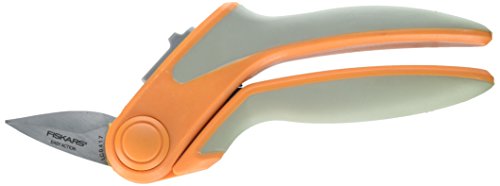
Fiskars Easy Action Rag Quilt Snip for Tabletop Cutting, Gray Orange, 8" (190600)
Chosen because it specifies Gray Orange and 8" (190600).
View on Amazon

Scissor and Snip Types at a Glance
| Tool | Best for | Stated features | Limits |
|---|---|---|---|
| Spring-action snips (for example Fiskars Easy Action styles) | Clipping seams on rag quilts | The maker lists spring-assisted opening and a short blade for fast snips | Short blades are not for long cuts |
| Dedicated rag quilt snips | Heavy repeat clipping | Often have a larger, cushioned handle and sharp tip | Brands and designs vary; check blade length and tip shape |
| Dressmaker shears (for example Gingher 8-inch) | Cutting squares from fabric and batting | Long, bent-handle blade for flat cutting | Heavy; seam clipping is awkward |
| Rotary cutter and mat (for example Olfa) | Cutting many squares fast | Circular blade, ruler guided | Needs a mat and careful handling |
| Patchwork or applique scissors (for example Clover) | Detailed trimming | Small, precise blades | Too small for thousands of seam clips |
| Thread snips | Cutting loose threads | Tiny and sharp | Not for fabric layers |
What to Look For
Spring action
A spring that opens the blades after each squeeze reduces the work your hand does. Many rag quilters favor these for long clipping sessions. Look for a lock so the snips stay safely closed when put away, and check that the spring is not too strong for smaller hands.
Blade length and sharpness
Rag quilt seams are thick, so you need blades sharp enough to cut through multiple cotton layers and batting in one motion. A blade length of around two to three inches is common on snips designed for this, but check the listing for the stated measurement. Dull blades chew fabric and require more pressure, which is a common source of hand strain.
Handle comfort
Cushioned, contoured or larger loops help distribute pressure. If you have arthritis or hand pain, a doctor or occupational therapist can advise on suitable tool shapes; a more ergonomic scissor may reduce discomfort but is not a medical treatment.
Left- and right-handed models
Some scissors are made for right-handed use, while others are ambidextrous or specifically left-handed. Check the listing, because using the wrong handedness reduces cutting accuracy and comfort.
Tip shape
A pointed tip gets into corners and tight seam intersections, while a blunt or rounded tip is safer around fingers but less precise. Rag quilting favors a fine point that stops short of cutting the stitching line, so clip carefully and stop about a thread width before the seam.
Budget, Mid-Range and Premium Tiers
Budget
General-purpose craft scissors and basic spring snips are adequate for a single small quilt. Expect to sharpen or replace them if you clip a lot, because lower-cost blades dull faster on batting.
Mid-range
Established brands such as Fiskars offer spring-action and ergonomic models that suit repeated clipping. For most makers, this tier balances sharpness, comfort and durability.
Premium
Professional-grade shears from brands such as Gingher and fine-quality snips use hardened steel and tighter tolerances, which stay sharp longer and can be sharpened and serviced. Use them for fabric cutting; for rag-seam clipping, a mid-range spring snip is usually more comfortable.
Care and Safety Notes
- Keep fabric shears for fabric only; cutting paper or tape dulls the edge.
- Clip away from your body and away from your fingers, and keep your hand on the quilt edge, not under the blade.
- Close or lock scissors when not in use and store them out of reach of children and pets.
- Wipe blades with a dry cloth after use and add a drop of sewing machine oil at the pivot if the maker advises it.
- If the blade becomes dull or chips, have it professionally sharpened or replace it instead of forcing it through the fabric.
- Take breaks every 20 to 30 minutes and stretch your hands; if you feel numbness or pain, stop and talk to a healthcare professional.
- When washing and drying a finished rag quilt, clean the lint trap often because rag quilts release a lot of loose fiber; the dryer maker’s manual explains safe lint cleaning and venting.
Pick X If… Decision Table
| Pick this if you | Choose | Why |
|---|---|---|
| Are making your first rag quilt | A basic spring-action snip | Easy clipping at a modest cost |
| Plan several large quilts | An ergonomic, cushioned spring snip | Less hand fatigue over long sessions |
| Cut many squares | A rotary cutter, ruler and mat | Speed and accuracy |
| Want one long-lasting fabric blade | 8-inch dressmaker shears | Clean cuts through layers, can be sharpened |
| Are left-handed | A left-handed or ambidextrous model | Better comfort and cut control |
| Have smaller hands | Lighter spring tension and small loops | Easier squeeze |
Alternatives to Standard Snips
- Electric fabric scissors: Battery-powered scissors reduce squeezing effort but are bulkier and not as precise at seam clipping.
- Rotary cutter used for clipping: Not usually practical because the seam allowances are short and angled.
- Pinking or clipping shears: Create a zig-zag edge that frays differently; useful for some patchwork but not typical rag fringe.
- Ready-made rag quilt kits: Some include precut squares and a fraying tool, saving cutting time.
Cutting the Squares Before You Clip
Rag quilts rely on neat, consistent squares. Many makers cut flannel or cotton squares with a rotary cutter and a mat, then layer them with batting and sew diagonal lines. A rotary cutter and acrylic ruler are generally faster and more accurate than scissors for this stage. Use a fresh blade, cut away from your hand, and retract the blade guard after every cut. Then switch to snips for clipping, which reduces fatigue by assigning each task to the right tool.
Workflow Tips for Faster Clipping
Work in a comfortable chair with the quilt supported on your lap or a table so its weight does not pull on your wrist. Clip in one direction across a seam, then rotate the quilt rather than twisting your hand. Many makers clip a few seams at a time and take breaks, because the repetitive squeeze is what tires the hand. Keep a small bin or tray for the snipped fabric strands, as they scatter easily. Replace or sharpen snips as soon as cutting feels harder, since forcing dull blades increases strain and can distort the seam allowance. Finally, wash and dry the quilt in a large machine with plenty of room, and check the lint filter between cycles, following the appliance manual.
Frequently Asked Questions
What scissors do I need for a rag quilt?
You need a tool for cutting the squares, such as a rotary cutter or sharp shears, and a pair of spring-loaded snips for clipping seams. The snips are used the most, so pick comfortable ones with sharp blades.
Are spring-loaded snips worth it?
For repeated clipping, many makers find them easier on the hand because the spring opens the blades for you. A single small quilt can be done with regular scissors, but spring snips are generally a good upgrade for larger projects.
How often do I need to sharpen scissors for rag quilts?
It depends on use. Dull blades will start to chew or fold fabric, and you will notice more squeezing effort. At that point, have them sharpened by a professional or replace low-cost snips.
Can I use the same scissors for paper and fabric?
It is not advised. Paper dulls the blade edge quickly, so keep a separate pair for fabric and batting.
How far apart should I clip rag quilt seams?
Common patterns suggest about a half inch between clips, stopping a hair short of the stitching. Follow your pattern’s guidance, since fabric weight and desired fringe length influence the spacing.
How do I avoid hand pain while clipping?
Use sharp, comfortable snips, take frequent breaks, and spread the clipping over several sessions. If you have ongoing pain, numbness or a diagnosed hand condition, ask a doctor or occupational therapist for advice.
More from Amazon
Programs that pair well with the guide above. Offers and eligibility are set by Amazon and may change.
Collect the home and kitchen items you want in one registry that guests can shop from.
Create a wedding registrySet up recurring deliveries of everyday items on eligible products. Terms and savings are set by Amazon.
Explore Subscribe & SaveFree shipping on eligible items, Prime Video and more. Eligible new members can start with a free trial.
Start a Prime free trialAudiobooks and podcasts to listen to on the go. Eligible new members can start with a free trial.
Try Audible freeAs an Amazon Associate we earn from qualifying purchases.