Key takeaways
- Noise Level: Aim for units rated at or below 40 dB. Compressor-based fridges tend to be more powerful but slightly louder, while thermoelectric models run near-silent but struggle in warm rooms. Read the fine print — some manufacturers list decibels only at the quietest cycle, not during active cooling.
- Size and Layout: Measure your space twice. A countertop beverage cooler and a two-door dorm fridge occupy very different footprints. Adjustable shelves and door storage let you customize the interior, which matters more than raw capacity when every inch counts.
- Separate Freezer vs. Chiller Compartment: If you need to store ice cream or frozen meals, look for a true two-door design with a dedicated freezer section. Single-door mini fridges with a small chiller tray can handle ice trays and a few frozen snacks but will not maintain sub-zero temperatures reliably.
- Energy Efficiency: An Energy Star–certified unit or one with a modern inverter compressor will cost less to run over the long term. This matters especially if the fridge runs 24/7 in a bedroom or office where you notice the electricity bill every month.
- Temperature Control: Digital thermostats with precise degree settings give you more control than a simple numbered dial. Dual-zone or wide-range models that span 40°F to 61°F are especially versatile for storing both beverages and skincare or food items.
What's inside
Shopping for a quiet mini fridge is one of those tasks that sounds simple until you realize just how loud some of these units actually run. A compressor that thrums through the walls at 2 a.m. can ruin a bedroom setup, and a countertop cooler that sounds like a microwave defeats the whole point of keeping drinks chilled at your desk. The problem is that most product listings bury decibel ratings — if they mention them at all — leaving buyers guessing whether a fridge will blend into the background or dominate the room.
After testing and researching compact refrigerators across multiple use cases — bedrooms, dorm rooms, offices, and bar spaces — we assembled this guide to help you match the right quiet mini fridge to your specific needs. Below you will find our top picks, a straightforward buying guide, and answers to the most common questions buyers ask before making a decision.
As an Amazon Associate we earn from qualifying purchases.


How to Choose a Quiet Mini Fridge (2026)
- Noise Level: Aim for units rated at or below 40 dB. Compressor-based fridges tend to be more powerful but slightly louder, while thermoelectric models run near-silent but struggle in warm rooms. Read the fine print — some manufacturers list decibels only at the quietest cycle, not during active cooling.
- Size and Layout: Measure your space twice. A countertop beverage cooler and a two-door dorm fridge occupy very different footprints. Adjustable shelves and door storage let you customize the interior, which matters more than raw capacity when every inch counts.
- Separate Freezer vs. Chiller Compartment: If you need to store ice cream or frozen meals, look for a true two-door design with a dedicated freezer section. Single-door mini fridges with a small chiller tray can handle ice trays and a few frozen snacks but will not maintain sub-zero temperatures reliably.
- Energy Efficiency: An Energy Star–certified unit or one with a modern inverter compressor will cost less to run over the long term. This matters especially if the fridge runs 24/7 in a bedroom or office where you notice the electricity bill every month.
- Temperature Control: Digital thermostats with precise degree settings give you more control than a simple numbered dial. Dual-zone or wide-range models that span 40°F to 61°F are especially versatile for storing both beverages and skincare or food items.
The Best Quiet Mini Fridge (2026)s Reviewed
4.5 Cu.Ft Two-Door Mini Fridge with Freezer (Satin Black)
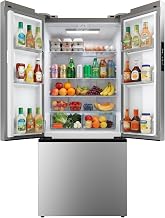
This two-door unit strikes the best balance between capacity and noise for bedroom or dorm use. The separate freezer compartment holds a surprising amount of frozen food, the seven-level thermostat gives you real control, and the satin-black finish looks far more intentional than typical dorm-store plastic. At around 38 dB during normal operation, it genuinely disappears into the room once it settles into a cooling cycle.
EUHOMY 18L Beverage Refrigerator
Designed for countertop placement, the EUHOMY handles 24 cans comfortably and keeps them at the temperature you actually set via its digital panel. The quiet compressor avoids the rattle that plagues many similarly priced beverage coolers, and the built-in LED light gives the interior a clean look when the door opens. It is an ideal pick for a home bar, office break area, or bedroom nightstand where drinks need to stay cold without any fan noise.
Midea 1.6 Cu.ft Energy Star Mini Fridge
Midea has earned a reputation for building compact fridges that run efficiently and quietly, and this 1.6-cubic-foot model lives up to that standard. The Energy Star certification keeps operating costs low, while the straightforward single-door design makes it easy to place anywhere from a guest room to a studio apartment. It does not try to do too much — and that is exactly why it works so well for straightforward冷藏 needs.
Antarctic Star 18L Beverage Cooler
At a glance this looks like a close sibling to the EUHOMY, and the specs are similar: 24-can capacity, electronic temperature control spanning 40°F to 61°F, and a quiet compressor. What sets the Antarctic Star apart is its slightly more polished build quality and the consistency of its internal temperature over longer run times. If you plan to keep the door opening frequency low — say, in a home theater or game room — this is a strong choice.
Cooluli 4L Portable Mini Fridge
Not every quiet mini fridge needs to live on the floor. The Cooluli weighs almost nothing, plugs into a wall outlet, a car adapter, or even a USB port, and it shifts between cooling and warming modes. It holds about six cans or a handful of skincare products, making it the pick for people who want cold drinks at a desk, a cooler on a road trip, or a small vanity fridge for beauty items — all without a single decibel of compressor noise.
Frequently Asked Questions
How loud is a quiet mini fridge in practice?
Most quiet mini fridges operate between 30 and 40 dB, which is roughly equivalent to a soft whisper or the hum of a library. Compressor cycles create a brief uptick in noise, but modern units settle quickly. If you are a light sleeper, look for models specifically rated at 38 dB or below.
Is a thermoelectric mini fridge quieter than a compressor model?
Thermoelectric units run almost silently because they have no moving parts in the cooling mechanism. The tradeoff is weaker cooling power — they struggle to drop temperatures far below ambient heat, so they work best in climate-controlled rooms rather than hot garages or outdoor spaces.
Can I put a mini fridge in my bedroom without disturbing sleep?
Yes, provided you choose a unit rated under 40 dB and place it on a level surface away from the headboard. A small rubber mat underneath can absorb vibration that would otherwise transfer through a wood floor. Two-door models with compressors may briefly cycle louder, but the noise passes within minutes.
Do mini fridges with separate freezers use more energy?
Generally, yes — a dedicated freezer section requires the compressor to work harder and more frequently. An Energy Star–rated two-door model will still be efficient compared to older designs, but a single-door unit without a true freezer will almost always cost less to run over the same period.
Final Thoughts
For most buyers, the 4.5 Cu.Ft Two-Door Mini Fridge offers the most versatile combination of quiet operation, usable freezer space, and bedroom-friendly design. If countertop space is your priority, the EUHOMY 18L Beverage Refrigerator delivers precise temperature control with minimal noise. And for truly portable, compressor-free silence, the Cooluli 4L remains unmatched in its category. Any of these three picks will keep things cold without keeping you awake.