Our Top Picks
Inflatable adult tubs suit travellers and renters who need storage-friendly soaking, folding tubs suit small bathrooms and showers where a full tub is not possible, and inflatable or folding baby tubs suit infant bathing on a counter or inside a larger tub. The right pick depends on who is bathing, where the tub will sit, and how you will fill and drain it. Anything involving infants, older adults or reduced mobility needs conservative handling: follow the maker’s manual and ask a doctor, nurse or occupational therapist when in doubt.
Types of Portable Bathtub
Inflatable adult tubs
These are PVC tubs, usually sized for one adult sitting upright or reclined, that inflate with a pump. Makers market them for small flats, campsites and spare rooms. Capacity, weight limits and dimensions vary widely, so read the stated numbers. They need a floor that is flat and free of sharp objects.
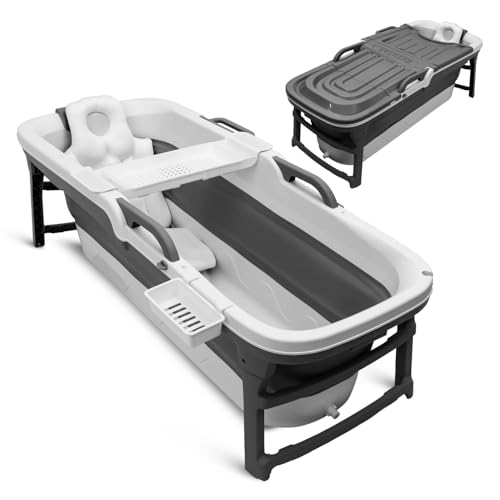
Serenelife 59" Portable Bathtub for Adults – Large Foldable Ice Bath Tub for Cold Plunge & Hot Spa, Freestanding Soaking Tub for Indoor/Outdoor, Athlete Recovery & Family Use, 440lbs Capacity
Chosen because it specifies Large Foldable Ice Bath Tub for Cold Plunge & Hot Spa and Freestanding Soaking Tub for Indoor/Outdoor.
View on Amazon
Portable Bathtub for Adult, Foldable Soaking Bathtub for Hot SPA&Ice Bath, Foldable Small Bathtub collapsible bathtub for Bathing, 6-layer Insulated portable tub,Space-Saving (black, 25.9X31.5 IN)
Chosen because it specifies Foldable Soaking Bathtub for Hot SPA&Ice Bath and Foldable Small Bathtub collapsible bathtub for Bathing.
View on AmazonFolding adult tubs
Plastic or fabric-and-frame tubs that collapse flat. Some, such as the style marketed by makers like Jungle Tub, are designed as freestanding soaking tubs rather than for use inside a bathtub. They hold less than a built-in tub and generally need a drain hose or bucket for emptying.
Baby and toddler portable tubs
Foldable infant tubs, such as those from brands like Munchkin, Skip Hop and Stokke, sit in a sink or tub or on a counter. They are designed for supervised use only.
Mobility and care bathing
Inflatable bed-bath or shampoo basins exist for caregivers. These are specialist items, and a medical professional can advise on what suits a particular person.
At a Glance: Portable Tub Comparison
| Type / example brand | Best for | Key stated specs | Limits |
|---|---|---|---|
| Inflatable adult tub, e.g. SereneLife style | Small flats, spare rooms, camping | Makers list PVC material, pump included in some kits, stated capacity and user weight limit | Can puncture; needs flat floor; fill and drain logistics |
| Folding freestanding tub, e.g. Jungle Tub style | Compact soaking | Makers list collapsible frame with liner, stated capacity | Less depth than a built-in tub; stability depends on floor |
| Foldable infant tub, e.g. Munchkin, Skip Hop | Newborns and babies, travel | Makers list compact fold, drain plug, sling or seat options | Strictly supervised use; weight and age limits apply |
| Inflatable tub insert for a baby inside the bath | Parents who want a smaller bath inside a larger tub | Makers state inflatable construction, age and weight guidance | Needs inflation; follow manual |
| Caregiver shampoo basin or bed bath kit | Bedridden care | Makers describe inflatable or foam-edged basins | Specialist; seek medical advice on suitability |
Brand lines change, so treat the table as a category guide and read each maker’s current specification page.
Key Features to Compare
Size and capacity
Check the stated interior dimensions and capacity, and compare them with the person’s height. A tub that is too small gives little benefit. Check the room too: an inflated tub may need clear floor space.
Weight limit
Makers publish maximum user weights. Do not exceed them. Choose a tub with a comfortable margin.
Material
PVC, TPE, rigid plastic and fabric liners are all used. Look at the maker’s description of thickness and whether the material is advertised as BPA-free or phthalate-free for baby products, and treat those as maker claims.
Stability and surface
Place portable tubs on a flat, even floor free of sharp edges. Wet floors are slippery, so use a non-slip mat around the tub and never leave it where it can tip.
Filling and draining
Filling can use a hose or jugs; draining may require a built-in valve, a siphon hose or bailing. Check how the maker suggests emptying, as large volumes of water are heavy and need proper disposal.
Heat retention
Some makers describe insulated walls or covers to keep water warm. Always test water temperature by hand or with a bath thermometer before use, especially for children and older adults.
Pick X If: Decision Table
| Pick this | If you |
|---|---|
| Inflatable adult tub | Need storage-friendly soaking in a rental or spare room |
| Folding freestanding tub | Want a more rigid structure that packs flat |
| Foldable infant tub | Bathe a baby on a counter or inside a larger tub |
| Inflatable tub insert | Want a baby-sized space inside an existing bath |
| Specialist caregiver basin | Support bathing for someone with limited mobility, after medical advice |
Budget Tiers
Budget inflatables tend to use thinner PVC and a basic pump; they are fine for occasional use but more prone to leaks. Mid-range tubs usually feature thicker material, better valves and clearer weight guidance. Premium folding tubs and infant bath systems come from specialist makers and typically offer sturdier frames and design polish at a higher outlay. For regular use, durability and stability matter more than extra accessories.
Safety Notes
- Never leave an infant or young child unattended in a bath, even for a moment, regardless of the tub type.
- Follow the maker’s age, size and weight limits.
- Test water temperature before use. Many health authorities advise keeping water moderate for babies; follow local paediatric guidance.
- Use a non-slip mat and keep the area clear. Older adults or people with balance problems should ask a doctor or occupational therapist about safe bathing methods.
- Do not use electrical devices near a filled tub; follow the maker’s manual and local electrical rules.
- Inflate to the pressure the maker states; over-inflation can damage seams.
- Do not place a rigid tub on an unstable or sloping surface.
Care and Storage
Empty the tub fully, wipe it dry, and let it air out before folding, since trapped moisture leads to odour and mildew. Store inflatables flat or loosely rolled in a cool place away from sharp objects. Clean with mild soap as the maker recommends, and avoid harsh solvents that may damage PVC. Check seams and valves before each use, and stop using a tub that leaks or shows cracks.
Alternatives to Consider
- Standard bathtub with a bath cushion or bath seat: for those who have a tub but need comfort or support; a clinician can advise on safe options.
- Walk-in or low-threshold shower with a shower chair: often easier for mobility concerns.
- Sink bath inserts for infants: a smaller option for newborns.
- Hot tubs and soaking tubs: permanent options for those with outdoor space; they have separate electrical and installation requirements.
Where a Portable Tub Works Best
Portable tubs are most useful where a permanent tub is unavailable or impractical. Renters in flats with shower-only bathrooms use inflatable or folding tubs for occasional soaks. Holiday homes and campsites benefit from storage-friendly designs. Parents of newborns often prefer a small infant tub that sits in a sink or a larger bath, as it reduces the water needed and keeps the baby in a stable position. In each case, the floor beneath must be flat, clean and able to take the weight of a filled tub; a full adult tub holds a lot of water and can be heavy, so check floor and balcony load limits if relevant.
Practical Setup Tips
- Lay down a mat or towel under inflatable tubs to protect against sharp spots.
- Inflate firmly but not to the limit, following the maker’s pressure guidance.
- Fill with warm water gradually, testing the temperature with your hand or a thermometer.
- Keep a towel and non-slip mat within reach before anyone steps in.
- Plan the drain route in advance: a hose to a drain, or a bucket and a lot of patience.
Limits to Understand
Portable tubs generally hold less water than built-in tubs and may not offer the same depth or support. Inflatables can lose air over time, and folding designs depend on stable frames. They are not medical devices, and they are not a substitute for equipment prescribed for someone with disabilities. For people with limited mobility, a clinician can advise on safe transfers, supports and alternatives such as shower chairs or walk-in showers. If a tub shows leaks, cracks or deformation, stop using it.
Water Use and Heating
A filled adult tub uses a substantial amount of water, so think about how you will heat and dispose of it. Some people fill from the shower head or a hose, others use kettles or a household hot water tap. Water that is too hot is a risk, especially for children and older adults, so test with a thermometer and follow local guidance on safe bath temperatures. Do not use mains-powered heaters or electrical devices in or near a filled tub unless the maker explicitly designs the product for it and you follow the manual and local electrical rules. For regular soaking, an electrician or plumber can advise on safer permanent options.
Frequently Asked Questions
Can an adult sit comfortably in a portable bathtub?
Many inflatable and folding tubs are sized for an adult sitting upright or semi-reclined. Check the stated interior size against the user’s height and the maker’s weight limit.
How do I empty a portable tub?
Some have a drain valve and hose, while others need siphoning or bailing. Check the maker’s instructions before buying, as water is heavy.
Are inflatable tubs durable?
Durability depends on material thickness and care. Use them on a clean, flat surface, avoid sharp items, and store them dry.
Is a portable tub safe for babies?
Dedicated infant tubs are designed for supervised use within stated age and weight limits. Never leave a baby alone in water, and follow the maker’s manual and paediatric advice.
Can I use a portable tub outdoors?
Many makers allow it, but follow the stated guidance on surfaces and temperature. Avoid sloped or rough ground and protect the tub from sharp objects.
Can portable tubs help people with limited mobility?
They may suit some people, but safety depends on individual needs. Talk to a doctor or occupational therapist about transfers, seating and fall risk before choosing one.
More from Amazon
Programs that pair well with the guide above. Offers and eligibility are set by Amazon and may change.
Collect the home and kitchen items you want in one registry that guests can shop from.
Create a wedding registrySet up recurring deliveries of everyday items on eligible products. Terms and savings are set by Amazon.
Explore Subscribe & SaveFree shipping on eligible items, Prime Video and more. Eligible new members can start with a free trial.
Start a Prime free trialAudiobooks and podcasts to listen to on the go. Eligible new members can start with a free trial.
Try Audible freeAs an Amazon Associate we earn from qualifying purchases.