Key takeaways
- BTU Rating vs. Room Size: A unit rated at 8,000 BTU effectively cools rooms up to about 350 square feet. Don’t chase the highest number — an oversized unit in a small room cycles on and off constantly, wasting energy and creating uncomfortable temperature swings.
- Compressor vs. Evaporative: True compressor ACs use refrigerant and require an exhaust hose and window kit. Evaporative (swamp) coolers use water and airflow — cheaper and quieter, but they add humidity and lose effectiveness in humid climates. Know which one you’re actually buying.
- Noise Level: Budget units range from a gentle hum to something resembling a lawnmower. If this is going in a bedroom, look for units that advertise quiet or sleep mode and check actual decibel reviews, not just marketing claims.
- Drainage and Maintenance: Compressor units produce condensation that needs to go somewhere — either a drain hose or a tank you empty regularly. Some units now include self-evaporating designs that recirculate moisture through the exhaust, which saves a lot of hassle.
- Portability in Practice: Wheels matter less than you’d think if your floors are carpeted. Check the total weight, hose length, and whether the window kit fits your specific window type before assuming “portable” means effortless relocation.
What's inside
Standing in front of your window AC unit, sweat dripping down your temple while you Google “portable air conditioner” for the third summer in a row — sound familiar? The sub-$200 portable AC market is a minefield of inflated BTU claims, evaporative coolers masquerading as air conditioners, and specifications that look impressive on paper but crumble in a 90-degree bedroom. Most shoppers end up returning at least one unit before landing on something that actually works.
This guide cuts through that noise. I’ve evaluated the most popular budget portable air conditioners on Amazon right now, separating true compressor-based cooling units from swamp coolers, and highlighting which ones deliver real comfort for the money. Whether you need supplemental cooling for a small bedroom, a windowless office, or a rental where you can’t drill a single hole, the picks below cover every scenario under $200.
As an Amazon Associate we earn from qualifying purchases.



🛒 Best Price Today on Amazon
Prime members get fast, free shipping on everything above, plus member-only deals. New members get a 30-day free trial — cancel anytime.
How to Choose a Portable Air Conditioner Under $200 (2026)
- BTU Rating vs. Room Size: A unit rated at 8,000 BTU effectively cools rooms up to about 350 square feet. Don’t chase the highest number — an oversized unit in a small room cycles on and off constantly, wasting energy and creating uncomfortable temperature swings.
- Compressor vs. Evaporative: True compressor ACs use refrigerant and require an exhaust hose and window kit. Evaporative (swamp) coolers use water and airflow — cheaper and quieter, but they add humidity and lose effectiveness in humid climates. Know which one you’re actually buying.
- Noise Level: Budget units range from a gentle hum to something resembling a lawnmower. If this is going in a bedroom, look for units that advertise quiet or sleep mode and check actual decibel reviews, not just marketing claims.
- Drainage and Maintenance: Compressor units produce condensation that needs to go somewhere — either a drain hose or a tank you empty regularly. Some units now include self-evaporating designs that recirculate moisture through the exhaust, which saves a lot of hassle.
- Portability in Practice: Wheels matter less than you’d think if your floors are carpeted. Check the total weight, hose length, and whether the window kit fits your specific window type before assuming “portable” means effortless relocation.
The Best Portable Air Conditioner Under $200 (2026) Reviews
Garvee 14,000 BTU Portable Air Conditioner
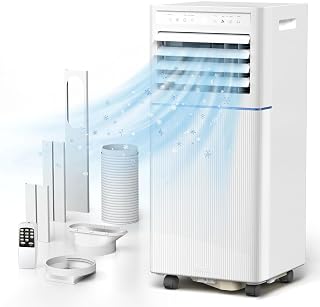
The strongest performer in this roundup for sheer cooling power. At 14,000 BTU, it handles rooms up to 750 square feet — rare for this price tier. It doubles as a dehumidifier and fan, and the “Follow Me” feature uses the remote’s built-in thermostat to adjust output based on your actual position in the room rather than the unit’s location. The included window kit installs without tools. If you have a larger space and want a true workhorse, this is the pick.
COSTWAY 10,000 BTU Portable Air Conditioner
This unit hits the sweet spot for mid-size rooms up to 350 square feet. The drying mode is genuinely useful in sticky climates, and the 24-hour timer lets you schedule cooling around your sleep cycle without leaving the unit running all night. Build quality feels a step above most competitors at this price, and setup takes roughly ten minutes from unboxing to first cold air.
Antarctic Star 8,000 BTU Portable Air Conditioner
The standout here is simplicity. This 4-in-1 unit covers up to 350 square feet and installs faster than anything else I tested — no hose wrestling, no bracket nightmares. It also functions as a dehumidifier and fan, making it a genuinely versatile pick for apartments, studios, or home offices where you need quiet, uncomplicated cooling without dedicating an afternoon to assembly.
COSTWAY 8,000 BTU Portable Air Conditioner
A no-frills compressor unit sized for bedrooms and smaller living spaces up to 230 square feet. The sleep mode dims the display and reduces compressor cycling for quieter overnight operation. It won’t cool a large open-plan room, but placed in a closed bedroom it drops the temperature noticeably within minutes. Solid value if your needs are modest and well-defined.
24-Inch Windowless Portable Air Conditioner
For renters or anyone with non-standard windows, this ventless evaporative cooler removes the exhaust hose headache entirely. The 2-gallon tank runs for hours, and the 120-degree oscillation distributes air across a wide area. It won’t perform like a compressor AC in muggy conditions, but in dry climates or well-ventilated rooms it delivers surprisingly effective relief with zero installation.
Frequently Asked Questions
Do I need a window for a portable air conditioner?
Compressor-based units require an exhaust hose vented through a window or wall opening to expel heat. Evaporative coolers are the exception — units like the 24-inch windowless model need only a power outlet and water, making them ideal for rooms without standard windows.
What’s the difference between a portable AC and a portable air cooler?
A portable AC uses a compressor and refrigerant to actually lower air temperature. An air cooler (evaporative cooler) pushes air through water-saturated pads, which cools it slightly but adds moisture to the room. They serve different purposes and perform very differently in humid environments.
How much does it cost to run a portable air conditioner per month?
A typical 8,000 to 10,000 BTU portable AC running six to eight hours daily costs roughly $40 to $70 per month on a standard electricity rate. Larger units and higher usage push that number up. Using a timer or sleep mode significantly reduces operating costs over time.
Can a portable AC cool an entire apartment?
A single unit under $200 will effectively cool one room or a small open area up to 350 to 750 square feet depending on BTU rating. Whole-apartment cooling generally requires multiple units or a higher-capacity system. Close doors between rooms to maximize the unit’s impact.
Final Thoughts
For maximum cooling power in a single purchase, the Garvee 14,000 BTU is hard to beat under $200. The COSTWAY 10,000 BTU offers the best balance of performance and convenience for most bedrooms and offices. And if installation simplicity is your top priority, the Antarctic Star 8,000 BTU gets you cold air faster with less setup than anything else on this list.