Key takeaways
- Cushion density and material: Look for moulded high-density foam rather than loose polyfill. Moulded foam holds its shape under sustained use and won’t bottom out after a few weeks. A seat thickness of at least 3–4 inches makes a noticeable difference during longer sessions.
- Backrest presence: Models with a dedicated backrest give you a place to rest between posture-focused stints, making the transition from a standard chair less jarring. If you plan to use the kneeling chair for several hours at a stretch, a backrest is worth the slight price premium.
- Adjustability range: The best models let you tweak seat height and angle independently so you can match them to your desk height and leg proportions. A chair that doesn’t adjust tends to fit only one body type well, which defeats the ergonomic purpose.
- Caster type and floor protection: Locking brake casters keep the chair stable when you’re seated and rolling freely when you need to reach across your desk. Soft-tread wheels are kinder to hardwood and tile, while harder casters suit carpeted rooms.
- Weight capacity and build quality: Check the rated load before purchasing. A steel or reinforced wood frame with a listed capacity of 230–250 pounds signals sturdier construction than a frame that advertises no limit but feels wobbly under normal use.
What's inside
Most people who sit at a desk for eight-plus hours a day know the drill: lower back tightens up by 3 PM, posture collapses by lunch, and no amount of lumbar pillows seems to fix the underlying problem. The real issue isn’t which cushion you add to your existing chair—it’s that a conventional seat keeps your hips locked at ninety degrees all day, which flattens your natural spinal curve and overloads your lower back muscles.
Kneeling chairs solve this by tilting the seat forward and opening the hip angle to roughly 110–120 degrees, which encourages an upright, self-supported posture without straining. They aren’t meant to replace your primary chair entirely, but rotating one into your daily routine can make a meaningful difference in comfort and spinal health. This guide walks through the best office kneeling chairs available in 2026, what separates a quality model from a cheap impulse buy, and which option fits your workspace and budget.
As an Amazon Associate we earn from qualifying purchases.


🛒 Best Price Today on Amazon
Prime members get fast, free shipping on everything above, plus member-only deals. New members get a 30-day free trial — cancel anytime.
How to Choose an Office Kneeling Chair (2026)
- Cushion density and material: Look for moulded high-density foam rather than loose polyfill. Moulded foam holds its shape under sustained use and won’t bottom out after a few weeks. A seat thickness of at least 3–4 inches makes a noticeable difference during longer sessions.
- Backrest presence: Models with a dedicated backrest give you a place to rest between posture-focused stints, making the transition from a standard chair less jarring. If you plan to use the kneeling chair for several hours at a stretch, a backrest is worth the slight price premium.
- Adjustability range: The best models let you tweak seat height and angle independently so you can match them to your desk height and leg proportions. A chair that doesn’t adjust tends to fit only one body type well, which defeats the ergonomic purpose.
- Caster type and floor protection: Locking brake casters keep the chair stable when you’re seated and rolling freely when you need to reach across your desk. Soft-tread wheels are kinder to hardwood and tile, while harder casters suit carpeted rooms.
- Weight capacity and build quality: Check the rated load before purchasing. A steel or reinforced wood frame with a listed capacity of 230–250 pounds signals sturdier construction than a frame that advertises no limit but feels wobbly under normal use.
The Best Office Kneeling Chairs (2026) Reviewed
Ergonomic Kneeling Chair with Brake Casters
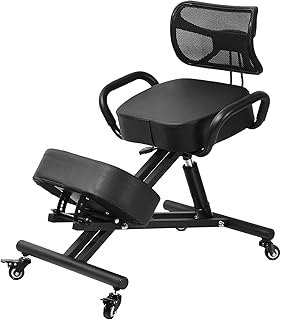
This adjustable kneeling stool uses thick moulded foam cushions and a forward-angled seat to guide your spine into alignment without feeling forced. Brake-equipped casters lock the chair in place when you settle in, so you aren’t sliding across hardwood every time you shift weight. It’s a no-frills workhorse that does the core job well.
Ergonomic Kneeling Chair with Backrest and Linen Upholstery
The addition of a supportive backrest makes this one of the more forgiving kneeling chairs for people easing into the format, and the linen cover breathes better than the vinyl you’ll find on cheaper alternatives. Thick rolling wheels with brakes round out a package aimed squarely at daily office use and back-pain relief.
Ergonomic Kneeling Chair with 5-Year Warranty
With adjustable seat height, a 250-pound capacity, and a rocking-stool mode, this model covers both posture correction and light movement at the desk. The five-year warranty is unusual for this product category and suggests the manufacturer stands behind the frame and hardware. A solid pick if long-term durability is a priority.
Easyego Ergonomic Posture Kneeling Chair
Easyego’s chair stands out with a natural wood frame and rocking motion that feels less clinical than caster-equipped competitors. The grey fabric padding is thick enough for comfortable 30-to-60-minute sessions, and the minimalist look fits well in a home office where aesthetics matter as much as ergonomics. Best suited for users who want a kneeling chair that doesn’t scream “office equipment.”
Ergonomic Kneeling Chair with Lumbar Support
Four inches of cushion padding and a dedicated lumbar support bar make this model especially comfortable for longer stretches of seated work. Adjustable height lets you line it up with standard desks, and the back support doubles as a gentle reminder to stay upright. It’s a practical choice for meeting rooms, reception areas, or any shared space where multiple body types will use the same chair.
Frequently Asked Questions
How long should I sit in a kneeling chair each day?
Most ergonomics experts recommend starting with 20-to-30-minute sessions and gradually extending as your body adapts. Alternating between your kneeling chair and a conventional seat prevents overloading the shins and knees while still delivering postural benefits.
Will a kneeling chair help with chronic lower back pain?
A kneeling chair can reduce strain on the lumbar region by promoting a more neutral spinal curve, but it is not a medical treatment. If you have diagnosed back conditions, consult a healthcare professional before replacing your primary chair entirely.
Do kneeling chairs work with standing desks?
Yes, provided you can lower the desk or raise the chair to the right height. Most kneeling chairs have a seat-height range of roughly 21–28 inches, which pairs well with adjustable standing desks at their lower settings.
Are kneeling chairs suitable for carpeted floors?
Models with locking casters generally roll on low- to medium-pile carpet without issue. Hard-carpeted rooms may benefit from a protective floor mat, while wood-frame rocking models like the Easyego bypass the caster question entirely.
Final Thoughts
If you want the most balanced option for everyday desk work, the Ergonomic Kneeling Chair with Backrest and Linen Upholstery delivers comfort, breathability, and posture support in one package. For durability-minded buyers, the five-year-warranty model offers peace of mind that’s hard to beat in this category. And if your home office doubles as a living space, the Easyego’s clean wood-and-fabric design looks like furniture rather than equipment. Whichever you choose, rotating a kneeling chair into your routine a few hours each day can be a simple, effective step toward sitting better.