Key takeaways
- Weight capacity of the changing top: A reliable changing surface should handle at least 30 pounds without wobble—look for reinforced brackets or a full-surround safety rail rather than a simple drop-on topper.
- Drawer construction: Solid-wood sides and dovetail or metal-glide joints outperform stapled particleboard. Test whether drawers pull out fully without sagging; shallow drawers eat up nursery space fast.
- Convertibility: The best nursery dresser changing tables shed the changing top once diapers are done, functioning as a standard bedroom dresser for years. Prioritize models where the topper removes cleanly with no exposed screw holes.
- Material safety: Confirm low-VOC or GREENGUARD-certified finishes. Nursery furniture sits inches from your baby’s face during changes—off-gassing matters more here than in any other room.
- Footprint and wall anchoring: Measure your nursery wall before ordering. Units taller than 34 inches should include or accept anti-tip hardware; this is non-negotiable once a mobile toddler can reach the drawers.
What's inside
- How to Choose a Nursery Dresser Changing Table (2026)
- The Best Nursery Dresser Changing Tables (2026) Reviewed
- Frequently Asked Questions
- Final Thoughts For most families, the Nursery Dresser Changing Table with Changing Top offers the best balance of storage, stability, and straightforward assembly. Parents who value open-shelf convenience should look closely at the FURNJOYLIFE model, while the BOLUO with fabric drawers is the smart pick for small spaces and easy cleaning. Any of these five will serve your nursery well—but anchoring it to the wall is the one step no parent should skip. More ways to save on Amazon ▸ Try Amazon Prime — free 30-day trial ▸ Start an Audible Premium Plus free trial ▸ Read free with Kindle Unlimited Related Articles
Expecting a baby means buying a mountain of furniture, and the nursery dresser changing table is the piece that silently does the heaviest lifting. It holds diapers at three in the morning, supports a wiggling newborn during outfit changes, and stores the tiny socks you’ll swear multiply overnight. The problem? Market listings blur together fast—every product claims to be “the only piece you need,” yet build quality, drawer depth, and changing-top safety vary wildly from one model to the next.
This 2026 roundup cuts through the noise. We evaluated nursery dresser changing tables on construction solidity, storage practicality, changing-pad compatibility, and long-term usefulness beyond the diaper phase. Below you’ll find our curated picks, a no-nonsense buying guide, and answers to the questions parents actually ask before clicking “Buy.”
As an Amazon Associate we earn from qualifying purchases.



🛒 Best Price Today on Amazon
Prime members get fast, free shipping on everything above, plus member-only deals. New members get a 30-day free trial — cancel anytime.
How to Choose a Nursery Dresser Changing Table (2026)
- Weight capacity of the changing top: A reliable changing surface should handle at least 30 pounds without wobble—look for reinforced brackets or a full-surround safety rail rather than a simple drop-on topper.
- Drawer construction: Solid-wood sides and dovetail or metal-glide joints outperform stapled particleboard. Test whether drawers pull out fully without sagging; shallow drawers eat up nursery space fast.
- Convertibility: The best nursery dresser changing tables shed the changing top once diapers are done, functioning as a standard bedroom dresser for years. Prioritize models where the topper removes cleanly with no exposed screw holes.
- Material safety: Confirm low-VOC or GREENGUARD-certified finishes. Nursery furniture sits inches from your baby’s face during changes—off-gassing matters more here than in any other room.
- Footprint and wall anchoring: Measure your nursery wall before ordering. Units taller than 34 inches should include or accept anti-tip hardware; this is non-negotiable once a mobile toddler can reach the drawers.
The Best Nursery Dresser Changing Tables (2026) Reviewed
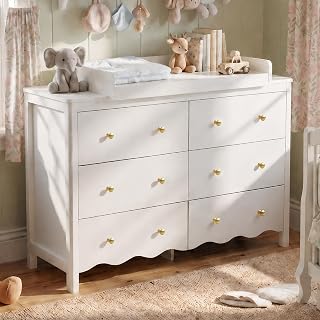
Nursery Dresser Changing Table with Changing Top
What stands out here is the integrated changing top that sits flush with the dresser frame—no awkward overhang or separate attachment to fumble with during assembly. The six-drawer layout gives parents genuine storage depth for bulk diaper packs and blankets, and the unit feels reassuringly stable once anchored. It is a solid all-rounder for first-time parents who want one purchase to cover both needs.
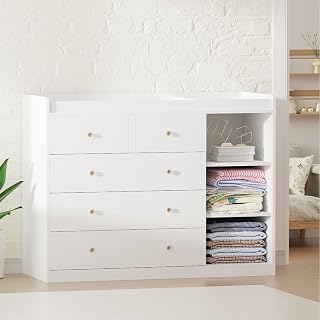
FURNJOYLIFE Nursery Dresser with Baby Changing Table
FURNJOYLIFE takes a different approach by combining three drawers with open shelving, which many parents find more practical for grabbing wipes and creams mid-change without opening a single drawer. The modern silhouette fits cleanly in contemporary nurseries, and the white finish resists yellowing better than several competitors at this price. Assembly instructions could be clearer, but the end result looks intentionally designed rather than mass-produced.
Nursery Dresser with Baby Changing Table, 6-Drawer Wooden
The wooden construction on this six-drawer model gives it a weight and presence that cheaper laminate units simply cannot match. Drawer glide smoothness is noticeably better out of the box, which matters when you are pulling open a drawer one-handed while holding a squirmy baby. This one earns its place in nurseries where longevity and a classic look are priorities over the lowest possible price.
BOLUO Baby Dresser with Changing Table Top
BOLUO swaps traditional wooden drawers for six fabric bins that slide into a sturdy frame, making the entire unit dramatically lighter to move and rearrange. The fabric drawers are machine-washable—a genuine advantage when spit-up inevitably finds its way into storage. Parents in smaller apartments or rental spaces tend to gravitate toward this model because repositioning it does not require two adults and a furniture dolly.
Diaper Changing Station with 5 Drawers
Five drawers hit a practical sweet spot: enough storage to stay organized without the wider footprint that six-drawer units demand. The changing station surface is slightly raised compared to competitors, which gives taller parents a more comfortable height during changes and saves their lower backs during late-night sessions. It is a pragmatic choice for tight nurseries where every inch of floor space counts.
Frequently Asked Questions
How long can my baby use the changing top?
Most manufacturers rate changing tops for children up to 30 pounds, which typically covers the diaper years through age two or three. Always follow the specific weight limit printed on your unit, and stop using the changing surface the moment your child can sit up unassisted and attempt to climb.
Can I use the dresser after the changing phase ends?
Yes—that is the whole point of choosing a dresser-changing table combo over a standalone changing table. Once you remove the topper, you are left with a fully functional bedroom dresser that works for a child’s clothes well into elementary school and beyond.
Do I really need to anchor the dresser to the wall?
Absolutely. The Consumer Product Safety Commission recommends anchoring all furniture taller than 30 inches. A toddler pulling open a top drawer can shift the center of gravity enough to topple an unsecured unit. Anchor hardware is inexpensive, and most of the dressers in this roundup include it in the box.
What size changing pad fits these dressers?
Standard rectangular changing pads—roughly 16.5 by 32 inches—fit the changing tops on every model reviewed here. Always confirm the recessed dimensions before purchasing a pad separately, as a pad that slides around on the surface creates a real safety hazard during changes.
Final Thoughts
For most families, the Nursery Dresser Changing Table with Changing Top offers the best balance of storage, stability, and straightforward assembly. Parents who value open-shelf convenience should look closely at the FURNJOYLIFE model, while the BOLUO with fabric drawers is the smart pick for small spaces and easy cleaning. Any of these five will serve your nursery well—but anchoring it to the wall is the one step no parent should skip.