Key takeaways
- Weather resistance: Look for materials that won’t swell, rot, or rust when exposed to rain, humidity, or intense UV rays.
- Maintenance effort: Some materials need periodic sealing or oiling, while others are virtually “set‑and‑forget.” Choose based on the time you’re willing to invest.
- Weight and portability: Heavier frames (cast iron, steel) stay put in windy conditions, but lighter options (HDPE, polywood) are easier to move for cleaning or seasonal storage.
- Heat tolerance: Metal can become scorching in direct sun, while wood and HDPE stay cooler to the touch, enhancing comfort during summer meals.
- Aesthetic match: Consider the style of your patio or garden—modern metal, rustic wood, or sleek synthetic surfaces—and how the material’s finish will age over time.
What's inside
Choosing the right material for an outdoor dining table can feel like navigating a maze of claims—“weather‑proof,” “rust‑free,” “UV‑stable.” In reality, the best option balances durability, maintenance, aesthetic appeal, and price, all while standing up to rain, sun, and seasonal temperature swings. The wrong choice can leave you with a warped surface, a rusted frame, or a table that fades to a dull shadow of its former self.
This guide breaks down the most reliable materials for 2026, highlights five standout products that embody those materials, and answers the common questions home‑owners ask before committing to an outdoor dining set.
As an Amazon Associate we earn from qualifying purchases.


🛒 Best Price Today on Amazon
Prime members get fast, free shipping on everything above, plus member-only deals. New members get a 30-day free trial — cancel anytime.
How to Choose a Material For Outdoor Dining Table (2026)
- Weather resistance: Look for materials that won’t swell, rot, or rust when exposed to rain, humidity, or intense UV rays.
- Maintenance effort: Some materials need periodic sealing or oiling, while others are virtually “set‑and‑forget.” Choose based on the time you’re willing to invest.
- Weight and portability: Heavier frames (cast iron, steel) stay put in windy conditions, but lighter options (HDPE, polywood) are easier to move for cleaning or seasonal storage.
- Heat tolerance: Metal can become scorching in direct sun, while wood and HDPE stay cooler to the touch, enhancing comfort during summer meals.
- Aesthetic match: Consider the style of your patio or garden—modern metal, rustic wood, or sleek synthetic surfaces—and how the material’s finish will age over time.
The Best Material For Outdoor Dining Table (2026)s Reviewed
SERWALL Outdoor 84″ HDPE Dining Table
This 84‑inch rectangular table blends the low‑maintenance advantage of high‑density polyethylene (HDPE) with a generously sized surface that comfortably seats six to eight. The integrated umbrella hole and robust frame make it ideal for larger gatherings while resisting stains, fading, and cracking.
MFSTUDIO Outdoor Dining Table
Featuring a wrought‑iron base and a polywood top, this 61‑inch table offers the classic elegance of metal paired with a wood‑like surface that won’t rot or splinter. Its weather‑resistant construction excels on decks and patios where a sleek, modern silhouette is desired.
Devoko Acacia Wood Dining Table
Crafted from sustainably sourced acacia, this walnut‑brown table delivers a warm, farmhouse vibe that transitions seamlessly from indoor kitchens to covered porches. While natural wood, it’s finished with a protective seal that guards against moisture and UV exposure.
Flamaker Outdoor Acacia Wood Table
The Flamaker table pairs a steel frame with an acacia top, providing the structural strength of metal and the inviting grain of wood. Its natural finish highlights the wood’s character, while the steel frame resists rust, making it a versatile choice for garden or pool‑side settings.
SERWALL Outdoor Dining Set with Bench
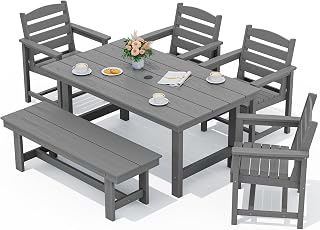
This gray‑toned set includes a rectangular table, a bench, and four chairs, all constructed from a high‑density polyethylene blend. The set’s cohesive design, built‑in umbrella hole, and easy‑to‑clean surface make it a practical, space‑saving solution for smaller patios.
Frequently Asked Questions
What material lasts the longest outdoors?
High‑density polyethylene (HDPE) and cast‑iron frames with powder‑coat finishes typically outlast wood and standard metal, resisting rot, rust, and UV degradation for a decade or more with minimal upkeep.
Is wood a good option for an outdoor table?
Yes, if the wood is treated or naturally resistant (e.g., acacia, teak). Proper sealing and occasional oiling will extend its life, but wood generally requires more maintenance than synthetic alternatives.
Can metal tables become too hot to use?
Metal surfaces can heat up in direct sun, especially thin aluminum or steel. Choosing tables with a protective top layer (polywood, HDPE, or wood) or using an umbrella can mitigate the heat issue.
Do I need to store my outdoor table during winter?
Storing the table or covering it with a breathable, waterproof cover protects against snow, ice, and harsh winds, extending the lifespan of most materials, particularly wood and HDPE.
Final Thoughts
For the best balance of durability and low maintenance, the SERWALL Outdoor HDPE Dining Table and the MFSTUDIO Outdoor Dining Table stand out as top picks. If you prefer a natural wood aesthetic, the Devoko Acacia Wood Table and Flamaker model both offer reliable outdoor performance when properly sealed.