Key takeaways
- Measure first: Leave roughly 36 inches between the island and surrounding cabinets, increasing that space where doors, drawers, or multiple cooks need to pass.
- Match the footprint: A mobile cart works well in a smaller kitchen, while a 71-inch or larger island needs an open layout and careful planning around traffic.
- Check the worktop: Solid wood feels warm and forgiving for everyday preparation; faux marble offers a bright, furniture-like appearance with a different maintenance routine.
- Prioritize useful storage: Look for adjustable shelves, drawers, open shelving, or dedicated space for a trash bin rather than storage that is difficult to reach.
- Think about seating and power: A drop leaf or extended top can create a breakfast spot when needed, while built-in outlets are valuable for mixers, phones, and small appliances.
What's inside
Choosing a kitchen island is rarely as simple as picking the longest or most attractive option. The right model must fit your room, leave enough clearance for comfortable movement, and provide storage that suits the way you actually cook. A drop-leaf top may be more useful than a permanently large surface in a compact kitchen, while a broad stationary island can transform an open-plan room into a practical gathering space.
This guide compares five useful styles, from compact rolling carts to furniture-style islands with seating and generous cabinetry. The focus is everyday comfort: work-surface height, mobility, storage access, seating practicality, finish, and features such as outlets, adjustable shelves, and towel racks.
As an Amazon Associate we earn from qualifying purchases.



How to Choose a/an Kitchen Island (2026)
- Measure first: Leave roughly 36 inches between the island and surrounding cabinets, increasing that space where doors, drawers, or multiple cooks need to pass.
- Match the footprint: A mobile cart works well in a smaller kitchen, while a 71-inch or larger island needs an open layout and careful planning around traffic.
- Check the worktop: Solid wood feels warm and forgiving for everyday preparation; faux marble offers a bright, furniture-like appearance with a different maintenance routine.
- Prioritize useful storage: Look for adjustable shelves, drawers, open shelving, or dedicated space for a trash bin rather than storage that is difficult to reach.
- Think about seating and power: A drop leaf or extended top can create a breakfast spot when needed, while built-in outlets are valuable for mixers, phones, and small appliances.
The Best Kitchen Island (2026)s Reviewed
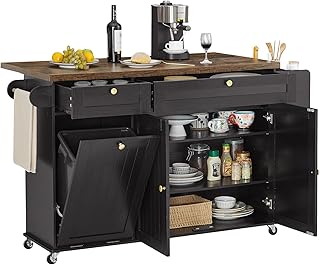
60-Inch Kitchen Island with Trash Can Storage
This black-and-rustic-brown rolling island is a strong fit for busy kitchens that need to hide a bin while gaining a useful prep surface. Its adjustable cabinet shelf, drop leaf, and built-in power outlet make it unusually versatile, although the 60-inch length still demands generous clearance.
71-Inch Modern Large Kitchen Island
Designed for larger homes, this white island combines a faux-marble-look top with seating for up to four and a stationary cabinet layout. Drawers and refrigerator space make it feel closer to a built-in kitchen feature than a simple cart, but its substantial footprint is best suited to an open floor plan.
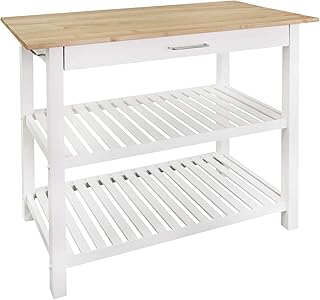
Casual Home Kitchen Island
The 40-inch Casual Home island is an appealing choice when simplicity and approachable proportions matter most. Its solid American hardwood top provides a pleasant everyday work surface, while the natural-and-white finish suits kitchens that need a modest prep station rather than a commanding centerpiece.
Homestyles Mobile Kitchen Island Cart
This blue Homestyles cart brings color and flexibility to the kitchen without requiring a permanent installation. The wood top and dropleaf breakfast bar offer a comfortable combination of prep space and occasional seating, and its mobile format makes it especially practical for renters or compact rooms.
VEVOR Kitchen Island Cart with Solid Wood Top
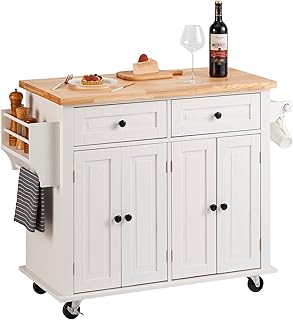
VEVOR’s white rolling cart makes good use of a relatively narrow 35.4-inch width, adding a storage cabinet, drawer, spice rack, and towel rack in a compact footprint. Height-adjustable shelving improves organization, though the smaller top is better for light prep and serving than for large batch cooking.
Frequently Asked Questions
How much clearance should a kitchen island have?
Aim for about 36 inches of open space around the island, measured from the island edge to nearby cabinets or appliances. Increase the clearance where an oven, dishwasher, or frequently used drawer opens into the walkway.
Are rolling kitchen islands stable enough for food preparation?
They can be, provided the casters lock firmly and the cart has a solid, well-balanced construction. Lock the wheels before chopping, kneading, or using a heavy appliance, and avoid leaning heavily against a narrow cart.
Is a drop-leaf island useful?
Yes, especially in smaller kitchens. The leaf can stay lowered to preserve circulation, then lift when you need extra prep space, a serving area, or a casual breakfast perch.
What countertop material is best for a kitchen island?
Solid wood offers warmth and can often be refreshed over time, while faux marble creates a bright decorative surface. Neither should be treated as automatically cut-proof or heat-proof, so use trivets and cutting boards regardless of the finish.
Final Thoughts
For the best mix of storage and everyday flexibility, the 60-Inch Kitchen Island with Trash Can Storage is a particularly capable choice. Larger homes may prefer the 71-Inch Modern Large Kitchen Island for seating and cabinet capacity, while the Casual Home island is the sensible pick for kitchens that need a compact, uncomplicated work surface.