Key takeaways
- Bowl Capacity: Consider how much ice cream you actually make at once. A 1-quart machine works for couples or solo experimentation, but families and entertainers should look at models pushing two quarts or beyond to avoid running double batches.
- Compressor Power and Recovery Time: The compressor does the heavy lifting by keeping the bowl cold during churning. Stronger compressors recover temperature faster between batches and handle denser recipes like gelato without struggling. Look for units that can run back-to-back cycles without a long cooldown pause.
- Noise Level: Compressor ice cream makers are inherently louder than freezer-bowl models, but there’s real variation. If your kitchen opens into a living area, a quieter compressor (or one you can step away from) makes a difference during the 20–40 minute churn cycle.
- Build Materials and Bowl Construction: Stainless steel bowls and housing last longer and chill more evenly than plastic alternatives. Heavier bowls retain cold better, which translates to smoother final texture. Check whether the paddle and bowl are dishwasher safe—hand-washing sticky residue gets old fast.
- Extra Features vs. Simplicity: LCD timers, preset modes, and keep-cool functions are genuinely useful if you tend to multitask. But every added feature is a potential failure point. Decide whether you want a straightforward churn-and-done machine or one that offers guided programs and extended cooling.
What's inside
Buying an ice cream maker with a built-in compressor sounds simple until you realize you’re staring at a dozen machines that all promise the same thing: fresh, churned frozen treats without the hassle of pre-freezing a bowl. The reality is messier. Some are loud enough to wake the house, others have bowls that don’t keep temperature well, and a few look great in photos but feel like toys once they’re on your counter. Choosing wrong means an expensive appliance collecting dust while you reach for store-bought pints.
This guide cuts through the noise for 2026. We looked at compressor performance, bowl capacity, noise levels, ease of cleaning, and real-world durability to narrow the field down to the machines worth your money. Whether you’re making a single batch of sorbet for a dinner party or churning out gallons for a family of six, these picks cover the range.
As an Amazon Associate we earn from qualifying purchases.


🛒 Best Price Today on Amazon
Prime members get fast, free shipping on everything above, plus member-only deals. New members get a 30-day free trial — cancel anytime.
How to Choose an Ice Cream Maker With Compressor (2026)
- Bowl Capacity: Consider how much ice cream you actually make at once. A 1-quart machine works for couples or solo experimentation, but families and entertainers should look at models pushing two quarts or beyond to avoid running double batches.
- Compressor Power and Recovery Time: The compressor does the heavy lifting by keeping the bowl cold during churning. Stronger compressors recover temperature faster between batches and handle denser recipes like gelato without struggling. Look for units that can run back-to-back cycles without a long cooldown pause.
- Noise Level: Compressor ice cream makers are inherently louder than freezer-bowl models, but there’s real variation. If your kitchen opens into a living area, a quieter compressor (or one you can step away from) makes a difference during the 20–40 minute churn cycle.
- Build Materials and Bowl Construction: Stainless steel bowls and housing last longer and chill more evenly than plastic alternatives. Heavier bowls retain cold better, which translates to smoother final texture. Check whether the paddle and bowl are dishwasher safe—hand-washing sticky residue gets old fast.
- Extra Features vs. Simplicity: LCD timers, preset modes, and keep-cool functions are genuinely useful if you tend to multitask. But every added feature is a potential failure point. Decide whether you want a straightforward churn-and-done machine or one that offers guided programs and extended cooling.
The Best Ice Cream Maker With Compressor (2026)s Reviewed
Homtone 2.64QT Ice Cream Maker
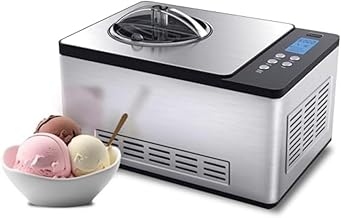
The largest capacity compressor machine in this roundup, the Homtone handles family-scale batches without breaking a sweat. Its all-stainless-steel construction feels premium, three modes cover ice cream, gelato, and sorbet, and the two-hour keep-cool function means you can churn and walk away. At 2.64 quarts, it’s genuinely roomy—rare at this price point.
Whynter ICM-200LS
Whynter’s 2.1-quart model has earned its reputation as a reliable workhorse. The LCD display and countdown timer remove guesswork, and the compressor handles consecutive batches well. It’s not the flashiest machine on the counter, but it consistently produces smooth, well-frozen results with minimal fuss—exactly what most home cooks need.
Instant Pot InstantChill
Instant Pot brings its brand polish to the ice cream space with the InstantChill, which supports traditional, gelato, sorbet, and even rolled ice cream modes. It runs quieter than many competitors and cleans up easily, with non-dairy compatibility built right in. The two-pint capacity is modest, but the versatility and low noise make it ideal for apartments and small kitchens.
Inoviva IM001
The Inoviva strikes a smart balance between capacity and digital convenience. Its 1.7-pint bowl is a sweet spot for couples or small households, and the three presets (ice cream, gelato, sorbet) with a digital timer take the learning curve out of homemade frozen desserts. It’s a solid entry point for anyone upgrading from a freezer-bowl machine.
4-in-1 Compressor Ice Cream Maker (1.0Qt)
This compact vertical unit packs surprising versatility into a small footprint. Beyond ice cream, it handles yogurt, gelato, and sorbet through its four modes, and the slim design tucks into tight counter spaces where larger machines won’t fit. The one-quart bowl limits batch size, but for solo users or small households experimenting with recipes, it’s a practical and affordable pick.
Frequently Asked Questions
How long does a compressor ice cream maker take?
Most compressor models churn a batch in 20 to 40 minutes, depending on the recipe and desired consistency. Thicker recipes like gelato tend to run on the longer end, while lighter sorbets finish faster. The compressor then keeps the bowl cold, so you don’t need to rush to the freezer immediately.
Do I still need to pre-freeze anything?
No—that’s the whole point of a compressor model. The built-in cooling system freezes the mixture during churning, unlike freezer-bowl machines that require 12–24 hours of pre-freezing. You can decide to make ice cream and start within minutes.
Can these machines handle dairy-free recipes?
Yes. Compressor ice cream makers work with coconut milk, oat milk, almond milk, and other non-dairy bases without any modification. Some recipes may churn slightly differently in texture, but the machines themselves are base-agnostic.
How much counter space do they need?
Compact models like the 4-in-1 take up roughly the same footprint as a standard toaster oven. Larger units like the Homtone require more clearance, especially around the lid for ingredient add-ins. Measure your available space and check dimensions before ordering.
Final Thoughts
For most households, the Homtone 2.64QT stands out as the best overall pick thanks to its large capacity, solid build, and keep-cool feature. The Whynter ICM-200LS remains the safe, proven choice for anyone who values brand reliability and straightforward operation. And if counter space is tight or you want the most versatile small machine, the Instant Pot InstantChill delivers impressive performance in a compact, quiet package.