Key takeaways
- Cycle Speed vs. Batch Size: Most budget machines claim “nine cubes in six minutes,” but batch sizes vary between six and nine bullets. A machine producing nine bullets per cycle will fill a glass faster during active use, which matters most when you’re entertaining.
- Ice Shape and Size Options: Bullet ice with two selectable sizes gives you flexibility—small bullets chill cocktails quickly while large ones melt slower in pitchers. Machines offering only one size limit your day-to-day utility.
- Self-Cleaning Function: This is non-negotiable for hygiene. Countertop ice makers develop mineral buildup fast, and a self-clean mode flushes internal lines without disassembly. If a model skips this feature, move on.
- Drainage Design: Poor drainage turns ice-making into a countertop puddle situation. Look for rear or bottom-mounted drain plugs that empty cleanly into a sink without tipping the unit forward.
- Noise and Footprint: These machines sit in your kitchen or bar area for hours at a time. Compact dimensions and quieter compressers—under 45 dB—mean the ice maker fades into the background rather than dominating conversation.
What's inside
If you’ve ever hosted a backyard cookout only to realize your freezer produced roughly six cubes of ice for fifteen guests, you already understand the problem. Standard freezers are slow, and bagged ice melts before it hits the table. A dedicated countertop ice maker solves the timing issue entirely, but the sub-$100 market is flooded with machines that all promise the same 26-pound daily output and six-minute cycle—making it genuinely hard to tell which one is worth the counter space.
This guide breaks down six of the most popular budget-friendly countertop ice makers available right now, narrows the field to the five that actually deliver, and walks you through exactly what to look for so you can stop overthinking a purchase that should make life easier, not more complicated.
As an Amazon Associate we earn from qualifying purchases.


How to Choose a Countertop Ice Maker Under $100
- Cycle Speed vs. Batch Size: Most budget machines claim “nine cubes in six minutes,” but batch sizes vary between six and nine bullets. A machine producing nine bullets per cycle will fill a glass faster during active use, which matters most when you’re entertaining.
- Ice Shape and Size Options: Bullet ice with two selectable sizes gives you flexibility—small bullets chill cocktails quickly while large ones melt slower in pitchers. Machines offering only one size limit your day-to-day utility.
- Self-Cleaning Function: This is non-negotiable for hygiene. Countertop ice makers develop mineral buildup fast, and a self-clean mode flushes internal lines without disassembly. If a model skips this feature, move on.
- Drainage Design: Poor drainage turns ice-making into a countertop puddle situation. Look for rear or bottom-mounted drain plugs that empty cleanly into a sink without tipping the unit forward.
- Noise and Footprint: These machines sit in your kitchen or bar area for hours at a time. Compact dimensions and quieter compressers—under 45 dB—mean the ice maker fades into the background rather than dominating conversation.
The Best Countertop Ice Makers Under $100 (2026) Reviewed
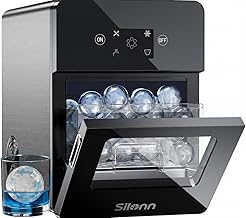
Silonn Portable Ice Maker
Silonn remains the most recommended entry point for a reason: the nine-cube batch is genuinely fast, the carry handle feels sturdy rather than decorative, and the included basket and scoop round out a package that doesn’t demand extra purchases. Build quality punches above its price, and the self-cleaning cycle runs without fuss. This is the machine most people are happiest with six months in.
Crzoe Countertop Ice Maker
Crzoe takes the same core formula—26 pounds per day, six-minute batches, two bullet sizes—and packages it in a matte black finish that looks sharper on a bar cart than most competitors. The eight-cube batch per cycle is one fewer than some rivals, but the cubes are consistently well-formed. It’s a solid pick if aesthetics matter alongside function.
EUHOMY Portable Ice Maker
EUHOMY’s offering stands out for its surprisingly quiet operation, which makes it a strong choice for open-concept kitchens or apartment living where noise carries. The carry handle is well-positioned for one-hand transport, and the two ice sizes respond accurately to your selection. Self-cleaning works reliably, and the overall build feels a step above the typical budget tier.
Antarctic Star Ice Maker Machine
Antarctic Star pitches energy efficiency hard, and the numbers back it up—slightly lower wattage draw over a full day compared to peers while maintaining the same 26-pound output ceiling. The portable handle and self-cleaning feature check every practical box. It’s particularly well-suited for RVs and camping setups where power supply is a concern, but it works perfectly well on a kitchen counter.
OLIXIS Countertop Ice Maker
OLIXIS rounds out the list with a dependable nine-cube batch and a straightforward auto-cleaning mode that activates at the push of a button. The two cube sizes freeze at slightly different densities, giving you a genuine choice between fast-cooling small bullets and slow-melting large ones. It’s a no-frills performer that focuses on doing the basics extremely well.
Frequently Asked Questions
Do I need to pre-freeze anything before using a countertop ice maker?
No. Countertop ice makers operate on a continuous water supply—you pour water into the reservoir and the machine freezes it directly. There are no removable ice trays to pre-chill. That’s the whole point: fill it, press a button, walk away.
How often should I run the self-cleaning cycle?
Once every one to two weeks is ideal for regular use. If you’re using filtered or distilled water, you can stretch that to monthly. Running it with a diluted white vinegar solution every few months helps dissolve stubborn mineral deposits that plain water won’t clear.
Can these machines keep ice frozen after the cycle completes?
Not for long. These are ice-making machines, not freezers. Once the cycle stops, the ice begins melting within minutes if you leave it in the basket. If you need ice held for later, transfer it to your freezer promptly—don’t count on the machine to preserve it.
Is distilled water really necessary?
It’s not required, but it makes a noticeable difference. Hard tap water produces cloudy, soft cubes and accelerates mineral buildup inside the unit. Distilled or filtered water produces clearer ice, tastes better in drinks, and extends the machine’s lifespan with less maintenance.
Final Thoughts
For most households, the Silonn Portable Ice Maker hits the sweet spot of speed, build quality, and value—it’s the safe recommendation for a reason. If quiet operation is your top priority, the EUHOMY edges ahead without sacrificing output. And for anyone placing the unit where power efficiency matters—RVs, patios, off-grid cabins—the Antarctic Star makes the most of every watt. Any of these three will keep the ice flowing well before your guests notice the freezer was ever the bottleneck.