Key takeaways
- IP Rating and Wet Certification: An IP65 rating means the fan resists sustained water jets—critical for patios exposed to rain. “Damp rated” only handles humidity; look for “wet rated” if your fan could catch direct rainfall.
- Motor Type and Noise: Brushless DC motors are quieter, use roughly 70% less energy, and let you reverse airflow direction for winter use. Expect 30+ dB on the lowest setting from a quality DC motor, compared to 50+ dB from older AC designs.
- Blade Span and Airflow: Fans under 24 inches suit compact gazebos (roughly 10×12 feet). For spaces larger than 14×14 feet, step up to a 52- or 56-inch fan and prioritize models advertising high CFM ratings—ideally above 5,000 CFM at full speed.
- Lighting and Color Temperature: Dimmable LED modules with adjustable CCT (color temperature) let you shift from a crisp 6500K work light to a warm 3000K dinner ambiance. Some fans now include app-controlled dimming for even finer adjustments.
- Mounting and Installation: Plug-in fans with hanging hooks require zero hardwiring—ideal for renters or DIY-averse homeowners. Hardwired models look cleaner but demand an outdoor-rated electrical box and, in many jurisdictions, a permit.
What's inside
Shopping for a ceiling fan that actually holds up outdoors is trickier than most people expect. Standard indoor fans corrode, seize up, or simply blow out the first time a summer storm rolls through the patio. Even fans marketed as “outdoor” range wildly in waterproofing, motor quality, and real-world airflow, leaving buyers guessing about what will genuinely last.
This guide cuts through the noise. I spent time evaluating the top-rated outdoor and patio ceiling fans available in 2026—looking past marketing language at IP ratings, motor types, blade span, and how each model actually performs in covered and semi-exposed outdoor living spaces. Whether you have a small gazebo or a wide-open pergola, there’s something here for you.
As an Amazon Associate we earn from qualifying purchases.



How to Choose a Ceiling Fan for Patio (2026)
- IP Rating and Wet Certification: An IP65 rating means the fan resists sustained water jets—critical for patios exposed to rain. “Damp rated” only handles humidity; look for “wet rated” if your fan could catch direct rainfall.
- Motor Type and Noise: Brushless DC motors are quieter, use roughly 70% less energy, and let you reverse airflow direction for winter use. Expect 30+ dB on the lowest setting from a quality DC motor, compared to 50+ dB from older AC designs.
- Blade Span and Airflow: Fans under 24 inches suit compact gazebos (roughly 10×12 feet). For spaces larger than 14×14 feet, step up to a 52- or 56-inch fan and prioritize models advertising high CFM ratings—ideally above 5,000 CFM at full speed.
- Lighting and Color Temperature: Dimmable LED modules with adjustable CCT (color temperature) let you shift from a crisp 6500K work light to a warm 3000K dinner ambiance. Some fans now include app-controlled dimming for even finer adjustments.
- Mounting and Installation: Plug-in fans with hanging hooks require zero hardwiring—ideal for renters or DIY-averse homeowners. Hardwired models look cleaner but demand an outdoor-rated electrical box and, in many jurisdictions, a permit.
The Best Ceiling Fans for Patio (2026) Reviewed
addlon 20″ Outdoor Ceiling Fan with Light
A compact cage-style fan that punches above its weight. The IP65 rating and plug-in hanging hook setup make it a no-brainer for gazebos and covered porches where you want airflow without hiring an electrician. Six speeds on a whisper-quiet reversible DC motor round out a genuinely useful package at a competitive price.
LEDIARY 20″ Waterproof Outdoor Ceiling Fan
The LEDIARY edges out similar caged fans thanks to full app control and a three-color dimmable LED. It covers roughly a 10×12-foot area comfortably, and the IP65 wet rating means it tolerates more exposure than its price point suggests. If you want smart-home integration without overspending, this is the pick.
56″ Wet-Rated Outdoor Ceiling Fan with Lights
When you need serious airflow across a large patio, this 56-inch model delivers. Seven UV-coated blades and a high-CFm DC motor push air across wide spaces quietly, while the three-color dimmable light handles late-evening gatherings. The all-weather build is robust enough for fully exposed pergolas.
56″ IP66 Waterproof Outdoor Ceiling Fan
An IP66 rating—one notch above the typical IP65—gives this fan an extra margin against driving rain and wind-driven spray. Remote and app control, auto memory for your last-used settings, and a reversible DC motor make it the most polished premium option in the roundup. Best for homeowners who want a set-it-and-forget-it solution on a large covered patio.
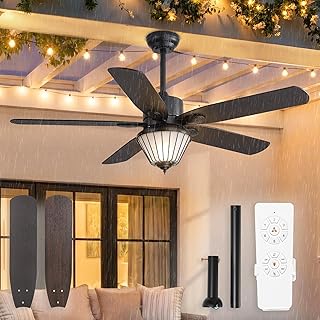
52″ IP65 Outdoor Ceiling Fan with Lights
A strong mid-size option that bridges the gap between the compact 20-inch models and the larger 56-inch units. Five dual-finish blades look at home in farmhouse or modern settings, and the wet-rated IP65 construction stands up to regular outdoor exposure. This is a versatile choice for patios, porches, and covered gazebos alike.
Frequently Asked Questions
Can I use a regular indoor ceiling fan on my patio?
Technically yes, but it’s a bad idea. Indoor fans lack the moisture resistance and corrosion protection that outdoor environments demand. Motor bearings, wiring connections, and blade materials will degrade rapidly when exposed to humidity, rain, or temperature swings.
What IP rating do I need for an outdoor patio fan?
For covered patios that rarely get direct rain, IP44 may suffice. For fans in open gazebos, pergolas, or anywhere rain could reach the unit, aim for IP65 or higher. The higher the second digit, the better the protection against water ingress.
Are plug-in outdoor ceiling fans as good as hardwired ones?
Modern plug-in models use the same DC motors and blade assemblies as hardwired versions. The trade-off is cosmetic—a visible cord—rather than functional. For renters or anyone avoiding electrical work, plug-in fans are a completely practical solution.
How loud are outdoor ceiling fans at night?
Fans with brushless DC motors typically operate between 25 and 35 decibels on low speed—roughly the volume of a quiet library. AC motor fans run noticeably louder. If nighttime quiet matters, check the decibel specification before purchasing.
Final Thoughts
For most patio setups in 2026, the 56″ IP66 Waterproof Outdoor Ceiling Fan stands out as the best all-around performer thanks to its superior weather resistance and polished smart features. Budget-conscious buyers should look hard at the LEDIARY 20″ for its excellent app integration at a lower price, while homeowners with large covered spaces will appreciate the raw airflow of the 56″ Wet-Rated model. Any of these five fans will serve you well—just match the size and IP rating to your specific outdoor space.