Key takeaways
- Installation: Confirm the machine’s width, depth, height, ventilation clearance, electrical requirements, and whether it is approved for freestanding or under-counter use.
- Drainage: A gravity drain may be sufficient in some kitchens, but models with a drain pump offer more flexibility when a floor drain is not nearby.
- Capacity: Compare daily production with bin storage. A machine that makes 100 pounds per day is not especially useful if its bin fills quickly during a gathering.
- Ice style: Crescent, cube, and nugget ice have different textures and melting rates. Nugget ice is soft and chewable, while harder shapes generally last longer in a glass.
- Maintenance: Look for self-cleaning functions, accessible filters or water paths, and clear guidance on descaling. Regular cleaning is essential for good-tasting ice.
What's inside
Choosing an ice maker for a home kitchen is less straightforward than it looks. Some machines are genuinely designed for under-counter installation, while others are portable countertop units that produce excellent ice but cannot replace a built-in appliance. Drain requirements, ventilation, storage capacity, and daily output can matter just as much as the headline production figure.
This guide focuses on practical home comfort: how quietly and reliably each machine fits into daily life, how much ice it can hold, and what installation may involve. We also include two compact GE Profile countertop models because their soft, chewable nugget ice is exceptionally appealing for everyday drinks, even though they are not built-in units.
As an Amazon Associate we earn from qualifying purchases.


How to Choose a/an Built-In Ice Maker (2026)
- Installation: Confirm the machine’s width, depth, height, ventilation clearance, electrical requirements, and whether it is approved for freestanding or under-counter use.
- Drainage: A gravity drain may be sufficient in some kitchens, but models with a drain pump offer more flexibility when a floor drain is not nearby.
- Capacity: Compare daily production with bin storage. A machine that makes 100 pounds per day is not especially useful if its bin fills quickly during a gathering.
- Ice style: Crescent, cube, and nugget ice have different textures and melting rates. Nugget ice is soft and chewable, while harder shapes generally last longer in a glass.
- Maintenance: Look for self-cleaning functions, accessible filters or water paths, and clear guidance on descaling. Regular cleaning is essential for good-tasting ice.
The Best Built-In Ice Maker (2026)s Reviewed
GE Profile Opal MINI PRO
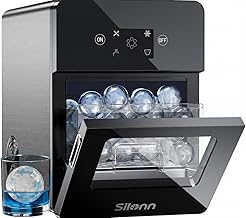
The GE Profile Opal MINI PRO is a strong choice for households that prioritize soft, chewable nugget ice over built-in installation. Its compact countertop format, top-fill design, side tank, and claimed 36-pound daily output make it convenient for family use, while the included descaler helps keep maintenance manageable.
GE Profile Opal Mini
The standard GE Profile Opal Mini delivers the same appealing pellet-style ice in a smaller, simpler countertop package. Its 2-pound bin is best suited to daily drinks rather than parties, but the top-fill reservoir and included cleaning supplies make it an easy appliance to live with.
Mojgar 100-Lb Commercial Under-Counter Ice Maker
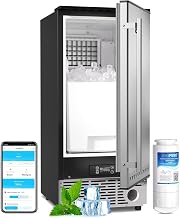
This 15-inch Mojgar model is aimed at buyers who need substantial output in a relatively narrow under-counter footprint. A 30-pound bin, self-cleaning function, and ETL approval add practical reassurance for home bars, entertaining spaces, or kitchens that regularly go through large quantities of ice.
Mojgar 100-Lb Ice Maker with 33-Lb Bin
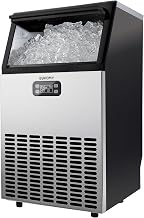
The second Mojgar option pairs commercial-level production with a slightly larger storage bin, making it a sensible pick for frequent hosts. Its stainless-steel construction suits a bar or utility kitchen, though buyers should measure carefully and verify water and drainage connections before planning a built-in installation.
EdgeStar 15-Inch Built-In Ice Maker
The EdgeStar is a more modest-capacity choice for homes that want a dedicated ice appliance without commercial-scale output. It produces crescent-shaped ice and stores up to 12 pounds, while its no-drain-required design can simplify placement where plumbing options are limited. It is particularly well matched to a home bar or secondary kitchen.
Frequently Asked Questions
Can a countertop ice maker be installed under a counter?
Usually not safely or reliably. Countertop machines depend on open-air ventilation and are not necessarily insulated or configured for the heat buildup found inside cabinetry. Use them on a stable, accessible surface unless the manufacturer explicitly approves built-in installation.
Does a built-in ice maker need a water line?
Most under-counter machines require a plumbed water supply for automatic production. They may also need a drain, depending on the design. Before buying, check whether the unit uses gravity drainage, includes a pump, or can operate with an alternative setup approved by the manufacturer.
How much ice should a home ice maker produce?
For ordinary family use, a lower-output machine can be adequate if the storage bin is emptied regularly. Entertaining, large families, and home bars benefit from higher production, but remember that the storage bin—not just the daily rating—determines how much ice is ready at one time.
How often should an ice maker be cleaned?
Clean the machine whenever ice develops an unusual taste or odor, and follow the manufacturer’s schedule for routine descaling and sanitizing. Hard-water homes may need more frequent attention. Emptying old ice and wiping the bin also helps maintain freshness.
Final Thoughts
For genuine under-counter use, the Mojgar 100-Lb models offer the most capacity, while the EdgeStar is a better fit for lighter household demand and simpler placement. If the priority is exceptionally pleasant soft ice rather than built-in integration, the GE Profile Opal MINI PRO is the standout countertop pick, with the smaller Opal Mini serving compact kitchens well.