Key takeaways
- Airflow: Check CFM at 90 PSI rather than relying on maximum PSI alone. Higher CFM supports demanding tools such as impact wrenches, grinders, and sanders.
- Tank size: A 20- to 30-gallon tank gives automotive tools a useful reserve and reduces constant motor cycling. Smaller tanks work better for inflation, brad nailing, and short bursts.
- Noise: Oil-free models generally simplify maintenance, but sound levels vary widely. For an attached garage, a quiet compressor can make a noticeable difference to comfort.
- Power and installation: Confirm whether the compressor runs on a standard 120V outlet or needs 220V service. A dedicated circuit may be advisable for larger units.
- Mobility and upkeep: Wheels, a practical drain valve, accessible controls, and a manageable footprint matter when the compressor shares space with vehicles, shelving, or workbenches.
What's inside
Choosing the best air compressor for an automotive shop is less about chasing the highest PSI number and more about matching the machine to your actual garage routine. A compressor that is fine for topping off tires may struggle with an impact wrench, while a large shop unit can be noisy, bulky, and unnecessarily demanding in a home workspace.
This guide focuses on practical ownership: usable airflow, recovery time, noise, footprint, maintenance, and everyday comfort. The lineup includes full-size vertical compressors for serious automotive work, quieter options for attached garages, and portable inflators for quick tire service.
As an Amazon Associate we earn from qualifying purchases.


How to Choose a/an Air Compressor For Automotive Shop (2026)
- Airflow: Check CFM at 90 PSI rather than relying on maximum PSI alone. Higher CFM supports demanding tools such as impact wrenches, grinders, and sanders.
- Tank size: A 20- to 30-gallon tank gives automotive tools a useful reserve and reduces constant motor cycling. Smaller tanks work better for inflation, brad nailing, and short bursts.
- Noise: Oil-free models generally simplify maintenance, but sound levels vary widely. For an attached garage, a quiet compressor can make a noticeable difference to comfort.
- Power and installation: Confirm whether the compressor runs on a standard 120V outlet or needs 220V service. A dedicated circuit may be advisable for larger units.
- Mobility and upkeep: Wheels, a practical drain valve, accessible controls, and a manageable footprint matter when the compressor shares space with vehicles, shelving, or workbenches.
The Best Air Compressor For Automotive Shop (2026)s Reviewed
Klutch 29-Gallon Air Compressor
The Klutch 29-Gallon Air Compressor is a sensible middle ground for a home automotive bay, offering 2.5 HP, 175 PSI, and 5.1 CFM at 90 PSI in a space-saving vertical design. Its oil-free pump keeps routine maintenance straightforward, while the large wheels and accessible tank drain make repositioning and shutdown less frustrating. It is well suited to nailers, light painting, tire inflation, and occasional automotive tools, though heavy continuous grinding may call for more capacity.
California Air Tools 20040CAD
With a 20-gallon tank, 4.0 HP motor, and automatic drain valve, the California Air Tools 20040CAD is built for users who want substantial capability without the harsh sound commonly associated with shop compressors. Its 75 dB rating is not silent, but it is more neighbor- and conversation-friendly than many heavy-duty alternatives. The 220V requirement is the main practical consideration, so it is best for a dedicated garage setup rather than a plug-and-play purchase.
DEWALT 30-Gallon Portable Compressor
The DEWALT 30-Gallon Portable Air Compressor provides a generous reserve for automotive work and uses a durable oil-lubricated pump designed for regular shop duty. Its vertical format helps preserve floor space, while the 175 PSI maximum gives it useful flexibility for multiple tools. Expect more maintenance and more operating noise than with an oil-free unit, but this is a strong choice for mechanics who value endurance over quiet operation.
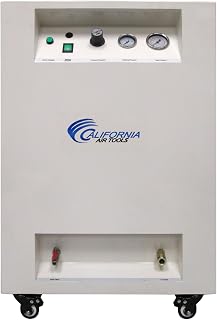
California Air Tools 10020SPC
The California Air Tools 10020SPC stands out for home comfort, combining a 10-gallon tank with an enclosed, sound-proof cabinet and a remarkably low 58 dB noise rating. It is a particularly attractive option for an attached garage or shared workspace where a loud motor quickly becomes tiresome. Its smaller tank favors inflation, brad and finish nailing, and short tool cycles rather than sustained high-demand automotive work.
DEWALT 20V MAX Tire Inflator
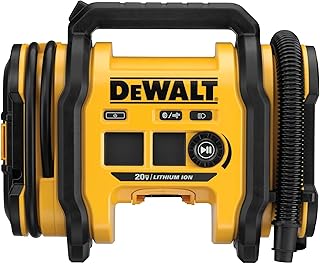
The DEWALT DCC020IB is not a substitute for a tank compressor, but it is one of the most convenient tools here for routine tire care. Automatic shutoff, an LED light, and cordless portability make it useful for topping off car, trailer, bicycle, and lawn-equipment tires without dragging out a hose. It is sold as a tool-only kit, so buyers need a compatible DEWALT 20V MAX battery and charger.
Frequently Asked Questions
What size compressor is best for automotive work?
For a home automotive shop, a 20- to 30-gallon tank is a comfortable starting point. Prioritize the tool’s required CFM and the compressor’s CFM at 90 PSI, especially if you plan to use an impact wrench or air ratchet regularly.
Is an oil-free compressor good for a garage?
Yes. Oil-free models are convenient because they avoid oil changes and reduce the chance of oil contamination. They can be louder or less durable under prolonged heavy use, so they are best matched to intermittent automotive tasks.
Can a 120V compressor run an impact wrench?
It can, provided its airflow and recovery rate meet the wrench’s requirements. A 120V unit may handle short bursts well, but frequent lug removal or extended tool use is easier with a larger tank and stronger airflow.
Do I need a moisture separator?
A separator or filter is worthwhile for painting, air tools, and humid garages. Drain the tank regularly as well, since compressed air naturally creates condensation that can contribute to rust and contaminate air lines.
Final Thoughts
The Klutch 29-Gallon is the most balanced choice for many home automotive shops, while the DEWALT 30-Gallon is better suited to heavier, more regular tool use. For noise-sensitive garages, the California Air Tools 10020SPC is the comfort pick, and the DEWALT 20V MAX Tire Inflator is the easiest solution for everyday tire maintenance.