Key takeaways
- Airflow: Compare CFM at 90 PSI, not just horsepower or maximum PSI. Higher CFM supports spray guns, impact tools, sanders, and other demanding equipment more reliably.
- Power requirements: Many large compressors need 230-volt service, while some require three-phase power. Confirm your electrical setup before ordering and use a qualified electrician for installation.
- Noise: Oil-free designs can simplify maintenance, while enclosed or “silent” models may be more comfortable near a home. Even quiet compressors still need a stable, well-ventilated location.
- Pump design: Oil-lubricated, two-stage pumps generally suit demanding, frequent use and can run cooler. They require regular oil checks and scheduled maintenance.
- Workshop fit: Measure doorways, ceiling height, service clearance, and floor space. An 80-gallon vertical tank saves footprint, but the complete unit can be tall and difficult to reposition.
What's inside
Best 80 Gallon Air Compressor (2026) — Choosing a large compressor is less about the biggest horsepower number and more about whether the machine fits your workshop, electrical service, noise tolerance, and everyday tools. An 80-gallon tank can provide welcome breathing room, but the wrong model may bring excessive vibration, demanding wiring, or disappointing recovery time.
This guide compares the leading 80-gallon options for serious home garages, furniture workshops, restoration spaces, and light industrial use. We focus on usable airflow, pressure, sound, maintenance, installation requirements, and the practical details that matter once the compressor is sitting beside your workbench.
As an Amazon Associate we earn from qualifying purchases.




How to Choose an 80 Gallon Air Compressor (2026)
- Airflow: Compare CFM at 90 PSI, not just horsepower or maximum PSI. Higher CFM supports spray guns, impact tools, sanders, and other demanding equipment more reliably.
- Power requirements: Many large compressors need 230-volt service, while some require three-phase power. Confirm your electrical setup before ordering and use a qualified electrician for installation.
- Noise: Oil-free designs can simplify maintenance, while enclosed or “silent” models may be more comfortable near a home. Even quiet compressors still need a stable, well-ventilated location.
- Pump design: Oil-lubricated, two-stage pumps generally suit demanding, frequent use and can run cooler. They require regular oil checks and scheduled maintenance.
- Workshop fit: Measure doorways, ceiling height, service clearance, and floor space. An 80-gallon vertical tank saves footprint, but the complete unit can be tall and difficult to reposition.
The Best 80 Gallon Air Compressor (2026)s Reviewed
VEVOR 80-Gallon Oil-Free Compressor
The VEVOR 80 Gallon Air Compressor is an appealing choice for buyers who want a relatively low-maintenance, oil-free setup with a 145 PSI ceiling and 15.5 CFM at 90 PSI. Its 220-volt single-phase requirement is more approachable than a three-phase industrial unit, although the 6.5 HP rating still calls for dedicated electrical planning. It makes sense for a serious home workshop where clean, convenient operation matters.
Campbell Hausfeld 80-Gallon Vertical Compressor
Campbell Hausfeld’s 5 HP, 140 PSI vertical compressor is a straightforward option for general shop work, including inflation, brad and framing tools, automotive service, and intermittent spraying. Its familiar configuration is easier to understand for first-time large-compressor buyers, but users with continuous high-demand tools should check its delivered CFM carefully before committing.
VEVOR 80-Gallon Heavy-Duty Compressor
This heavy-duty VEVOR model steps up to 17 CFM at 90 PSI and a 175 PSI maximum, giving it stronger recovery potential for demanding pneumatic equipment. The oil-lubricated pump is better suited to sustained workshop use than a basic homeowner unit, but its 230-volt, three-phase design and lack of a plug make installation a significant project rather than a simple upgrade.
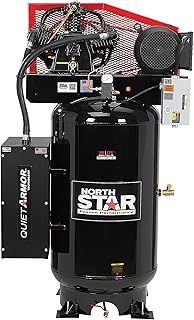
NorthStar 7.5 HP Quiet Armor Compressor
The NorthStar 80-gallon model stands out for buyers who want substantial airflow—up to 26 CFM—without accepting the full noise level of a conventional shop compressor. Its Quiet Armor enclosure and maintenance-friendly access are useful in a home setting, while the 7.5 HP platform is well matched to demanding pneumatic tools. Allow room around the unit for cooling and servicing.
Industrial Plus Silent 80-Gallon Compressor
Industrial Plus targets serious users with 31 CFM, a 7.5 HP motor, vertical two-stage configuration, pressure lubrication, and an automatic drain system. That combination is particularly attractive for frequent tool use and a cleaner maintenance routine. Its 230-volt requirement and large performance envelope make it best for a properly equipped workshop, not a casual garage corner.
Frequently Asked Questions
Is an 80-gallon compressor too large for home use?
Not necessarily. The tank is useful when you run tools that demand steady airflow, but an 80-gallon unit is excessive for occasional tire inflation or light nailing. Check the footprint, noise, electrical supply, and service access before buying.
How much CFM do I need for furniture work?
Light fastening and intermittent cleaning need relatively little airflow. Spray finishing, orbital sanding, and continuous air tools can require considerably more, so compare the tool’s recommended CFM with the compressor’s CFM at 90 PSI and leave a practical margin.
Are oil-free compressors better?
Oil-free models avoid oil changes and can be convenient for clean, occasional use. Oil-lubricated pumps are often the stronger choice for frequent, heavy-duty operation, provided you are willing to maintain the pump and manage potential oil carryover with suitable filtration.
Can I plug one into a normal household outlet?
Usually not. Large compressors commonly require a dedicated 220- or 230-volt circuit, and some industrial models need three-phase power. Have an electrician verify the motor, breaker, wiring, disconnect, and local code requirements.
Final Thoughts
For a quieter home workshop, the NorthStar 7.5 HP Quiet Armor is a compelling all-rounder, while the Industrial Plus Silent model is the airflow leader for demanding work. Buyers seeking simpler single-phase operation should consider the VEVOR oil-free compressor, provided its CFM matches their tools.