Key takeaways
- Motor Power: Anything under 1 HP struggles with thick hardwoods at resaw height. Look for 1 HP minimum; 1.5–2 HP gives you breathing room on dense stock without bogging down.
- Blade Compatibility: A saw that only accepts narrow blades is a curves-only machine. Verify it handles at least ¾-inch blades for resaw work, and check that the guide system tracks well across that full width.
- Table Quality and Size: Cast iron is non-negotiable for serious work — it dampens vibration and stays flat. Confirm the table is large enough to support wider boards without auxiliary fences propping everything up.
- Resaw Capacity: The throat depth gets you the 14-inch label, but resaw height determines what lumber you can actually split. Six inches is the baseline; anything above that opens up book-matching and thick slab work.
- Dust Collection and Ergonomics: A well-sealed lower housing with a properly placed port makes a dramatic difference in a small shop. Also weigh overall machine heft — heavier saws vibrate less but demand a sturdy stand and a permanent home.
What's inside
Shopping for a 14-inch band saw in 2026 means wading through dozens of listings that all blur together — inflated motor ratings, vague build-quality claims, and spec sheets that bury the details you actually need. For anyone building furniture, resawing hardwood, or just tired of fighting curves on a underpowered machine, the wrong pick wastes money and workshop space in equal measure.
This guide cuts through the noise. I evaluated the current crop of 14-inch band saws on motor output, table flatness, resaw capacity, dust collection, and real-world value, then narrowed the field to five models worth your consideration. Whether you’re outfitting a home shop or upgrading from a starter saw, you’ll find a clear winner in each price bracket.
As an Amazon Associate we earn from qualifying purchases.


🛒 Best Price Today on Amazon
Prime members get fast, free shipping on everything above, plus member-only deals. New members get a 30-day free trial — cancel anytime.
How to Choose a 14-Inch Band Saw (2026)
- Motor Power: Anything under 1 HP struggles with thick hardwoods at resaw height. Look for 1 HP minimum; 1.5–2 HP gives you breathing room on dense stock without bogging down.
- Blade Compatibility: A saw that only accepts narrow blades is a curves-only machine. Verify it handles at least ¾-inch blades for resaw work, and check that the guide system tracks well across that full width.
- Table Quality and Size: Cast iron is non-negotiable for serious work — it dampens vibration and stays flat. Confirm the table is large enough to support wider boards without auxiliary fences propping everything up.
- Resaw Capacity: The throat depth gets you the 14-inch label, but resaw height determines what lumber you can actually split. Six inches is the baseline; anything above that opens up book-matching and thick slab work.
- Dust Collection and Ergonomics: A well-sealed lower housing with a properly placed port makes a dramatic difference in a small shop. Also weigh overall machine heft — heavier saws vibrate less but demand a sturdy stand and a permanent home.
The Best 14-Inch Band Saw (2026)s Reviewed
JET 14-Inch Woodworking Band Saw, 1.75 HP (JWBS-14SFX-BLK)
JET’s SFX line represents the sweet spot for serious hobbyists and small-shop pros. The 1.75 HP motor handles resaw tasks with a calm authority that lesser motors simply can’t match, and the black-finish body looks as sharp as it performs. Cast iron table, solid fence system, and JET’s well-documented parts availability round out a package that’s hard to beat under two grand.
Powermatic 14-Inch Woodworking Bandsaw (PWBS-14CS)
Powermatic has earned its “gold standard” reputation honestly, and the PWBS-14CS lives up to it. The 1.5 HP motor feeds smooth, consistent power through a blade that tracks true on the first cut. Build quality is immediately obvious when you close the door on the lower housing — everything fits, nothing rattles, and the precision-ground table feels premium in hand. You pay a premium, but the machine rewards you with years of trouble-free service.
JET 14-Inch Woodworking Band Saw, 1 HP (JWBS-14CS)
JET’s entry-level offering trades raw power for polished basics. The 1 HP motor is adequate for most dimension lumber and moderate resaw work, though it will labor on thick, dense hardwoods. Where this saw shines is fit and finish — the same JET engineering at a friendlier price point. If your projects lean toward joinery and cabinetry rather than slabs, the JWBS-14CS delivers reliable results without overcommitting your budget.
WEN Industrial Band Saw, 14-Inch, 1 HP (BA1411)
WEN continues to undercut competitors on price while shipping genuinely usable machines. The BA1411’s dual-voltage capability makes it flexible for different shop setups, and the two-speed pulley system lets you dial in blade speed for hardwood versus softwood. It’s not without compromises — the stock fence needs tuning out of the box and the dust port is undersized — but at its price, those are easy to forgive. An excellent entry point for woodworkers testing the band-saw waters.
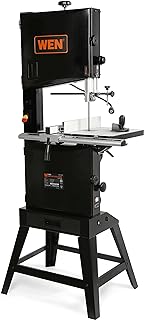
WEN Band Saw with Stand, 14-Inch, Two-Speed (BA1487)
The BA1487 bundles WEN’s capable saw with a dedicated steel stand, eliminating the hunt for a matching base. The included stand raises the cutting table to a comfortable working height and stores tools in its open shelf. Performance matches the BA1411 — same two-speed versatility, same dual-voltage convenience — but the bundle saves you a separate purchase and ensures the stand is properly sized for the saw. A practical choice for a first dedicated workshop setup.
Frequently Asked Questions
What blade width should I use on a 14-inch band saw?
For general woodworking, ⅜-inch to ½-inch blades handle most curves and straight cuts comfortably. If you plan to resaw, invest in ¾-inch or even 1-inch blades — the wider profile tracks straighter under load and wastes less wood in the kerf.
Can a 14-inch band saw resaw hardwood?
Absolutely, provided you have adequate motor power (1 HP minimum, 1.5 HP preferred) and enough resaw height. Most 14-inch saws offer 6–12 inches of resaw capacity, which is plenty for splitting boards, book-matching panels, and creating thin veneers from figured wood.
How important is blade tension and tracking adjustment?
Critical. Poor tracking leads to inconsistent cuts and accelerated blade wear, while incorrect tension causes the blade to wander on wider resaw tasks. Look for a saw with easily accessible tension controls and a micro-adjust tracking knob — you’ll use both regularly.
Should I buy a band saw with a stand included?
If you’re starting from scratch, a bundled stand like the one on the WEN BA1487 saves time and ensures a stable, properly aligned setup. If you already have a bench or rolling base, buying the saw alone lets you allocate your budget toward a better motor or blade selection.
Final Thoughts
For most home-shop woodworkers, the JET JWBS-14SFX-BLK hits the best balance of power, build quality, and long-term value. Shoppers watching their budget should start with the WEN BA1411 and put the savings toward quality blades. And if you want a saw that will outlast every other tool in your shop, the Powermatic PWBS-14CS justifies its price with every cut.